• Student Accomplishments – March 2015

accomplishments-heading

Please join us in congratulating the UConn undergraduates named below for the significant research and creative accomplishments they have earned to date this spring. Students: if you have an accomplishment to share, please do so using this online form.


AWARDS

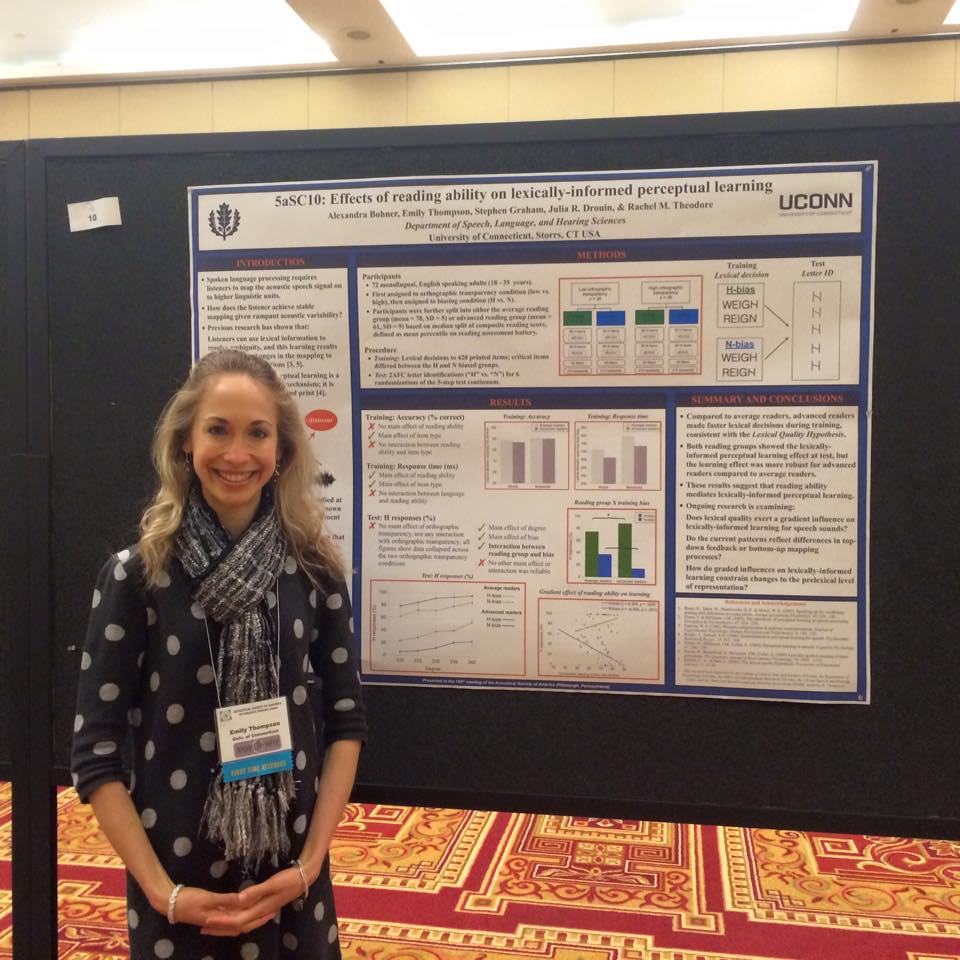
ASHA logoEmily Thompson ’15 (CLAS) is the recipient of a 2014-15 ASHA Students Preparing for Academic-Research Careers (SPARC) Award from the American Speech-Language-Hearing Association (ASHA). This is a mentored award to support students who are pursuing careers in academia that integrate research and clinical practice. Emily’s Honors thesis research component will examine the effects of reading ability on perceptual learning in adults, and her teaching component will be to assist her advisor, Dr. Rachel Theodore, in preparing fMRI and EEG tutorials for a new interdisciplinary Honors core course on communication disorders. This SPARC mentorship experience will provide Emily with an opportunity to foster her teaching and research skills under the direction of Dr. Theodore. Emily is currently conducting her Honors thesis research in the UConn SLaP Lab, which examines perceptual learning in adults with dyslexia.
Margaret Rowland ’15 (CLAS) was selected by Active Minds as an Emerging Scholars Fellow. This fellowship program supports behavioral health research by undergraduate researchers. Margaret’s project examines how mental health professionals tackle ethical dilemmas in patient care, with a particular focus on decisions related to pharmacotherapy. This project lies at the intersection of her interests in neuroscience (pharmacology research) and bioethics.

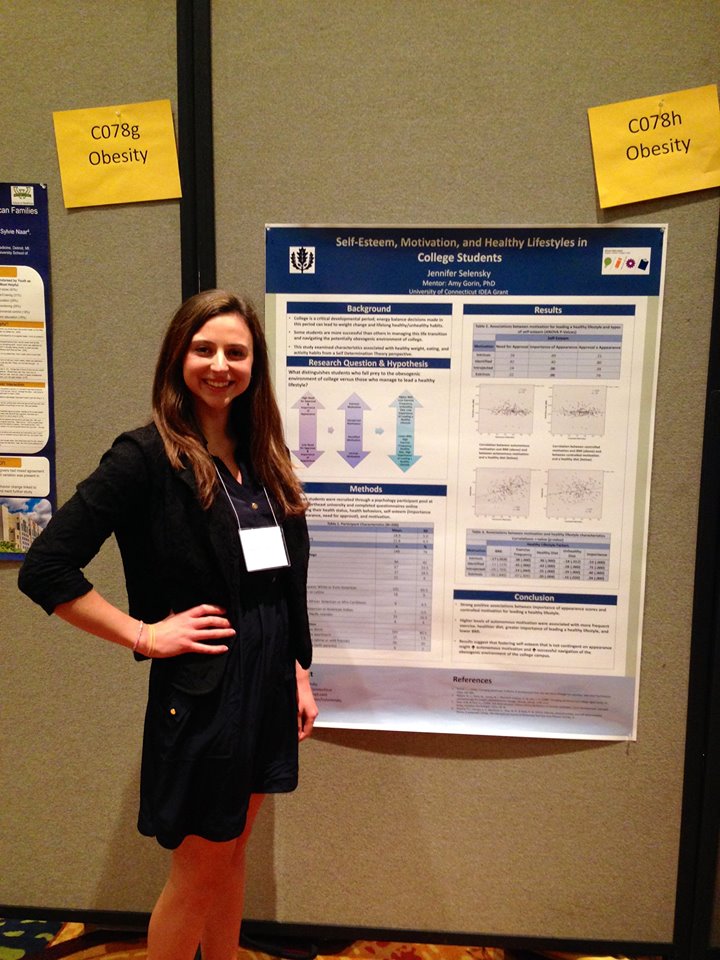
Both Emily and Margaret will be presenting their research at the upcoming Frontiers in Undergraduate Research Poster Exhibition; we hope to see you there on April 10th and 11th.


PUBLICATIONS

UConn IDEA Grant recipient Ari Fischer ’15 (ENG) is the first author on a manuscript related to his grant project:

Fischer, A., Du, S., Valla, J.A., & Bollas, G.M. (2015). The effect of temperature, heating rate, and ZSM-5 catalyst on the product selectivity of the fast pyrolysis of Spent Coffee Grounds. RSC Advances, DOI: 10.1039/C5RA00212E.

Undergraduate students Sai Nagella, Andrea Lugo, and Scott Pierce are co-authors on the following publication from the Angeles-Boza research group in Chemistry:

Daben, M., Libardo, J., Nagella, S., Lugo, A., Pierce, S., & Angeles-Boza, A.M. (2015). Copper-binding tripeptide motif increases potency of the antimicrobial peptide Anoplin via Reactive Oxygen Species generation. Biochemical and Biophysical Research Communications, 456(1), 446-451.

Garrett Fontaine ’16 (CAHNR) is a co-author on the following journal article:

Pryor, R.R., Casa, D.J., Vandermark, L.W., Attanasio, S.M., Fontaine, G.J., & Wafer, A.M. (2015). Athletic training services in public secondary schools: A benchmark study. Journal of Athletic Training, 50(2).

IDEA Grant recipient and Holster Scholar Sarah Mosure ’17 (CLAS) is a co-author on the following publication:

Deady, L.D, Shen, W., Mosure, S.A., Spradling, A.C. & Sun, J. (2015). Matrix Metalloproteinase 2 Is Required for Ovulation and Corpus Luteum Formation in Drosophila. PLOS Genetics, 11(2):e1004989. doi:10.1371/journal.pgen.1004989


EXHIBITIONS

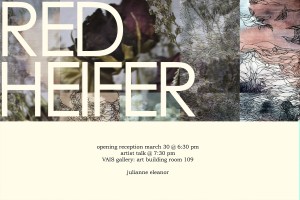
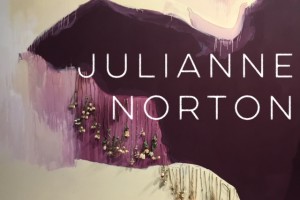
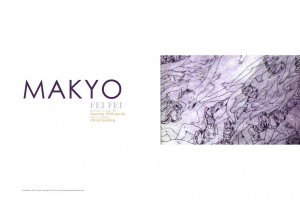
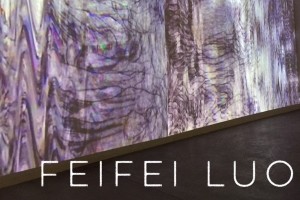
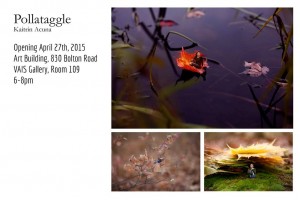
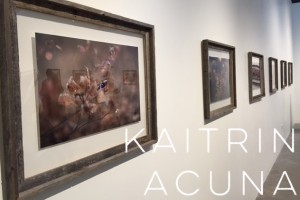
After a series of weather delays, February 2015 kicked off a series of incredible art exhibitions in the VAIS Gallery by the following artists:

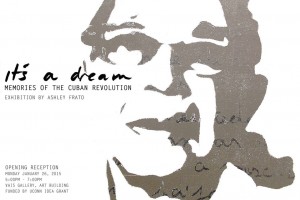
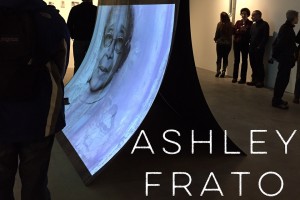
Ashley Frato ’15 (SFA) – UConn IDEA Grant recipient
it’s a dream: Memories of the Cuban Revolution

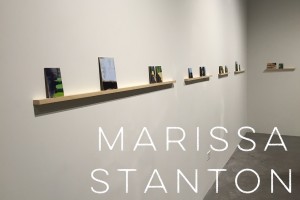
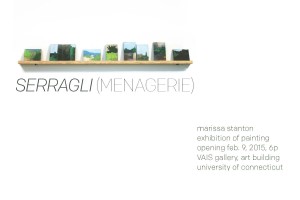
Marissa Stanton ’15 (SFA) – UConn IDEA Grant recipient
Serragli (Menagerie)


PRESENTATIONS

Eastern Athletic Trainers’ Association Meeting & Clinical Symposium – January 9-12, 2015 – Philadelphia, PA

Nicole Taranto ’15 (CAHNR) – OUR Travel Award recipient
Influence of Sport Specialization on Landing Technique in Youth Soccer Athletes

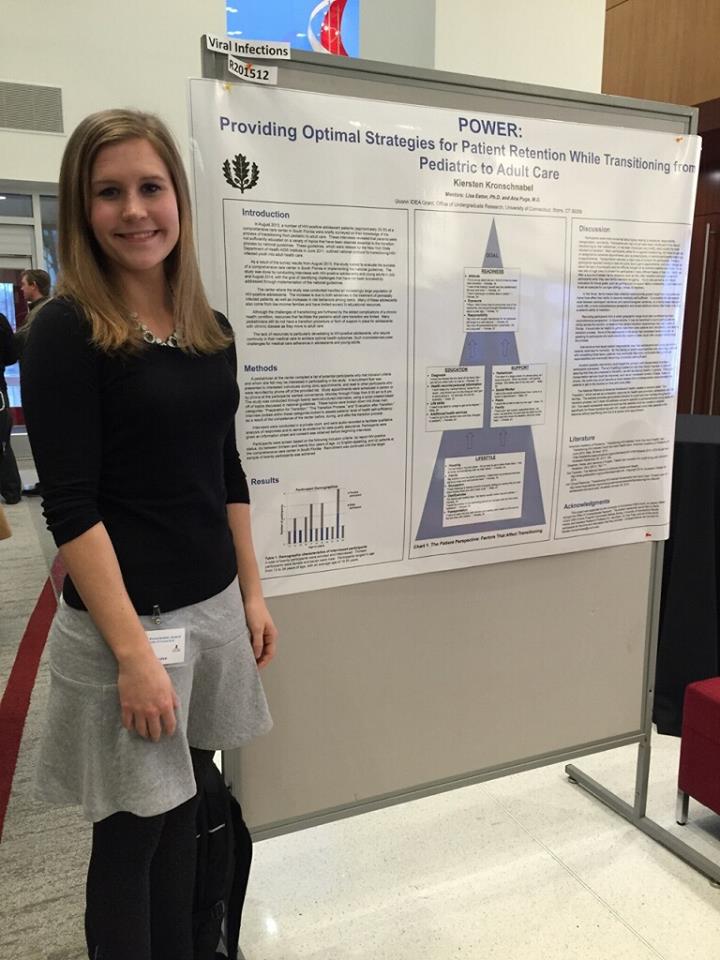
Kiersten Kronschnabel '15 (CLAS) presents her research at the St. Jude/PIDS conference in Memphis, TN.
Kiersten Kronschnabel ’15 (CLAS) presents her research at the St. Jude/PIDS conference in Memphis, TN.
Joint Mathematics Meetings – January 10-13, 2015 – San Antonio, TX

Shaun Benvie ’15 (CLAS) – OUR Travel Award recipient
Partial Metric Spaces: Representation and Classification

Amanda Groccia ’16 (CLAS) – OUR Travel Award recipient
Stochastic Differential Equations

International Stroke Conference – February 11-13, 2015 – Nashville, TN

Kristopher Masilamani ’16 (CLAS) – OUR Travel Award recipient
Strokes in HHT

St. Jude/PIDS Pediatric Infectious Diseases Research Conference – February 20-21, 2015 – Memphis, TN

Kiersten Kronschnabel ’15 (CLAS) – UConn IDEA Grant recipient
POWER: Providing Optimal Strategies for Patient Retention While Transitioning from Pediatric to Adult Care

American Choral Directors Association National Conference – February 25-28, 2015 – Salt Lake City, UT

Nathan Fletcher ’15 (SFA) – OUR Travel Award recipient
O Gracious Light

American Medical Student Association Annual Convention – February 27-28, 2015 – Washington, DC

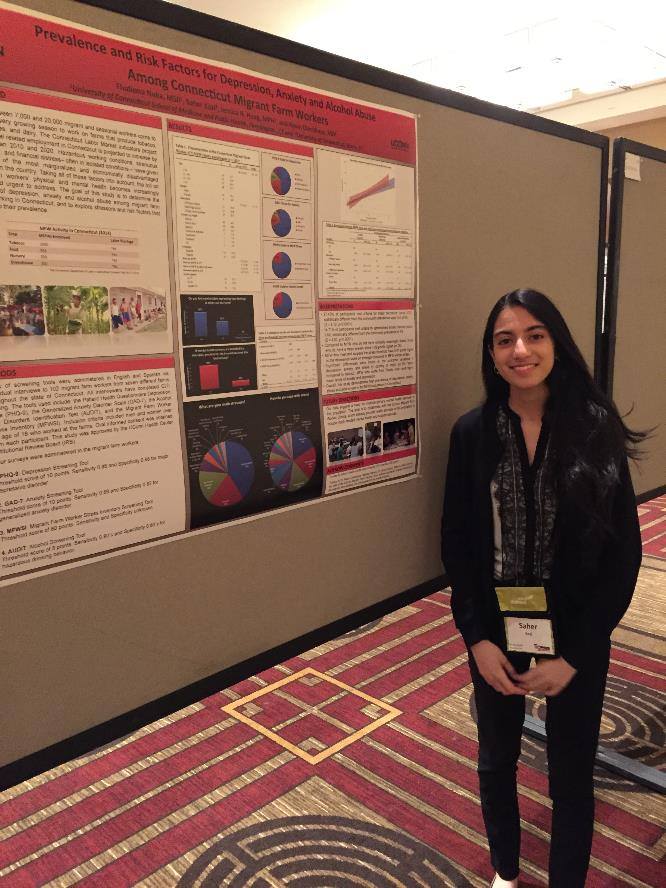
Saher Kazi '16 (CLAS) presents at the American Medical Student Association Annual Convention in Washington, DC.
Saher Kazi ’16 (CLAS) presents at the American Medical Student Association Annual Convention in Washington, DC.
Saher Kazi ’15 (CLAS) – UConn IDEA Grant recipient
Prevalence and Risk Factors for Depression, Anxiety, and Alcohol Abuse Among Connecticut Migrant Farm Workers
Awarded the 2015 People’s Choice Award

56th Annual Drosophila Research Conference – March 4-8, 2015 – Chicago, IL

Sarah Mosure ’17 (CLAS) – UConn IDEA Grant recipient
The Role of Drosophila Adipocyte Secretions in Female Fertility

Eastern Psychological Association Annual Meeting – March 5-7, 2015 – Philadelphia, PA

Lauren Masayda ’17 (CAHNR) – OUR Travel Award recipient
Human Conditioned Place Preferences using a Secondary Reinforcer

Kimberly Valerio ’15 (CLAS) – OUR Travel Award recipient
Language Development and EEG Mu Rhythm in Early Childhood

AIChE Northeast Regional Student Conference – March 7-8, 2015 – Cambridge, MA

Ornella Tempo ’16 (ENG)
In Vitro Evaluation of Calcium Peroxide Release from Composite Poly(lactic-co-glycolic acid) Microsphere Scaffolds

United States Institute for Theatre Technology 55th Annual Conference & Stage Expo – March 18-21, 2015 – Cincinnati, OH

Lindsay Duval ’15 (SFA) – OUR Travel Award recipient
The 25th Annual Putnam County Spelling Bee Scenic Design

Academic and Health Policy Conference on Correctional Health – March 19-20, 2015 – Boston, MA

Alyssa Zabin ’16 (CLAS) – OUR Travel Award recipient
Social Challenges for Correctional Nurses Delivering Healthcare

Society for Research in Child Development Biennial Meeting – March 19-21, 2015 – Philadelphia, PA

Kelly Romano ’15 (CLAS) – OUR Travel Award recipient
Cultural Identity, and Perceived Peer and Parent Outgroup Norms in Relation to Engagement in Cross­group Friendships
The Power of Home: Guardianship Effects for Adolescents in School­-based Substance Use Recovery
Patterns in Impulsivity and Emotion Regulation: A Comparison of Substance Use Recovery Students


From Spring 2014:
Power and Energy Conference at Illinois (PECI) – February 28-March 1, 2014 – Champaign, IL

Manal Tahhan ’15 (ENG)
A Uniform Temperature Test Rig for Thermoelectric Generator Characterization and Testing (paper presentation)


Aaron Rosman, future forest manager or park ranger

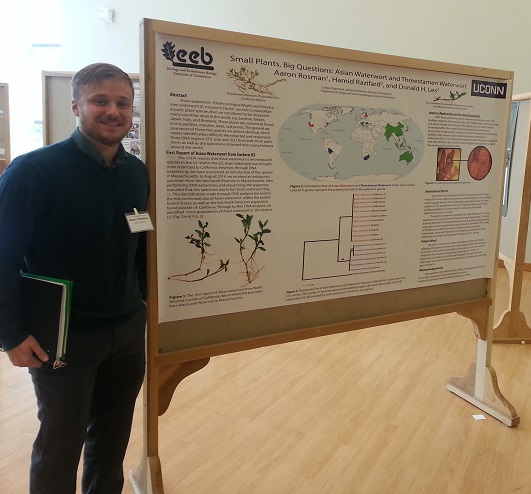
Aaron_Rosman_webAaron Rosman ’16 (CAHNR) is a member of the second cohort of UConn IDEA Grant recipients. Aaron’s research focuses on clarifying the species boundaries between different kinds of waterwort, or Elatine, considered invasive species in many countries. Through DNA sequencing, Aaron and his advisors determined that Elatine ambigua Wight (Asian waterwort) and Elatine triandra Schkuhr (threestamen waterwort) are indeed distinct species. Further, they documented the first confirmed case of E. ambigua in the United States outside of California.


Lauren O’Malley wrote the following profile of Aaron, which was originally published on the College of Agriculture, Health, and Natural Resources’ Naturally@UConn blog:

Aaron Rosman’s green thumb and familiarity with UConn made applying to CAHNR an easy decision. While studying natural resources with a concentration in forestry, Aaron spends his free time conducting research and volunteering on a student farm. Here is what he said in an interview.

What attracted you to UConn? Storrs is my hometown and both of my parents have worked at UConn, so UConn has always been a big part of my life. When I was applying to colleges, I considered some other schools, but nothing appealed to me like UConn. In addition, I knew that UConn began as an agricultural school and was strong in that field. Since I wanted to study natural resources, this definitely helped solidify my decision.

Why did you choose your particular major? I have always loved plants, especially trees. Since I was six years old, I have been playing in the woods. I cannot think of anything better than being able to continue to do this for the rest of my life. That is why I decided to major in natural resources with a concentration in forestry.

Which one of your UConn activities, internships or jobs was the most memorable? Why? My most memorable experience at UConn has been my research. It is an amazing opportunity to be able to conduct research as an undergraduate student, and it is not something that I would have imagined myself doing before coming to UConn. I have always been a “big picture” kind of person, and so it has been awesome to experience the other side of things, studying something as small as plant DNA. I am currently researching two species of aquatic plants called elatine. For part of my research, I conduct DNA-analyses to determine whether to consider these plants the same species or two separate ones. So far, I have found my research very interesting, and I really enjoy it. Continue reading

Chris Kegler, behavioral HIV researcher

Chris_Kegler_webChris Kegler ’15 (CAHNR, CLAS) received a donor-funded Summer Undergraduate Research Fund (SURF) Award for summer 2014 to study the process of self-identifying as HIV-positive. Chris traveled to Atlanta, GA to facilitate focus group discussions about the identification process and is now completing his data analysis.


Lauren O’Malley wrote the following profile of Chris, which was originally published on the College of Agriculture, Health, and Natural Resources’ Naturally@UConn blog:

While at UConn, Chris Kegler immerses himself in research and health promotion. After he graduates this spring with a dual degree in allied health sciences and psychology, Chris wants to delve into the complex and multi-faceted field of HIV/AIDS research. Here is what he said in an interview.

What attracted you to UConn? I grew up in Storrs, and so I have always been familiar with UConn. I knew many students and professors who all had great experiences here. After I received a scholarship, this solidified my decision, and I knew that UConn was the right place for me.

Why did you choose your particular major? I entered UConn as an undecided major who was leaning towards nursing. However, during my freshman year, I started working in a psychology laboratory that dealt with behavioral HIV/AIDS research. I completely fell in love with the work that I was doing, and I decided to choose psychology as my major. Later, I also realized my passion for public health, and I decided to add allied health sciences with a concentration in public health and health promotion as my second major. Now, I am getting a dual degree in allied health and psychology. I am interested in behavioral medicine and interventions for people living with chronic illnesses, and I love that my dual degree allows me to explore this from multiple perspectives.

Which one of your UConn activities, internships or jobs was the most memorable? Why? My most memorable part of UConn is my research. My main research experience has been with the Southeastern HIV/AIDS Research Evaluation (SHARE) Project, through UConn’s Center for Health, Intervention and Prevention (CHIP). Last year, I received a Summer Undergraduate Research Fund (SURF) Award so that I could continue working for the SHARE Project over the summer.

My research looks at the process people go through when they identify as HIV-positive. I study how people diagnosed with a chronic illness, such as HIV, finally come to terms with their condition. This process of self-identification is extremely complex and can take years, and so I investigate what helps or hinders this process and the psychological health outcomes it can have.

This past summer, I went to Atlanta, Georgia, the base of the SHARE Project. While there, I ran three focus groups of eighteen people and facilitated discussions on identifying as HIV-positive. I transcribed the data that I collected, and I hope to have a manuscript ready for publication soon. Continue reading

Andy Bilich, future environmental manager

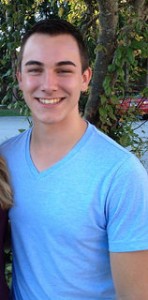
Andy_Bilich_webAndy Bilich ’14 (CAHNR) recently graduated with bachelor’s degrees in Natural Resources and Resource Economics and minors in Political Science and Environmental Economics and Policy. In this essay, he describes his experiences as an undergraduate researcher at the University of Connecticut.

I am originally from San Ramon, California, but I came to the University of Connecticut in the fall of 2010 and will graduate with a BS in Natural Resources and a BS in Resource Economics in May 2014. In my four years at the University of Connecticut I have had the incredible privilege to be an undergraduate researcher. This experience not only prepared me well for the job and graduate school markets, but also gave me the opportunity to travel, present at conferences, and meet and work with professionals in my field.

I got started in the fall of 2011 when I reached out to a Dr. Mark Boyer, the professor of my global environmental politics class, with some questions that had come up in my summer work. I spent the summer as an energy policy analyst intern at Energy Commercialization LLC working on presentations on renewable energy deployment in the Middle East and India and the creation of the California carbon trading market. My professor met with me and we talked about the research and after our discussion, he offered me a research assistantship on his new project. This ongoing research project is looking at local governance for climate adaptation policies. Along with a PhD student, I have been gathering and analyzing climate change adaptation policy and initiatives data for 169 Connecticut townships, which Dr. Boyer is using to write a book about local governance and the issue of climate change. The data will also be published into a database that will allow users to search for specific types of policies and initiatives undertaken by towns with specific demographic, geographic, and economic characteristics. Hopefully this database can help to positively influence future environmental and climate change governance.

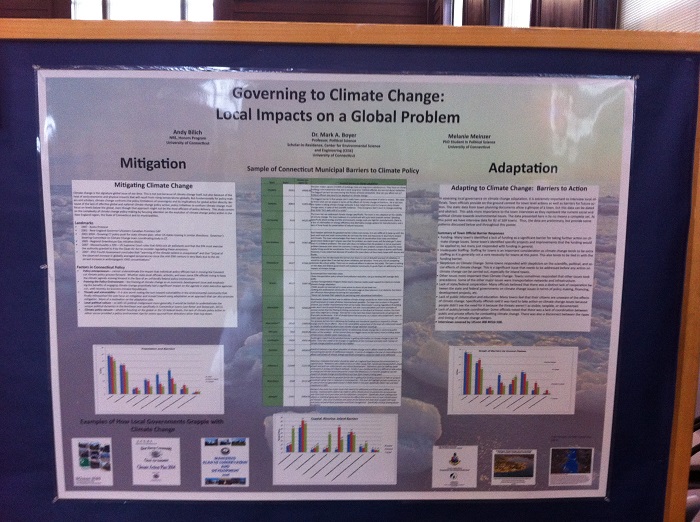
Bilich_Frontiers_Poster_webDuring this project, I applied for and was awarded a Social Sciences, Humanities, and Arts Research Experience Award (SHARE). This award provided me with funding to continue the research that I was conducting with Professor Boyer, but more importantly it gave me the ability to attend the Frontiers in Undergraduate Research Poster Exhibition as a student researcher. For this event I prepared a poster summarizing some of the preliminary results and trends of the interviews of town policy officials that I helped conduct. This was an awesome opportunity because it allowed me to practice presentation skills and gain a better understanding of the data I was working on and some of the questions that people had about it. This was valuable and practical experience that I built on for future presentations.

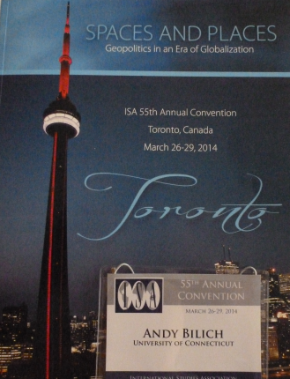
Bilich_programIn the spring of my senior year I received a Travel Award from the Office of Undergraduate Research which helped me to travel to Toronto for the 55th Annual International Studies Association Conference on Geopolitics and Globalization. As part of this amazing trip I presented some of our research findings on policy drivers for climate adaptation policy in Connecticut towns. I also met professors and researchers from around the world and attended panel discussions on water security, energy deployment and security, environmental justice, climate change, and geoengineering.

It is clear to me that my experience in undergraduate research was the most important and formative thing I did while at the University of Connecticut. As a graduating senior, there is no better piece of advice I can give to current and future UConn students than to get involved with research. The research experience that I have had has given me all of the skills and confidence I need to succeed in the next chapter of my life. This fall I will be building upon this foundation as I pursue a Master’s of Environmental Management in Energy and Climate Resources at the Bren School of Environmental Management at the University of California Santa Barbara.

Carl D’Oleo-Lundgren, future Foreign Service Officer

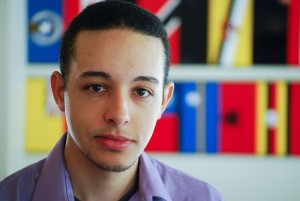
Carl_DOleo-Lundgren_webCarl D’Oleo-Lundgren ’14 (CLAS), an individualized major in international relations, aspires to earn a master’s degree and join the Foreign Service. As part of his undergraduate studies, Carl collaborated on a SHARE Award project with Dr. Prakash Kashwan, a faculty member in the Department of Political Science. The SHARE Award supports research apprenticeships for students majoring in the social sciences, humanities, and arts to enable these students to explore their research interests and build inquiry skills. A summary of this particular SHARE project follows.
Could a Union Save this Planet?
Coding and Analyzing “Sustainable Development”: Perspectives of IUCN Members

The project sought to understand the perspectives of the members of the International Union for the Conservation of Nature (IUCN), with these specific research questions:

  • How does international relations theory compare with practice?
  • How do expectations compare with results?
  • How promising are results of IUCN projects?

To answer these questions, they:

  • Analyzed IUCN records
  • Examined IUCN meeting minutes in depth
  • Coded trends for systematic analysis

In addition, they examined the United Nations Framework Convention on Climate Change (UNFCCC), seeking to understand the role of growing civil society participation in international climate change negotiations. In particular, they were interested in the role of networking NGOs.

To characterize these roles, they:

  • Researched and indexed the history, goals, values, and methods of “Climate Justice Now!” and the Climate Change Network
  • Interviewed officials from each NGO over Skype to ascertain civil society perspectives on:
    • The civil society-UNFCCC relationship
    • Civil society perspectives on their work
    • The future of international climate change action

Ultimately, they concluded that the future of international climate change action is unclear. In the wake of messy negotiations in Copenhagen, the UNFCCC will continue to restrict civil society participation in the short to medium term.

Learn more about Carl’s undergraduate career, including a range of research experiences, in this UConn Today profile.

Rebecca D’Angelo, future historian

By Samantha Ruggiero CLAS ’14, originally published March 24, 2014 in CLAS News.

History and Anthropology student Rebecca D’Angelo, CLAS ’14.

While still in high school, Rebecca D’Angelo was working in the Research Department at the Mashantucket Pequot Museum when she stumbled across an unusual detail in a book about New England whalers. She read that these whalers were apparently using using schooners for their journeys to the sub-Antarctic islands between Australia and Antarctica.

“I thought that was odd because I know that they wouldn’t typically use schooners to whale,” says D’Angelo, currently a senior history and anthropology double major, referring to the small size of schooner boats. “So I looked into it and turns out they were actually catching seals.”

As a native to the Connecticut shoreline, D’Angelo paired her passion for maritime culture with a major in history and anthropology so that she could enrich her understanding of the world’s evolving social, political and environmental patterns.

“We talk about history all the time in the conversations we’re having now about politics, culture, and life,” says D’Angelo. “If you know history, you can identify when public figures are invoking it correctly, and when they are invoking it incorrectly. Understanding history ultimately makes you a better consumer of culture.” Continue reading

Krisela Karaja, future editor

By Samantha Ruggiero CLAS ’14, originally published May 19, 2014 in CLAS News.

Fulbright scholar Krisela Karaja (CLAS ’14) will return to Albania to conduct research.

If there’s one word that translates UConn senior Krisela Karaja’s story into words anyone can understand – it would probably be “translation.”

Literary translation, says Karaja, is a challenging endeavor because the translator carries the responsibility of not only delivering an author’s message, but also interpreting the cultural background of a word or phrase.

“I like the process of translating poetry because there are so many ways to tackle it,” says Karaja. “There’s no such thing as a literal translation because an expression in Albanian might not have the same cultural baggage if it were just translated word-for-word in English.”

Karaja, a double major in English and Spanish, has spent much of her undergraduate career bridging the gap between language and literature by composing English translations of poems and academic essays originally in written Albanian or Spanish. Born in Albania, Karaja moved to the United States when she was two years old and is a native Albanian speaker. She is also fluent in Spanish.

“My interest in language and literature stems from a natural desire to integrate my knowledge of the Spanish, English and Albanian languages,” says Karaja. “I’ll be reading a really great text in Albanian that isn’t very well-known in English, and think, ‘Wouldn’t it be great if I could translate and share this?’” Continue reading

Ragini Phansalkar, future physician scientist

By Samantha Ruggiero CLAS ’14, originally published May 19, 2014 in CLAS News.

Ragini Phansalkar will pursue her MD and PhD at Stanford in the fall of 2014.

Ragini Phansalkar will pursue her MD and PhD at Stanford in the fall of 2014.

For senior Ragini Phansalkar, bridging the gap between different fields of research through her dual degree in computer science and biology has been like solving an exciting puzzle – and one that has taken her around the world.

“I think a lot of the advancements that are going to be needed to overcome today’s medical challenges are going to be achieved through interdisciplinary collaboration,” says Phansalkar. “Biomedical engineering is interdisciplinary, but I liked having the freedom to choose for myself the aspects of engineering and biology that I wanted to integrate, specifically bioinformatics.”

Phansalkar has spent the past four years at UConn combining computational science with biological sciences by working in the labs of Assistant Professor Daniel Schwartz of the Physiology and Neurobiology Department and Assistant Professor Barbara Mellone of the Molecular Cell Biology Department. Phansalkar’s interdisciplinary research experiences at UConn have developed her interest in pursing the medical field, and earned her acceptance to the MD/Ph.D program at Stanford University. Continue reading

• Launch of the Mentorship Excellence Awards

Chemical engineering student Derek Chhiv '14, right, discusses with Professor Anson Ma his group’s prototype for an artificial kidney.
Chemical engineering student Derek Chhiv ’14, right, discusses with Professor Anson Ma his group’s prototype for an artificial kidney.

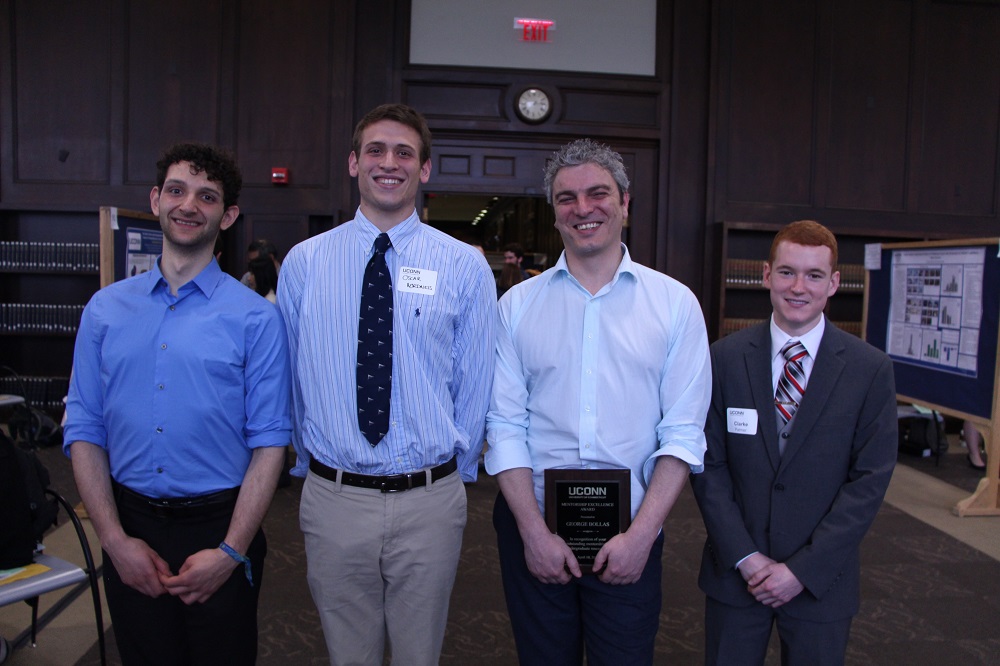
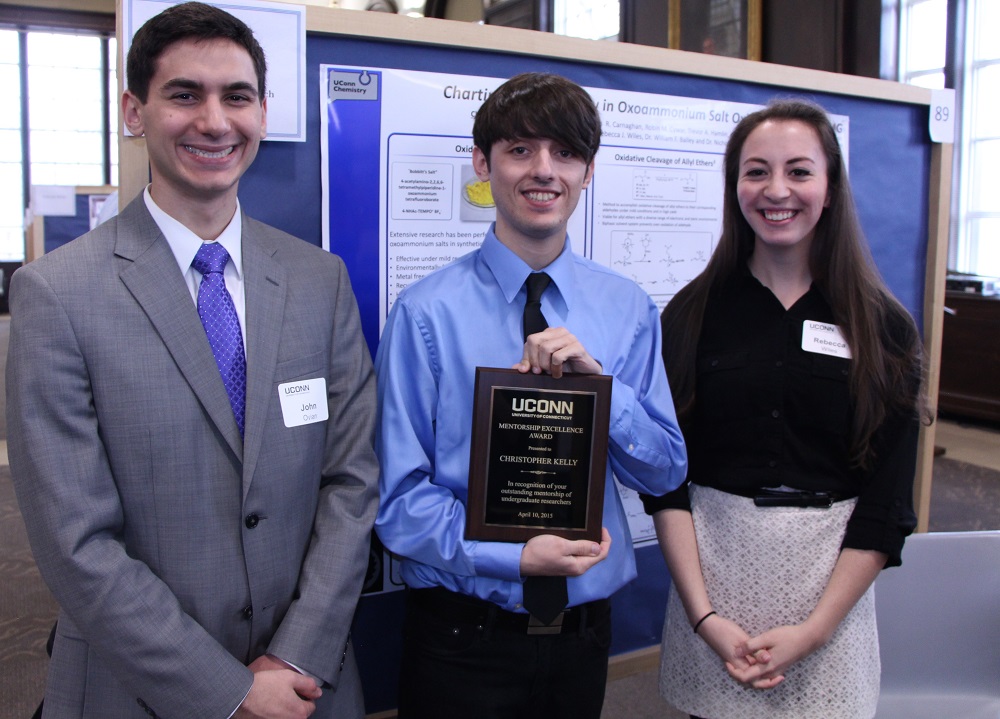
In recognition of the critically important role that mentors play in supporting undergraduate research and creative activity, the Office of Undergraduate Research is pleased to introduce a new annual award program for outstanding mentorship. This program was developed in collaboration with the OUR Peer Research Ambassadors, undergraduates engaged in research and creative scholarship across the disciplines who help promote undergraduate inquiry at the university.

The Mentorship Excellence Awards will be presented each year to one faculty recipient and one graduate student recipient. A committee of undergraduate students will select the award recipients, who will be formally presented with their awards in April during the Frontiers in Undergraduate Research Poster Exhibition.

Students are encouraged to nominate their outstanding mentors before the close of the nomination period on Wednesday, March 11, 2015. Learn more and access the nomination forms on the Mentorship Excellence Awards webpage.