Web cookies (also called HTTP cookies, browser cookies, or simply cookies) are small pieces of data that websites store on your device (computer, phone, etc.) through your web browser. They are used to remember information about you and your interactions with the site.
Purpose of Cookies:
Session Management:
Keeping you logged in
Remembering items in a shopping cart
Saving language or theme preferences
Personalization:
Tailoring content or ads based on your previous activity
Tracking & Analytics:
Monitoring browsing behavior for analytics or marketing purposes
Types of Cookies:
Session Cookies:
Temporary; deleted when you close your browser
Used for things like keeping you logged in during a single session
Persistent Cookies:
Stored on your device until they expire or are manually deleted
Used for remembering login credentials, settings, etc.
First-Party Cookies:
Set by the website you're visiting directly
Third-Party Cookies:
Set by other domains (usually advertisers) embedded in the website
Commonly used for tracking across multiple sites
Authentication cookies are a special type of web cookie used to identify and verify a user after they log in to a website or web application.
What They Do:
Once you log in to a site, the server creates an authentication cookie and sends it to your browser. This cookie:
Proves to the website that you're logged in
Prevents you from having to log in again on every page you visit
Can persist across sessions if you select "Remember me"
What's Inside an Authentication Cookie?
Typically, it contains:
A unique session ID (not your actual password)
Optional metadata (e.g., expiration time, security flags)
Analytics cookies are cookies used to collect data about how visitors interact with a website. Their primary purpose is to help website owners understand and improve user experience by analyzing things like:
How users navigate the site
Which pages are most/least visited
How long users stay on each page
What device, browser, or location the user is from
What They Track:
Some examples of data analytics cookies may collect:
Page views and time spent on pages
Click paths (how users move from page to page)
Bounce rate (users who leave without interacting)
User demographics (location, language, device)
Referring websites (how users arrived at the site)
Here’s how you can disable cookies in common browsers:
1. Google Chrome
Open Chrome and click the three vertical dots in the top-right corner.
Go to Settings > Privacy and security > Cookies and other site data.
Choose your preferred option:
Block all cookies (not recommended, can break most websites).
Block third-party cookies (can block ads and tracking cookies).
2. Mozilla Firefox
Open Firefox and click the three horizontal lines in the top-right corner.
Go to Settings > Privacy & Security.
Under the Enhanced Tracking Protection section, choose Strict to block most cookies or Custom to manually choose which cookies to block.
3. Safari
Open Safari and click Safari in the top-left corner of the screen.
Go to Preferences > Privacy.
Check Block all cookies to stop all cookies, or select options to block third-party cookies.
4. Microsoft Edge
Open Edge and click the three horizontal dots in the top-right corner.
Go to Settings > Privacy, search, and services > Cookies and site permissions.
Select your cookie settings from there, including blocking all cookies or blocking third-party cookies.
5. On Mobile (iOS/Android)
For Safari on iOS: Go to Settings > Safari > Privacy & Security > Block All Cookies.
For Chrome on Android: Open the app, tap the three dots, go to Settings > Privacy and security > Cookies.
Be Aware:
Disabling cookies can make your online experience more difficult. Some websites may not load properly, or you may be logged out frequently. Also, certain features may not work as expected.
So you’ve heard of research, and you know that it’s happening at UConn. Maybe you have friends that work in labs, your professors have mentioned their work in lectures, or you stopped by to see the poster presentations at Frontiers in Undergraduate Research. Whatever your exposure, research sounds exciting and important, and now you want to get involved, too! Continue reading →
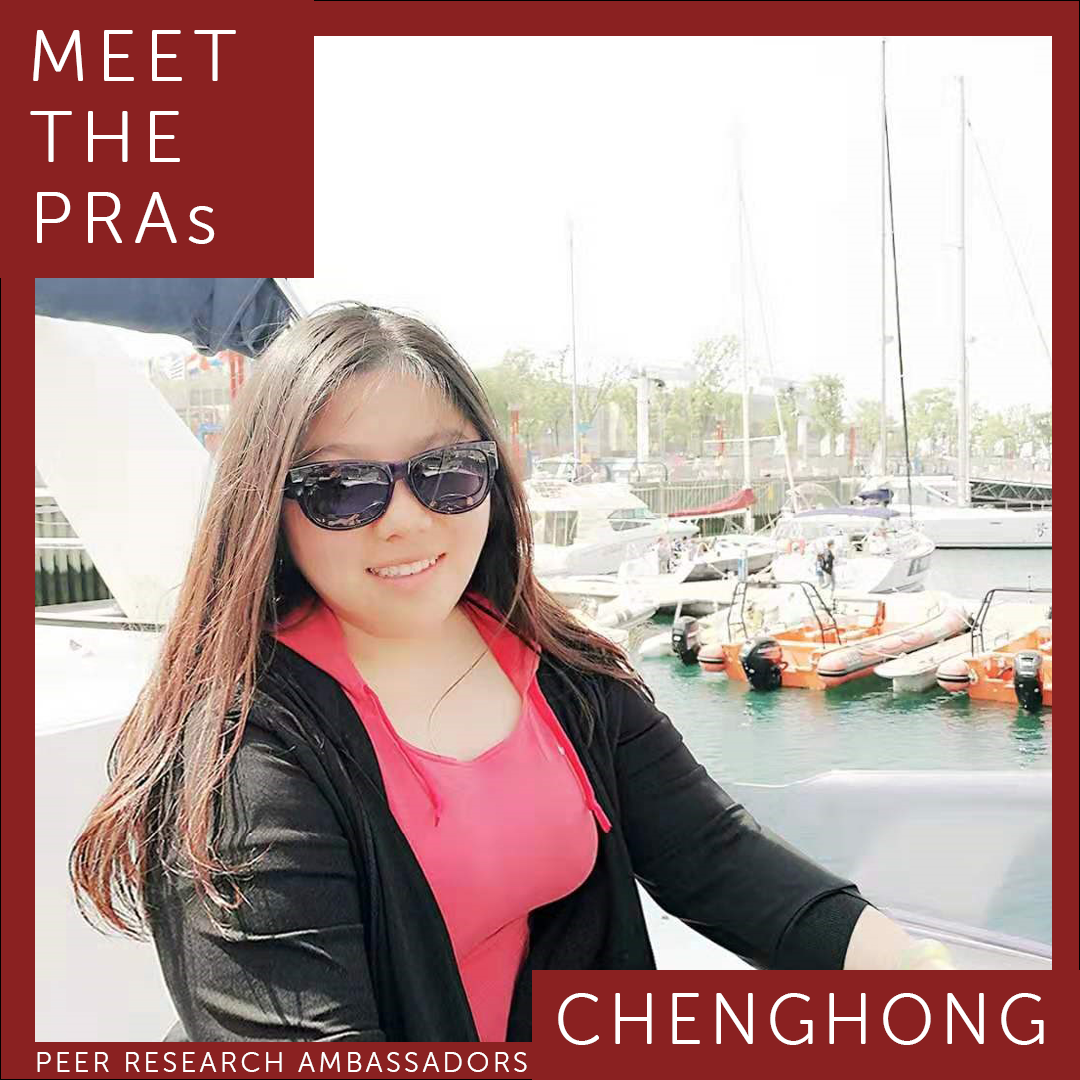
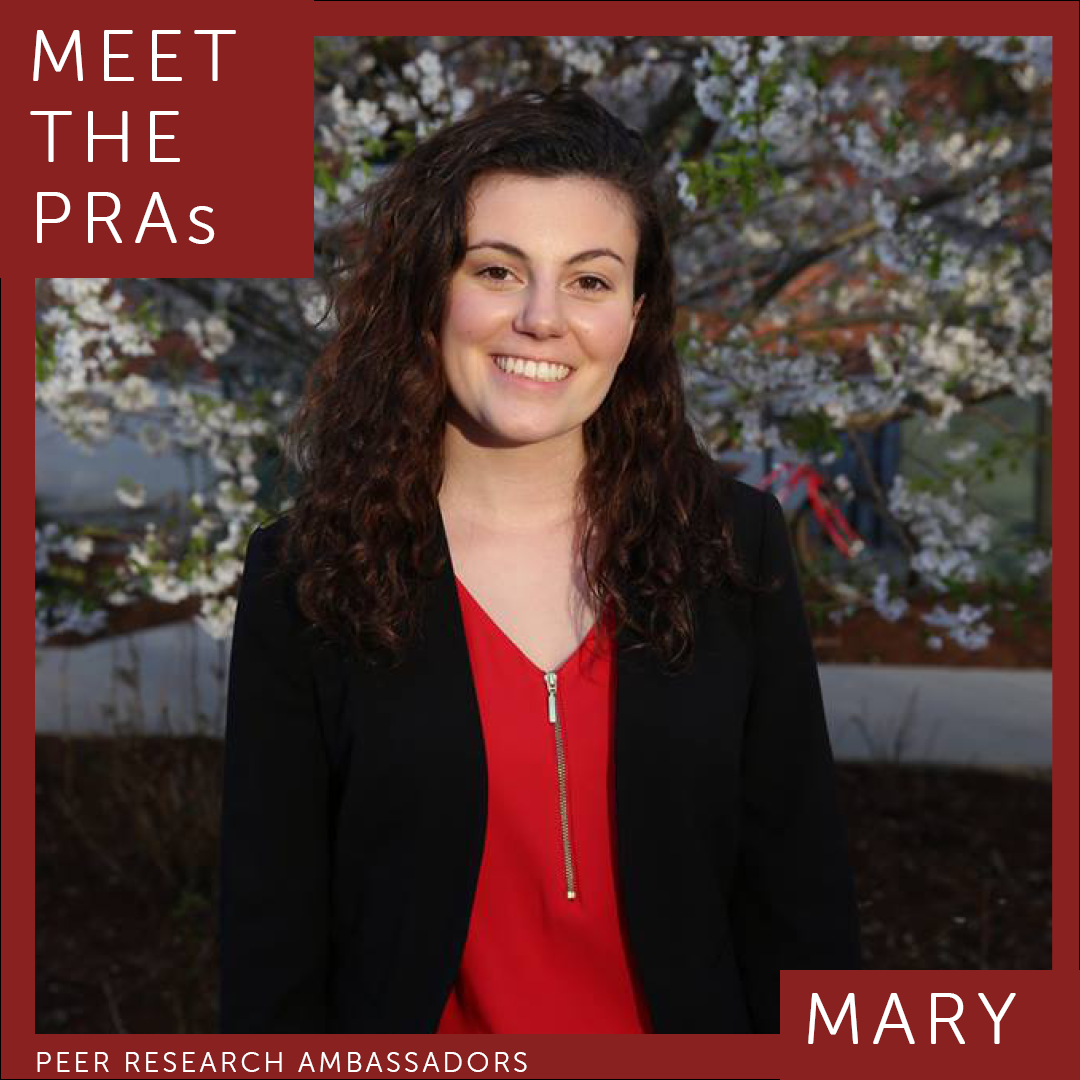
Meet Mary Vlamis ’20, an OUR Peer Research Ambassador (PRA) double majoring in Economics and Political Science.
What is the focus of your research?
I am a part of two current research projects. One focuses on gender and ethnic discrimination in the Peruvian labor market, the other focuses on tort reform and public opinion.
Why did you get involved in research activity?
I have always been a curious person, and I have a genuine interest in most of the classes I take. Working hard and showing interest in my classes lead professors to approach me to assist them in their projects. Research is a long and difficult process, but my love for the topics I research helps me to stay focused!
What advice would you give to incoming freshmen?
Put yourself out there! Ask questions in class if something interests you, or go to office hours and talk with faculty on their research. This is the only time in your life you will be surrounded by people who know so much about things you elect to study. Take advantage of it!
What do you enjoy the most about participating in research?
I most enjoy figuring out a creative way to solve a problem. In social science research, it is often difficult to measure your subject of interest. You have to think outside of the box to construct a project that properly analyzes what you intend.
Describe the impact your research experience has had on you.
My research experience has taught me to be patient with myself and be patient with the process. In this, I have learned that I am capable of much more than I once believed. My research experience has also added a new dimension to my interest in public policy.
Imagine this, you’ve written an email to a professor whose research project is the one you know you want to join; you’ve read it over twice, and it states everything you need to include. But now you’re hesitating to send it because a million different possibilities are running through your head. You start second-guessing your qualifications and your reason for sending this email in the first place and it takes a while to muster the courage to hit send (or even worse, you never hit send!). Continue reading →
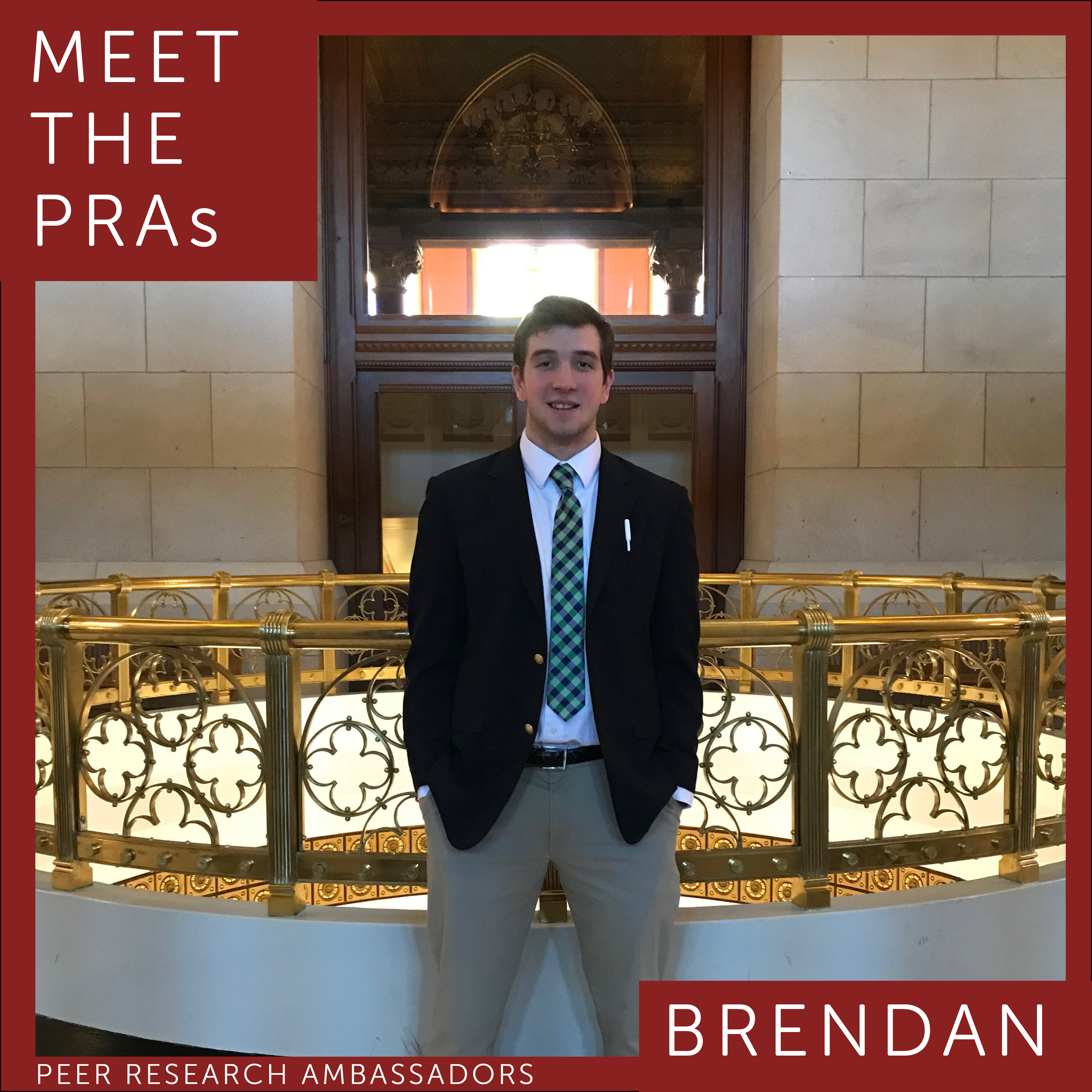
Meet Brendan Hogan ’21, an OUR Peer Research Ambassador (PRA) majoring in Political Science, Psychology, and Philosophy.
What is the focus of your research?
In my Freshman and Sophomore years, I participated in research that revolved around the influence of intellectual humility upon public discourse. Essentially, when someone engages in a conversation with another person over a political issue in today’s political climate, the conversation tends to go into one of two directions. When a conversation begins, it can either end with both parties either agreeing or both parties disagreeing. When both parties disagree over a topic, a hostile conversation usually is created where both sides become angry and attempt to force their opinion on the other. Thus, the researchers I worked with were trying to create a third outcome where parties instead agreed to disagree. With this, an attempt was made to have both sides acknowledge the facts of the other side and ultimately end the conversation with a humble realization that we are all trying to find a solution. Thus, the overall goals were to promote this idea that we are all attempting to solve the issues of today and need to work together as a society to compromise.
Currently, I am beginning to participate on a project that will examine the role of race and the far-right in the making of the US-led postwar ‘liberal international order’. In particular, through theoretically-informed empirical analysis, the manuscript that I will be helping edit will show how the far-right contributed to the crystallization of a distinct racialized anticommunist politics at home crucial to US power-projection abroad.
In the future, I hopefully will be able to carry out a research project where I can intertwine my love for photography with this current project I am working on. I may look towards the area of political journalism to find a more solidified direction for my project.
Why did you get involved in research?
When I was provided my initial opportunity to carry out research, I saw it as a chance to become exposed to a real life research project. From that opportunity, I hoped that I would be able to take what I learned and then carry out my own project. While the research experiment was an important aspect of the project, it was also pertinent that I became accustomed to the behind-the-scenes management and organization of a project.
In addition, I chose all these research opportunities as I felt a desire to understand these areas of political science and attempt to figure out how researchers are trying to solve the political issues of today. Without this desire to take part in these specific projects, I would not have gotten involved as the work and research may not have been enjoyable.
What advice would you give to incoming freshmen?
When you are jumping into college, it is easy to sign up for and commit to many extracurricular activities. If I could give you any advice, it would be to try to find a few things that you love the most and stay committed to those activities throughout your undergraduate years. Work to improve those clubs, positions, and opportunities, but also look to find a balance between your own personal life and college career. The next few years will be some of the most enjoyable years of your life, so don’t forget to take the time to not only build your resume, but to grow as an individual and find yourself. If you can do this, you will be able to graduate with an idea of what is important to you and what you want to do after your time at UConn.
Describe the impact your research experience has had on you.
After I finished my research around intellectual humility, I found that I have begun to approach arguments from the perspectives of both sides. This concept has really shed light on the issue of political polarization for me and has shown me that it is important to work towards compromises. With this real world application of research, this experience has left a lasting impact on my outlook in my everyday interactions with others.
What are your plans after graduation? How has involvement in research influenced your plans and/or prepared you for the future?
After I graduate, I hope to go to law school and eventually practice law in Connecticut, D.C., or New York. From this research, it has inspired me to try to see both sides in debates and conversations so that the facts of the argument can first be examined. From there, it has shown to me that no one side is necessarily always right, but rather both sides should try to meet in the middle and overcome any divides. Without people attempting to reach a middle ground, our polarized political climate will only worsen in the future. Thus, as my previous research was applicable to my area of studies, I have found that it has allowed me to grow as a political scientist, a potential lawyer, and even as an individual.
Meet Brendan Hogan ’21, an OUR Peer Research Ambassador (PRA) majoring in Political Science, Psychology, and Philosophy.
What is the focus of your research?
In my Freshman and Sophomore years, I participated in research that revolved around the influence of intellectual humility upon public discourse. Essentially, when someone engages in a conversation with another person over a political issue in today’s political climate, the conversation tends to go into one of two directions. When a conversation begins, it can either end with both parties either agreeing or both parties disagreeing. When both parties disagree over a topic, a hostile conversation usually is created where both sides become angry and attempt to force their opinion on the other. Thus, the researchers I worked with were trying to create a third outcome where parties instead agreed to disagree. With this, an attempt was made to have both sides acknowledge the facts of the other side and ultimately end the conversation with a humble realization that we are all trying to find a solution. Thus, the overall goals were to promote this idea that we are all attempting to solve the issues of today and need to work together as a society to compromise.
Currently, I am beginning to participate on a project that will examine the role of race and the far-right in the making of the US-led postwar ‘liberal international order’. In particular, through theoretically-informed empirical analysis, the manuscript that I will be helping edit will show how the far-right contributed to the crystallization of a distinct racialized anticommunist politics at home crucial to US power-projection abroad.
In the future, I hopefully will be able to carry out a research project where I can intertwine my love for photography with this current project I am working on. I may look towards the area of political journalism to find a more solidified direction for my project.
Why did you get involved in research?
When I was provided my initial opportunity to carry out research, I saw it as a chance to become exposed to a real life research project. From that opportunity, I hoped that I would be able to take what I learned and then carry out my own project. While the research experiment was an important aspect of the project, it was also pertinent that I became accustomed to the behind-the-scenes management and organization of a project.
In addition, I chose all these research opportunities as I felt a desire to understand these areas of political science and attempt to figure out how researchers are trying to solve the political issues of today. Without this desire to take part in these specific projects, I would not have gotten involved as the work and research may not have been enjoyable.
What advice would you give to incoming freshmen?
When you are jumping into college, it is easy to sign up for and commit to many extracurricular activities. If I could give you any advice, it would be to try to find a few things that you love the most and stay committed to those activities throughout your undergraduate years. Work to improve those clubs, positions, and opportunities, but also look to find a balance between your own personal life and college career. The next few years will be some of the most enjoyable years of your life, so don’t forget to take the time to not only build your resume, but to grow as an individual and find yourself. If you can do this, you will be able to graduate with an idea of what is important to you and what you want to do after your time at UConn.
Describe the impact your research experience has had on you.
After I finished my research around intellectual humility, I found that I have begun to approach arguments from the perspectives of both sides. This concept has really shed light on the issue of political polarization for me and has shown me that it is important to work towards compromises. With this real world application of research, this experience has left a lasting impact on my outlook in my everyday interactions with others.
What are your plans after graduation? How has involvement in research influenced your plans and/or prepared you for the future?
After I graduate, I hope to go to law school and eventually practice law in Connecticut, D.C., or New York. From this research, it has inspired me to try to see both sides in debates and conversations so that the facts of the argument can first be examined. From there, it has shown to me that no one side is necessarily always right, but rather both sides should try to meet in the middle and overcome any divides. Without people attempting to reach a middle ground, our polarized political climate will only worsen in the future. Thus, as my previous research was applicable to my area of studies, I have found that it has allowed me to grow as a political scientist, a potential lawyer, and even as an individual.
Are you considering graduate school? The GRE (Graduate Record Examination) might be just the test you are looking for! There is a wealth of detailed information available online about the GRE, and although this is helpful it can also be overwhelming. Through this post, I hope to give a brief overview of the exam and discuss my experience. Continue reading →
Meet Kavita Rana ’20, an OUR Peer Research Ambassador (PRA) majoring in Molecular & Cell Biology and minoring in Psychological Sciences.
What is the focus of your research?
The focus of our research is on parasitic organisms and how to hinder growth and replication in order to avoid disease on a macroscopic level.
Why did you get involved in research?
I became involved in research because I thought it was interesting to see science applied in real life.
What advice would you give to incoming freshmen?
I would tell freshman to get involved in research early in their college career so they can start getting a better idea of the field they want to go into. Another benefit of starting early is that you can become more independent by the time you are an upperclassman.
What is your greatest accomplishment so far?
My greatest accomplishment in research was being an author on a publication. I was especially happy to contribute to the project in a major way. It really opened my eyes to research and the field, which was good for me as a premed student. I’m always learning about physiological processes, and it is great to see the things I’ve learned in class be applied in the real world.
What are your plans after graduation? How has involvement in research influenced your plans and/or prepared you for the future?
My plan after graduation is to attend medical school. Being involved in research has exposed me to a microscopic level of medicine that I didn’t know existed. For example, I was researching the relationship between sickle cell diseased patients and bone health. I learned about both of these topics, but I had not thought to investigate the relationship between them.
Getting into research is hard enough but for social science students there is an added level of effort: combating the myths and misconceptions of doing social science research. Here are some common myths and the real truth behind them: Continue reading →
Meet Ian Sands ’20, an OUR Peer Research Ambassador (PRA) majoring in Biomedical Engineering.
What is the focus of your research?
Using nanoparticles as vehicles for drug delivery into biological tissue that is normally difficult to penetrate. I work with chondrocytes, neurons, astrocytes, and microglial cells with the hopes of delivering nucleic acids at a high penetration efficiency.
Why did you get involved in research?
I began research in order to become more involved with the particular interests I had within biomedical engineering. As an undergraduate studying within a broad major with many avenues of specialty, I was able to take time to settle on a topic that truly interested me which just so happened to be tissue engineering via nanoparticle drug therapy.
What advice would you give to incoming freshmen?
My advice to freshman would be to remain unbiased towards opportunities that come their way. Speaking academically, keep an open mind to subjects and research opportunities that may arise because you never know the types of collaborations and perspectives you can gain through the various fields of study.
Describe the impact your research experience has had on you.
Research as an undergraduate has helped me stay focused and consistent, especially as a senior that is nearing the end of my four years at UConn. Any worry that I had about losing motivation as time goes on has disappeared completely and I am continuously motivated by the results, both retrospective and prospective, that I produce on a week-to-week basis.
What are your plans after graduation? How has involvement in research influenced your plans and/or prepared you for the future?
My post-graduate plans involve pursuing my Ph.D in biomedical engineering with a specific focus in nanomedicine and/or drug therapy. There is increasing demand in the research community with respects to nanomedicine in cancer treatment and tissue regeneration applications and I would like to take my skill set and perspective into a lab that focuses on some of these topics. My experience as an undergraduate researcher will be invaluable especially due to the many publications and presentations that I will have authorship on. There are also multiple opportunities for me to present at both Frontiers conferences and even a few international ones which will further assist me in my outreach and connections process.
Kathryn Allen ’19 (CLAS) earned her bachelor’s degree this spring and shares the value of an unexpected academic “detour” in this essay.
When I first entered UConn, I had a plan. Like many eager incoming freshmen, I would major in Biology; take classes that follow the pre-med track, hopefully gain some research experience, and ultimately apply to medical school the summer of my junior year. However, also true of many freshmen entering the academia environment, that plan would soon change over my time at UConn.
After enjoying a few courses that were not strictly biology focused, I began thinking about a major that would provide both science-oriented subjects and those focused on the humanities. During my sophomore year, I changed my major to Cognitive Science, an interdisciplinary major, and began exploring various subjects including linguistics, psychology, and speech language and hearing science. My new major, while quite small, was a perfect medium that allowed me to enroll in a wider array of unique courses, while still having adequate time to fulfill the pre-med requirements. By the end of my sophomore year, I started to recognize my interest in topics like child development, language, and neurological disorders and function.
At this point in my undergraduate career, I began my search for a lab that would allow me to complete my thesis. Like many uncertain undergraduate students, I had no idea where to begin my search. During my junior year, I reached out to a professor in the psychology department, met with them about their interests and area of research, and eventually began working in their lab. Throughout the semester, I gained valuable experience running clinical trials, but realized that I wished to conduct my thesis on a different topic.
Towards the end of my junior year, my academic advisor, Dr. Naigles mentioned that she had a spot opening up in her lab, as well as a project she thought I might be interested in. I had taken two classes with her during my time at UConn and she proposed a project that had both language and neural components; two areas I was particularly interested in. Knowing that I was behind on my project compared to my classmates, I began doing preliminary work on it during the summer before senior year. I worked from home transcribing audio of story narratives told by both children with Autism Spectrum Disorder and typically developing children. In the fall, I had the opportunity to accompany our graduate student to a home to collect additional story narratives. A graduate student in our lab had previously collected the Auditory Brainstem Response data with an EEG and my project focused on the relationship between story narratives and internal brainstem response for children with Autism Spectrum Disorder (ASD) and typically developing (TD) children.
As I was transcribing the data, I realized noticeable differences between the narratives derived from the children diagnosed with ASD and those from the TD children; however, I could not initially explain why. I proposed to Dr. Naigles a method for assessing if these differences were significant. I generated a document featuring story narrative transcripts from the children, administered the transcripts to peers and had them rate the stories based on how well they understood them. Dr. Naigles was supportive and encouraging of the creative component of the project and suggested that we include it.
After transcription was performed during the summer, I spent the fall administering the transcripts to peers and analyzing the data. Prior to this project, I had never used SPSS besides minimal exposure in STAT1000Q and was not entirely sure what I was doing. However, as the months progressed, the data analysis became easier and easier. By the end of the project, I was able to run correlations, identify whether to run a paired or unpaired t-test, interpret statistical significance, and
Kathryn Allen ’19 (CLAS)
more.
During my spring semester I compiled the data, started writing my thesis, and with the encouragement of Dr. Naigles, I applied to present my findings at an international conference held in Montreal, CA. The aid from the OUR grant made my attendance at the conference possible. I had few expectations of what it meant to present a poster at a conference, let alone attend one, but when I arrived, I was pleasantly surprised at what I found. I hope to attend medical school in the future and have interests ranging across disciplines. During the conference, I was able to attend talks focused on an array of different topics, such as clinical treatments, genetic predispositions to Autism Spectrum Disorders, and global disparities within the medical field. They were fascinating and educating. My poster presentation was scheduled for the second day I was there. I am generally not nervous when it comes to talking to new people, but when I knew I would be presenting my findings to experts in the field, I clammed up. Dr. Naigles helped me practice how to present the poster, which calmed my nerves significantly. Gradually, individuals approached my poster and began asking questions. As time went on, I became less and less nervous and it felt natural to tell others about the findings of my research.
The aid from the OUR grant not only allowed me to attend a conference, but it offered a space for me to explore exciting ongoing research, and refine my public speaking skills, which will be valuable for my future career in medicine. I am so grateful for the opportunity I have had to complete a project of my own and attend a conference where I was able to present my thesis to others in the field. Ultimately, I am happy my initial plan entering college took the many detours it did to get me to where I am today and surpass all my expectations as to what research can entail for an undergraduate at UConn.
https://events.uconn.edu/live/json/v2/events/response_fields/location,summary/date_format/%25F%20%25j,%20%25Y/group/Office of Undergraduate Research/max/4/start_date/today/end_date/6 months/