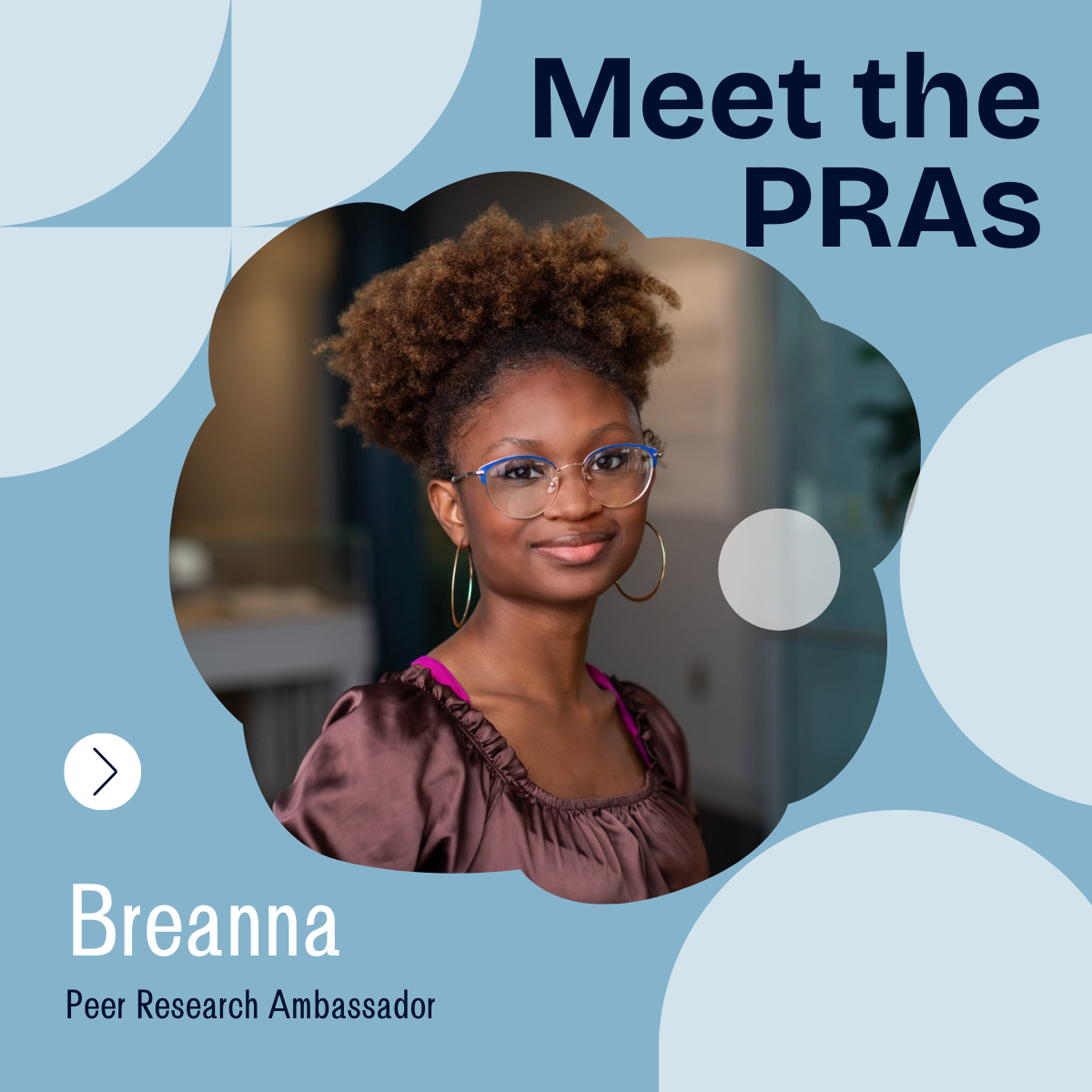
Meet the PRAs: Breanna Bonner

Meet Breanna Bonner ’26, an OUR Peer Research Ambassador majoring in Human Rights and Media, Policy, and Social Movements (individualized major).

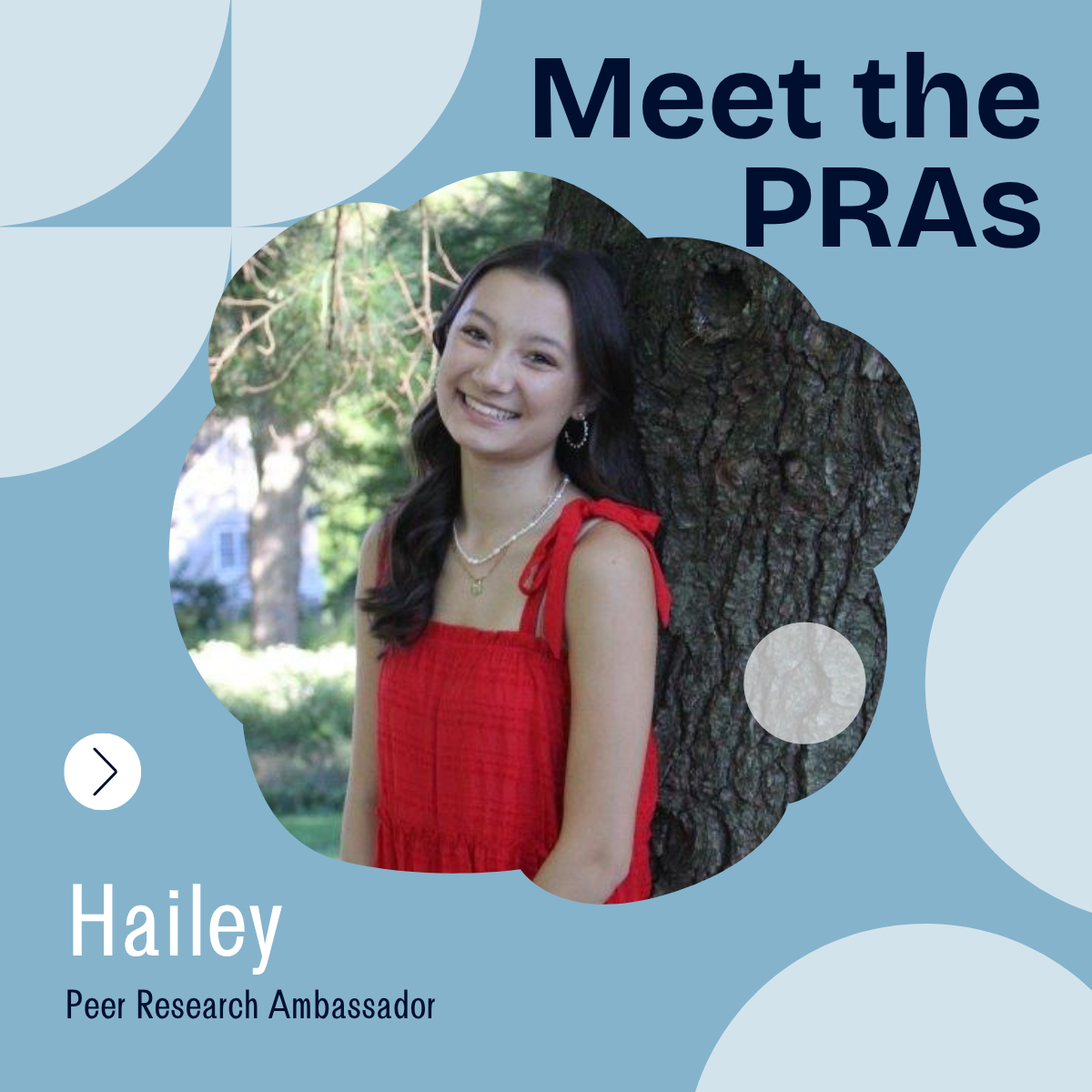
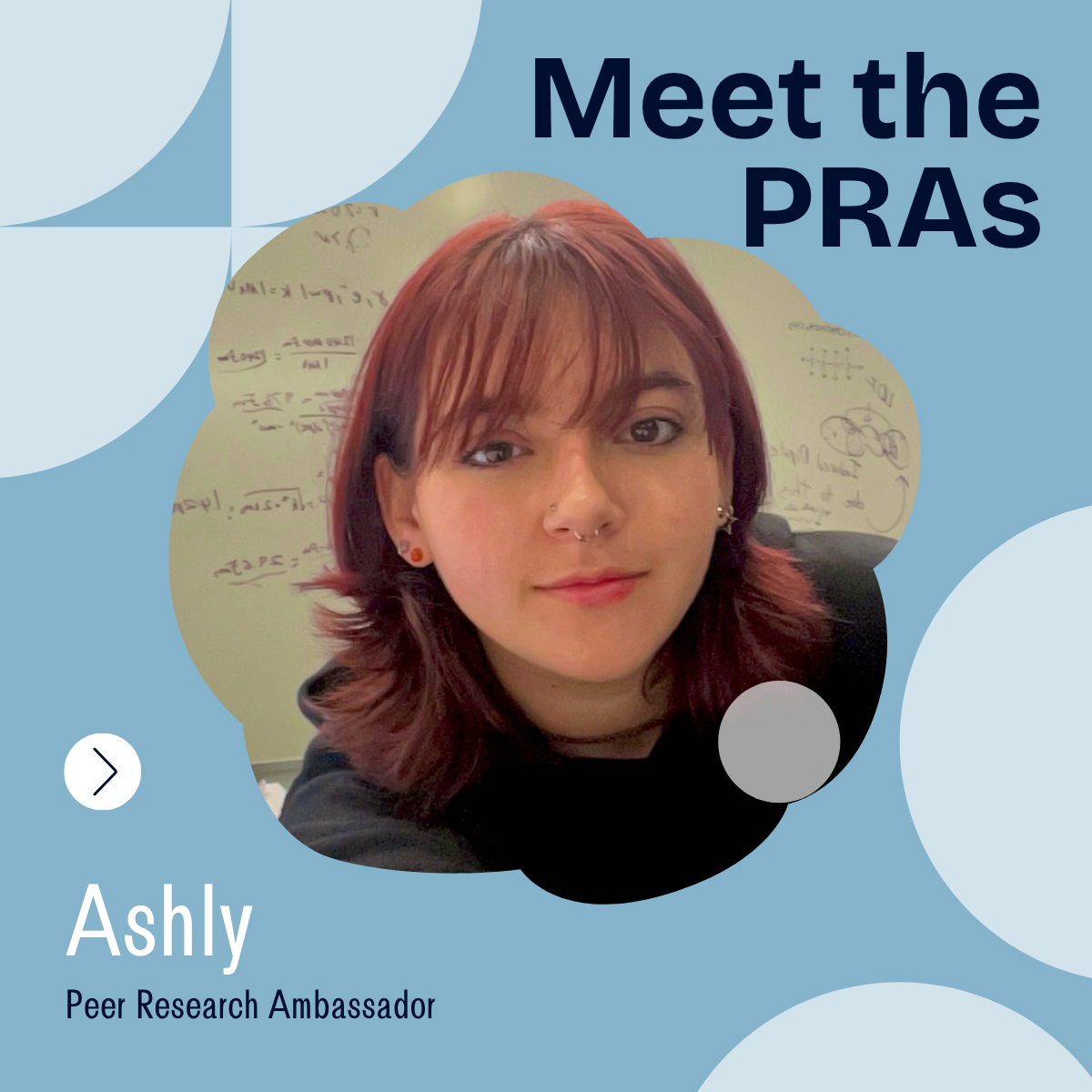
What is the focus of your research/creative activity?Image of a Peer Research Ambassador in a frame surrounded by geometric shapes. The text "Meet the PRAs" is in the top right corner, with the text "Breanna" above "Peer Research Ambassador" is in the lower left corner.

My current research focus is exploring art and policy-based interventions to gun violence in the U.S. I spent the summer exploring these topics through the BOLD Scholars program, where I traveled to Kansas City, Chicago, and Boston to implement my project. The process included interviewing gun violence prevention scholars/practitioners from across the U.S., heavily engaging in literature, interviewing non-profits, and creating/ executing art-based processing curriculum for survivors of gun violence. My senior thesis aims to work with community members, policy-makers, and non-profits to study community perceptions of public safety. I am also currently working on curating an exhibit at UConn as a form of dissemination of my BOLD project!

Why did you get involved in research/creative activity?

I got involved in research because I am constantly looking to explore big questions. I’ve always wanted to know why society is the way that it is, and research has allowed me to not only explore these questions, but to actively engage in interventions. I love research because I believe that it has the power to inform social change when done correctly. To find solutions to social problems, we first have to be able to name them and understand their context.

What advice would you give to aspiring student researchers?

The advice that I would give to student researchers is to explore a topic that they’re truly passionate about. The best research projects center around questions that keep you up at night and make you excited to go into the ‘lab’ space the next day. Caring deeply about the topic prevents burnout and allows for reaching your full potential!

What is your greatest accomplishment so far?

Research-wise, my greatest accomplishment is leading an art-based processing retreat around gun violence solutions with 25 current and former gang-involved men in my hometown of Kansas City, Missouri. Watching them engage in passionate solution-based dialogue and seeing them hanging up the art-work that they created was the highlight of my career so far. I’m excited to go back and visit them!

Personally, being a senior in college and meeting my incredible campus family.

What are your plans after graduation? How has involvement in research/creative activity influenced your plans and/or prepared you for the future?

My plans after graduation are to either pursue graduate education researching public safety and social movement research methodology, or to work for a non-profit organization doing community participatory action research (PAR) My experiences doing community-based research in undergrad has prepared me to ask questions, think critically, and build coalitions across demographics for social change.

How to Make New Mistakes

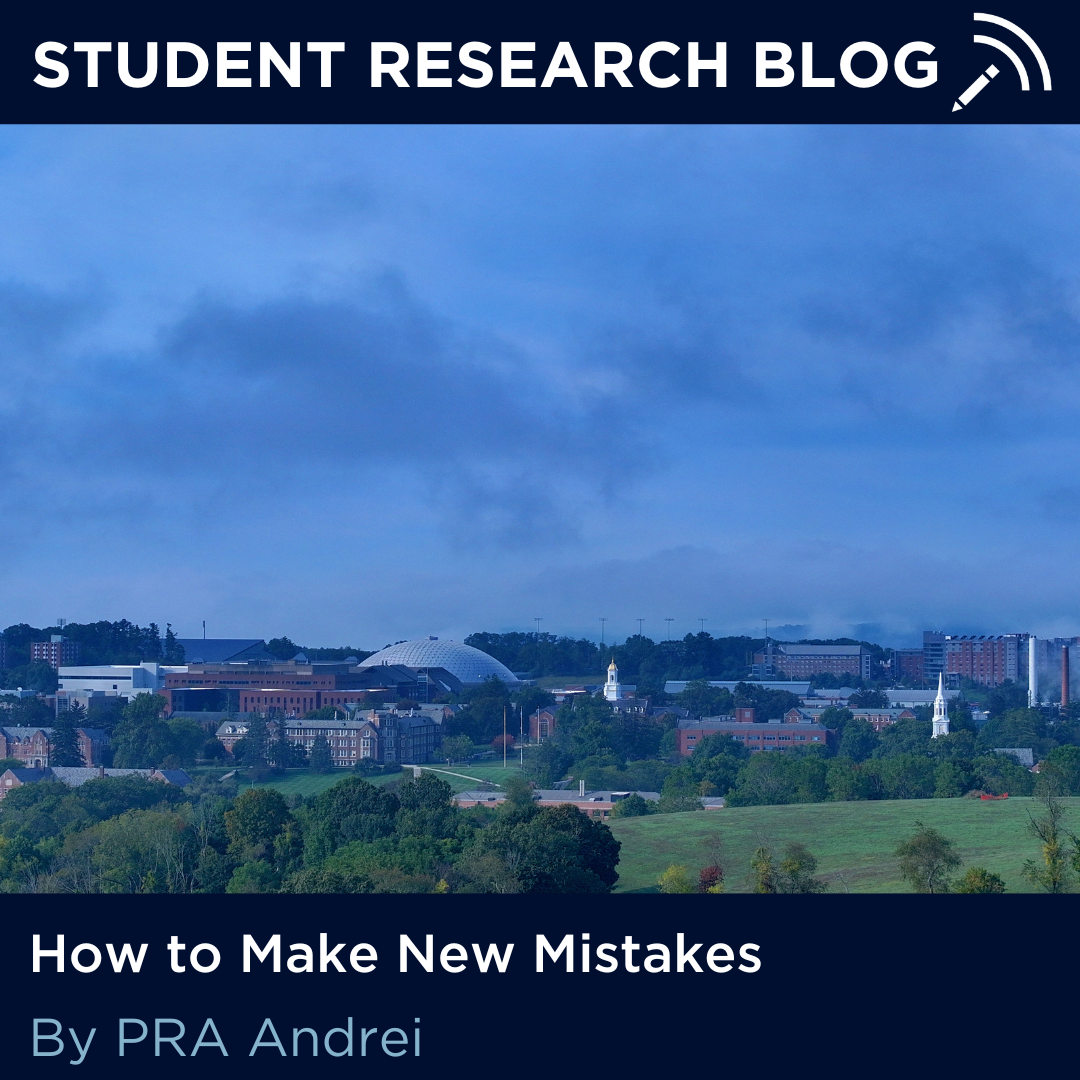
By Andrei Abarientos, Peer Research AmbassadorThe UConn Storrs campus appears blue under fog on September 16, 2025.

There’s a plethora of articles, classes, and Reddit posts dedicated to ensuring your success in a research career: how to find a professor, how to read papers, and how to make the most of your research experience. Those resources are, of course, incredible and important as you begin your journey into research. On the other hand, there’s a shortage of resources on how to mess up, how to make mistakes and how to handle them. In my opinion, knowing how to deal with your own human fumbles can be an even more important skill to be an effective scientist or researcher. Properly reacting to mistakes is key for building endurance in research, where blunders are commonplace in the field.

With that in mind, I think of myself as a bit of an expert on mistake-making. To be clear, I consider myself fairly adept in the lab, and I’m proud of the work I’ve accomplished. At the same time, over the course of my research career, I’ve mixed up samples, pipetted incorrect amounts, and lost track of what step I was on during a long experiment (most wet lab folks probably know the mental struggle of pipetting clear liquids into more clear liquids without getting confused). I’ve spent hours on assays like a western blot only to see it fail for one reason or another (see SDS-PAGE “Hall of Shame” for a sense of what I’m talking about).

I take solace knowing I’m not alone in this, having witnessed everyone from other undergrads to tenure-track professors make simple mistakes The title of this article’s a bit misleading. There’s no need to discuss how to make a mistake; if you haven’t made a mistake yet, you just have to spend some more time doing research. When you do the work for long enough, it’s bound to happen. It isn’t really science without some degree of failure, is it?

But especially when you’re just getting started, I know that those small mistakes can feel terrifying. You want to come off as the perfect undergraduate star, and you want to prove your worth, both to your research group and to yourself. It feels like any error threatens that perception. Here’s a few tips on how to make the most of your mistakes:

  1. Breathe. Like I said before, everyone makes mistakes. No matter what career you enter, they’re bound to happen, and research especially is full of them. Don’t brush errors aside, but don’t take them incredibly personally either. Your suitability for research isn’t defined by minute moments, but instead by big picture progress. Little errors say little about your aptitude, but your reaction can.
  2. Own up to them. I know, especially with an academic mindset where mistakes are often affiliated with penalties and grade deductions, your first instinct may be to try to cover up your own errors. I’ve heard stories of undergraduates trying their best to move forward with an experiment knowing they messed up, wasting their time and possibly their mentor’s time. Especially if you’re working closely with a mentor on a project, or using someone else’s samples, it’s crucial that you let them know immediately so you can move forward effectively. If you’re in a positive research environment, you shouldn’t expect any sort of long-term detriment to simple, one-off mistakes. As always, communication is key.
  3. Think about ways to prevent them in the future. Sometimes, things just happen: a distracting noise, a pipette going awry. Most of the time, though, there’s some sort of way you can mediate potential issues in the future. Sometimes, you just need to be more mindful of the work you’re doing. Especially if it’s a protocol you’ve done many times before, it can be easy to go on autopilot and make a simple foible. Simply forcing yourself to be present, and keeping past errors in mind, can be enough. Other times, you can consider making the work easier to remember for yourself, including integrating a checklist or putting away reagents as soon as you’re done working with them.

You are not defined by your mistakes but instead by your reaction to them, and how you carry yourself forward in the future. Mistakes are a part of the learning process. No matter what level of research you are on, you will inevitably mess up sometimes. The most memorable and important advice I’ve received since I began my research journey was three simple words: “Make new mistakes”.   View your mistakes as a chance to learn something new and better your own skills. If you keep your head up and stay on a path of learning, you should be able to avoid making the same mistake twice.

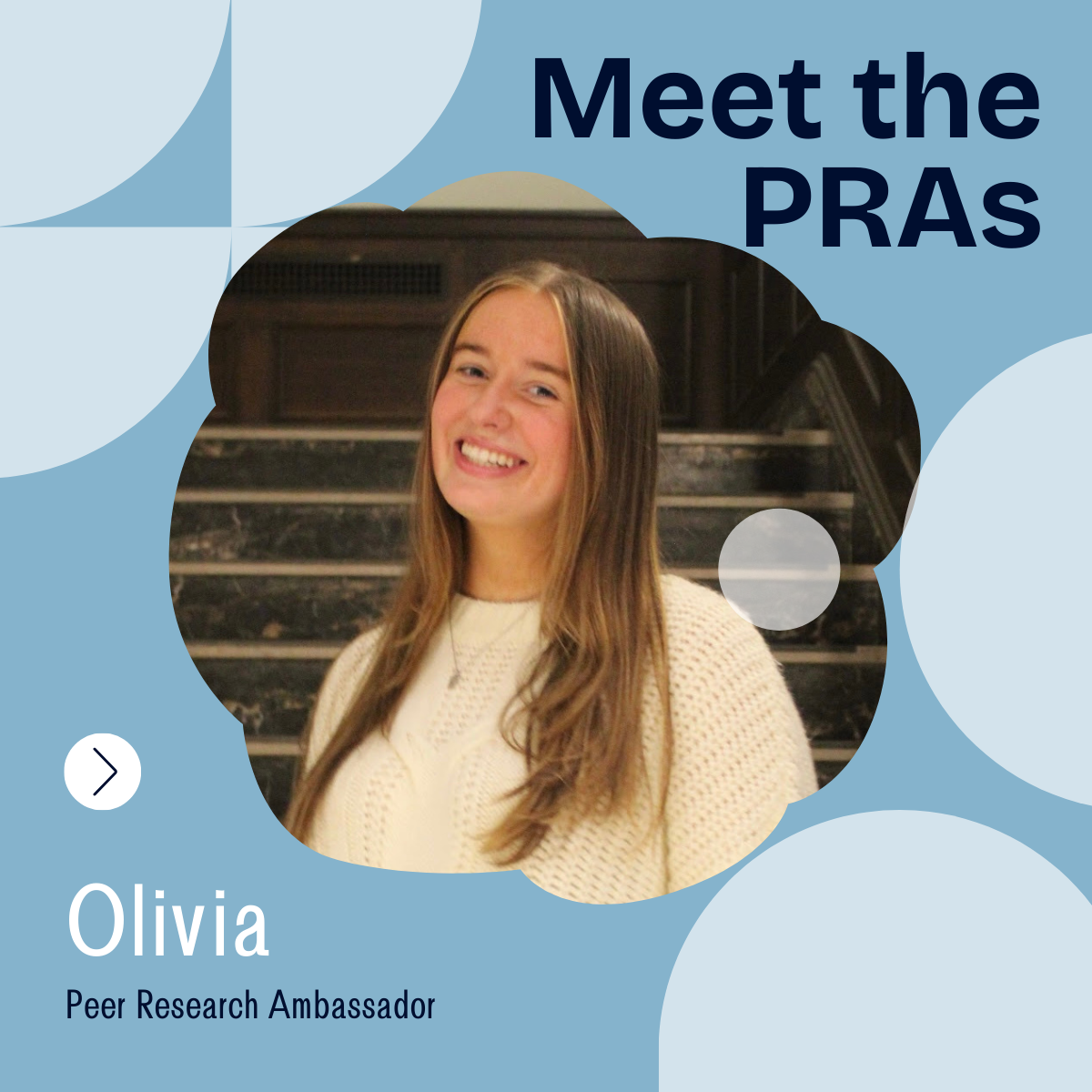
Meet the PRAs: Olivia Joyce

Meet Olivia Joyce ’27, an OUR Peer Research Ambassador majoring in Political Science and Statistics and minoring in Public Policy and Analytics. Image of a Peer Research Ambassador in a frame surrounded by geometric shapes. The text "Meet the PRAs" is in the top right corner, with the text "Olivia" above "Peer Research Ambassador" is in the lower left corner.

What is the focus of your research/creative activity? 

Currently I am focused on a student led project for Summer 2025 that I hope to continue working on for my honors thesis! I am focusing on torture laws in the United States. I have been examining torture laws on a state-by-state basis and what exists in the legal statues across states. I am trying to make an argument that all forms of torture should be covered under state law and that torture as an act should be criminalized. For this project I was lucky enough to receive the Caxide Scholars Grant and have been able to work with my wonderful mentor Dr. Richards in the Political Science Department.  

Why did you get involved in research/creative activity? 

Upon entering UConn in my first semester, I found the Political Science department offers research assistant positions through the Bennett Honors Research Assistantship program for Honors students. I found a lot of the research topics and projects being done within the department super interesting and wanted to get a little bit of insight into what is research in the social sciences and whether it was something I would enjoy. I ended up loving the process and working so closely with faculty. After that I continued to pursue research experiences in political science and other disciplines.  

What advice would you give to aspiring student researchers? 

Getting involved in research seems intimidating and can take a bit of effort and persistence. As a student in the social sciences your research journey may look a little bit different than your friends or students in other majors. Social science research is important, and everyone should pursue research if they feel it is a good fit for them. It is important to follow your interests and passions. Identify what topics and disciplines you are interested in and start exploring.  

What do you enjoy the most about participating in research/creative activity? 

Participating in research has been such a rewarding experience for me. It has shaped my undergraduate experience. I think my favorite part is being able to get hands on experience working with data and information that I am learning about. I also think that being able to collaborate with the amazing UConn professors has been rewarding. Being able to build a relationship with a mentor and someone who wants to see you do well and help you get there has been an important part of my journey.  

What are your plans after graduation? How has involvement in research/creative activity influenced your plans and/or prepared you for the future? 

I plan to attend graduate school and hopefully end up in a research focused career. I would like to attend law school or a PhD program. Getting started in research so early on in my time here at UConn pushed me and inspired me to reexamine what I was looking for in a career. I think that research has pushed me to be more curious and analytical and I want to nurture those skills in my career. Research has allowed me to apply knowledge from my classes along with learning so many new things and it has taught me to always dig deeper with my learning and skills.  

To make an appointment with Olivia, submit a meeting request here!

How Research Changed My Life: Reflections on a Research Journey

By Annette St. Jacques, Peer Research Ambassador

Students walking on top of Horsebarn Hill against a blue sky on August 27, 2025.

Research changed my life, and here’s why:

It was my first semester as a first-year student. I chose my major based on what I was interested in during high school, but I did not fully know what I wanted to do with my life after college. I still had so much time to think about how I wanted to implement the degree that I was working for, but I wanted to try something new in a field I was interested in.

I learned about research from a professor. At the time, I was unaware that all the professors have some sort of research going on outside of teaching. I started looking into the research labs within my major, and sent a lot of emails hoping for any type of response. At that time, I did not know how to get involved. It took a few months to find a lab that I felt I could fit into, but by the end of my second semester, I was able to secure a spot in a lab for the fall.

I spent my second year reading publications and getting trained on new techniques. Believe it or not, I spent the greater part of my third semester dissecting fruit fly ovaries. More importantly, I started to appreciate how research works. I decided that next summer, I wanted to stay in the lab, so I applied for a SURF award and received one! I spent that summer fully focused on my project, without having to worry about classes. That summer was eye-opening, and it made me ponder about what I wanted to do with my life.

In my third year as a student and my second year as a researcher, I gained confidence in the work that I was doing. I was able to get some interesting results in my research project, and I was able to present my data all across the country at symposiums and conferences. My spring break included a long weekend in New York City, presenting at Madison Square Garden, and a week in San Diego, attending a national conference. While these opportunities  were just some of the big ones, there were small things I have learned in my research journey.

Since I was little, I was fascinated by how things work. Research is hard work, but I have also found a passion for creativity. I have learned how to read about something, think about an idea, come up with a question, and see what happens when I experiment. At the end of my third year, my project mentor said that I could work in the lab again in the summer. I have gained independence is my abilities and helped me figure out what I want to do with my life.

For me, classes and course work does not come easy. Studying and memorizing just to be settling in the medians for exams was, and still is a struggle for me. Research has become an outlet for me. It is a place for me to learn into the depths of my mind and think of the unknown. Now that I am going into my last year as an undergraduate student, I have realized that research has helped me find out who I am and how I want to go forward. The critical thinking skills I have acquired have helped me in the lab, but also outside of the lab. Research has, and still is, teaching me new outlooks.

Looking back, I realize how naïve I was. I thought that my major was just a single road to a specific career. Getting involved in research opened up my mind. I have been able to take what I learned in my courses and implement it in a different way. I have also had the opportunity to explore different career paths. My research mentor has been able to connect me to many experts in my field and help me plan for my future in a different way than I ever imagined.

Now as I enter my last year as an undergraduate student, I have decided that I want to pursue a career as a researcher. An idea that I never thought about before coming to UConn, but one that I have found to be my true calling.

Annette is a senior majoring in Molecular and Cell Biology. To learn more about her, click here.

Meet the PRAs: Alana Wolfson

Meet Alana Wolfson ’27, an OUR Peer Research Ambassador majoring in Animal Science and minoring in Molecular and Cell Biology.

Photo of a peer research ambassador with the text "Meet the PRAs" in the top right corner, with the name "Alana, Peer Research Ambassador" in the lower right corner.

What is the focus of your research/creative activity?

My research project is on how poor diets during sheep gestation can impact the muscle development and mitochondria of their offspring and, “grand” offspring.

Why did you get involved in research/creative activity?

I got involved in research to explore my interests related to veterinary medicine and cell biology. Research allows me to dive deeper into a specific concept or idea outside of a normal classroom curriculum.

What advice would you give to aspiring student researchers?

The main piece of advice I would give aspiring student researchers is to try any idea, possible connection, or questions they have. I would encourage them to keep pushing for their goals and interests in this field, regardless of rejection.

What do you enjoy the most about participating in research/creative activity?

The most satisfying part about participating in research is presenting the final project. I enjoy sharing my experimental outcomes and sparking conversations with various people in academia.

Describe the impact your research experience/creative activity has had on you.

Research sparked my curiosity and confidence. Constantly reading new articles, talking to professors, and presenting my work in front of people in academia gave me these skills.

What is your greatest accomplishment so far?

My greatest accomplishment in research so far was when I presented at a research conference (American Physiological Society) with a wide range of successful scientists. I learned a ton from the American Physiological Society’s community and my mentor’s colleagues.

What are your plans after graduation? How has involvement in research/creative activity influenced your plans and/or prepared you for the future?

My plan after graduation is to attend veterinary school. Research and my passion for veterinary medicine coincide with each other. Research allowed me to study a specific topic in veterinary medicine/animal science of my interest.

To make an appointment with Alana, submit a meeting request here!

Undergraduate Research Assistants Needed: Emotions and Cognitive Control Validation Study

Lead Investigator: Deborah Schneider (deborah.schneider@uconn.edu)
Project: Stop, Feel, Go: Emotions at the Intersection of Cognitive Control
Credits: 1-2 credit hours (3-6 hours/week commitment)

Opportunity Description

Project Overview: Join our research examining how emotional content affects cognitive control and response inhibition. This validation study establishes the reliability and validity of Go/No-Go tasks using emotional stimuli before implementing them in neuroimaging research. This is an excellent opportunity to gain hands-on experience with experimental psychology methodology while contributing to research that advances our understanding of emotion-cognition interactions.

What You’ll Learn
• Research methodology: Experimental design and psychometric validation processes
• Data collection and analysis: Working with behavioral measures and standardized assessments
• Critical analysis: Evaluating test reliability, validity, and sensitivity to emotional interference
• Scientific writing: Contributing to manuscript preparation
• Collaboration: Working as part of a research team

Responsibilities
• Assist with participant recruitment and data collection sessions
• Help administer Go/No-Go tasks and standardized measures
• Participate in weekly online team meetings
• Maintain detailed records using structured data collection protocols
• Assist with data analysis and quality assessment procedures

Recognition Opportunities Research assistants who demonstrate sustained commitment and make meaningful contributions will be eligible for:
• Acknowledgment in the published manuscript
• Potential co-authorship based on level of contribution
• Recommendation letters for graduate school or future research opportunities

Time Commitment
• 2-5 hours per week of research work
• 1 hour per week online team meeting
• Flexible scheduling around your academic commitments

Student Qualifications
What We’re Looking For
• Highly motivated students committed to seeing the project through completion
• Interest in emotion research, cognitive control, or experimental psychology
• Strong attention to detail and organizational skills
• Ability to work independently while contributing to team goals
• Reliable attendance at weekly meetings

How to Apply
To Apply: Contact Dr. Deborah Schneider (deborah.schneider@uconn.edu) with:
• Brief statement of interest
• Current CV or resume
• Availability for weekly meetings

Mentor: Deborah Schneider, Postdoctoral Research Associate
Department: Psychological Sciences
Email: deborah.schneider@uconn.edu
Timing: Ongoing
Campus: Storrs

Undergraduate Research Assistants Needed: Systematic Review of Neuroimaging & Autism Intervention Research

Autism Intervention Research
Lead Investigator: Deborah Schneider (deborah.schneider-richardson@uconn.edu), Department of Psychological Sciences
Project: Systematic Review of Neural and Behavioral Changes Following Interventions in Autism Spectrum Disorders
Credits: 1-2 credit hours (3-6 hours/week commitment)

Opportunity Description

Project Overview: This systematic review synthesizes neuroimaging studies to understand the neural and behavioral mechanisms underlying intervention effectiveness. This is an excellent opportunity to gain hands-on experience with systematic review methodology while contributing to research that could improve interventions for individuals with autism spectrum disorders.

What You’ll Learn
• Research methodology: Systematic review processes following PRISMA guidelines
• Data extraction and synthesis: Deep understanding of peer-reviewed neuroimaging and behavioral studies
• Critical analysis: Evaluating research quality and synthesizing data across studies
• Scientific writing: Contributing to manuscript preparation
• Collaboration: Working as part of a research team

Responsibilities
• Extract and code data from research articles that have already been screened
• Participate in weekly online team meetings
• Maintain detailed records using structured data collection forms
• Assist with data synthesis and quality assessment of included studies

Recognition Opportunities: Research assistants who demonstrate sustained commitment and make meaningful contributions will be eligible for:
• Acknowledgment in the published manuscript
• Potential co-authorship based on level of contribution
• Recommendation letters for graduate school or future research opportunities

Time Commitment
• 2-5 hours per week of research work
• 1 hour per week online team meeting
• Flexible scheduling around your academic commitments

Student Qualifications
What We’re Looking For
• Highly motivated students committed to seeing the project through completion
• Interest in autism research, neuroimaging, or intervention studies
• Strong attention to detail and organizational skills
• Ability to work independently while contributing to team goals
• Reliable attendance at weekly meetings

How to Apply
To Apply: Contact Dr. Deborah Schneider (deborah.schneider@uconn.edu) with:
• Brief statement of interest
• Current CV or resume
• Availability for weekly meetings

Mentor: Deborah Schneider, Postdoctoral Research Associate
Department: Psychological Sciences
Email: deborah.schneider@uconn.edu
Timing: Fall 2025, Spring 2026, Summer 2026, Ongoing
Campus: Storrs

Undergraduate Research Assistant in REINVENT-PT Lab

Opportunity Description

The REINVENT-PT lab (REhabilitation INnoVations & Emerging Novel Technologies in Physical Therapy, PI: Dr. Sudha Srinivasan) at the University of Connecticut (UConn) is interested in understanding developmental trajectories of individuals with developmental disabilities including Autism, Cerebral Palsy, Down syndrome, etc. across the lifespan.
The REINVENT-PT lab is interested in understanding developmental trajectories of individuals with neurodevelopmental disabilities such as Autism, Cerebral Palsy, Down syndrome, and Intellectual Disability across the lifespan. We are interested in studying how infants and children with developmental disabilities explore their physical and social environment compared to typically developing peers and the cascading effects of motor difficulties on a child’s social communication and cognitive development. We are also interested in assessing health-related outcomes in adolescents and young adults with developmental disabilities, including their physical activity and physical fitness levels. Based on our understanding of the developmental trajectories of individuals with disabilities, our goal is to develop multi-system, engaging, evidence-based, behavioral interventions and assistive technologies to empower the lives of people with disabilities.

At present, the lab has 1 federally funded (funded through the National Institutes of Health) research project: a randomized control trial exploring the feasibility and efficacy of a novel upper extremity home-based training program using ride-on toys and navigational games to improve upper extremity function and spontaneous use in children with hemiplegia. Specifically, we are interested in comparing our novel ride-on toy intervention (called SPEED training) with a program based on conventional occupational therapy involving seated arts and craft activities (called CRAFT program).

Student Qualifications
We are looking for passionate, energetic, and empathetic undergraduate students interested in working on projects involving infants, children, and adults with disabilities. Students can pursue research at the lab for credit, for work study, and with the potential of converting a subset of the research into an honors Thesis. Students are required to commit to pursuing research in the lab for at least 2-3 semesters for the experience to be meaningful for students. Students are required to complete CITI training given that our research is with human subjects (details will be provided by the study PI).

How to Apply
Students from diverse backgrounds including but not limited to psychology, physiology and neurobiology, biology, exercise science, communication sciences, allied health, and education are encouraged to contact Dr. Sudha Srinivasan at sudha.srinivasan@uconn.edu. Please attach your CV/Resume and your unofficial transcript to your email.

Mentor: Dr. Sudha Srinivasan, Assistant Professor
Department: Kinesiology
Email: sudha.srinivasan@uconn.edu
Timing: Summer 2025, Ongoing
Campus: Storrs

Research Assistant for a Summer Field Survey Project

Opportunity Description

Project: Dr. Steven Mellor (PSYC) has a model of psychological predictors of the decision to voluntarily leave one’s union. To test the model, data are needed from actively employed union members, in which the survey asks members to tell their union story. Field sites for data collection include open community events and local union meetings, in which survey participation is strictly voluntary and anonymous.

Responsibilities: In coordination with Dr. Mellor, student research assistants are expected to seek and find survey sites for data collection, and once found, to distribute and collect surveys.

Time commitment: The hours per week are not set. Devoted hours are dependent on how many sites can be generated and when survey administration is scheduled. The number of weeks is open, but could include June, July, and available weeks in August.

Pay: This is an unpaid assistantship, although Psyc 3889 course credit is available (Undergraduate Research-Independent Study).

Student Qualifications
Required qualifications: (a) Interest in developing basic skills in survey field research (assistantship includes one-on-one training and IRB certification) and (b) a valid drivers license and a car or ready access to a car (all survey sites are located off-campus).

How to Apply
Apply by emailing me (steven.mellor@uconn.edu) for a day and time to meet in my office (156 Bousfield Psychology Building, located on the Storrs campus); no resumé or application material is necessary.

Mentor: Steven Mellor, Associate Professor
Department: Psychological Sciences
Email: steven.mellor@uconn.edu
Timing: Summer 2025
Campus: Storrs & Remote work

Research Assistant in Child/Adolescent and Mood Program (CAMP) Lab

Opportunity Description

Researchers in the Child/Adolescent and Mood Program (CAMP) Lab in the Department of Psychiatry at UConn Health are seeking undergraduate students to assist with their on-going research studies.

Primary responsibilities include:
➢ Participant Recruitment
➢ Helping study coordinators with administrative duties
➢ Contact with families and school personnel
➢ Data entry
➢ Scholarship opportunities
➢ Other duties assigned by the CAMP Lab

Student Qualifications
We are looking for volunteers who can commit to work a minimum of 8-10 hours per week for 1 year, which includes 1 in-person workday at our West Hartford location. This can be taken for course credit (PSYC 3889/3899).

How to Apply
Students should send an email describing their interest in working in our lab, their CV with current GPA, and a list of two references to Emilie Butler (ebutler@uchc.edu).

Mentor: Emilie Butler, Postdoctoral Fellow
Department: UConn School of Medicine
Email: ebutler@uchc.edu
Timing: Fall 2024, Spring 2025, Summer 2025, Ongoing
Campus: Remote opportunity with a commitment of 1 in-person workday in West Hartford, CT