Author: Emily

Dealing With Rejection

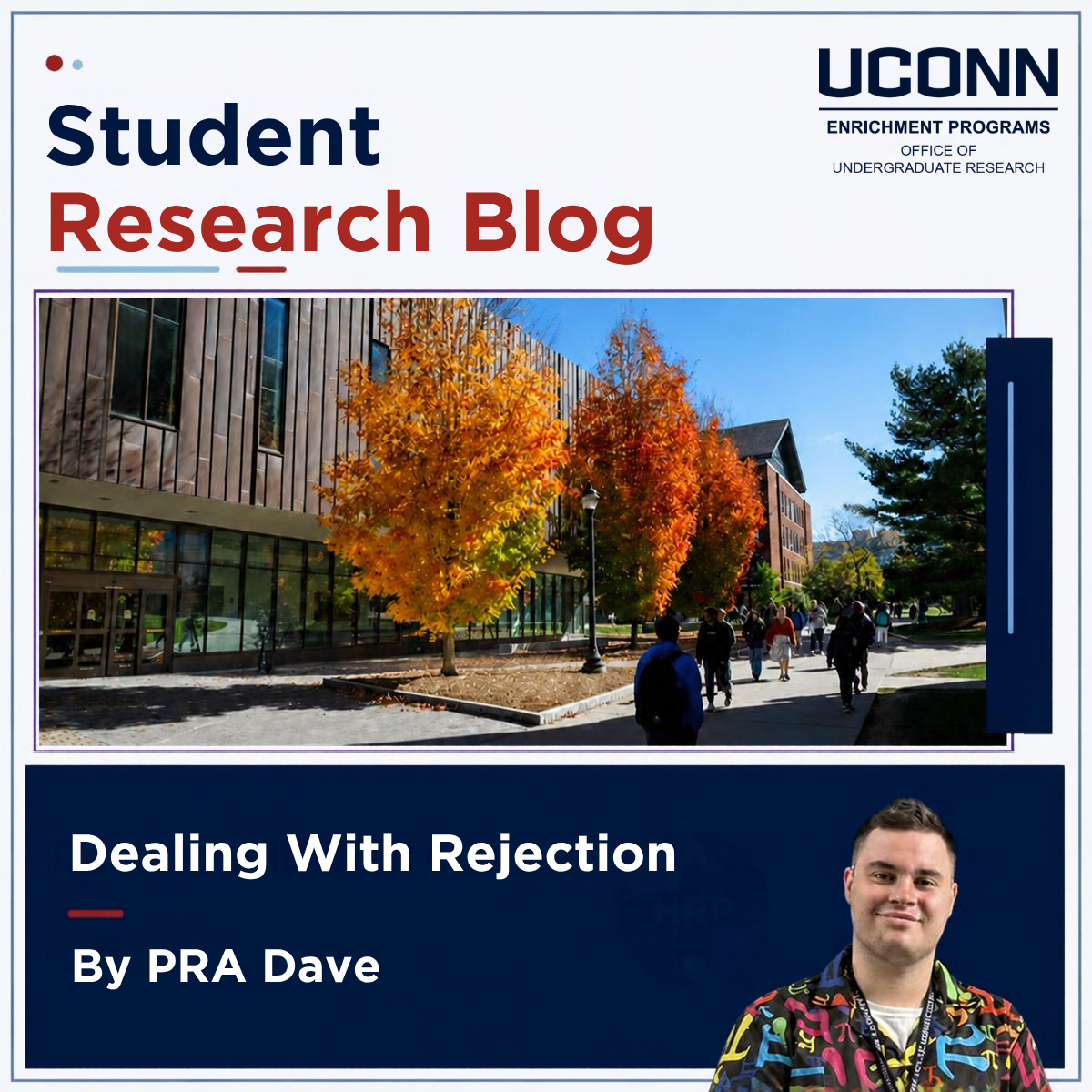
By PRA Dave TolmachImage of trees in fall with the text "Student Research Blog" overhead and the title "Dealing with Rejection by PRA Dave" underneath. Image of Dave is next to the title.

Tell me if this sounds familiar. You reached out to tons of research groups, labs and potential mentors and received nothing but “nos”, or worse yet, no reply at all. You think to yourself, “They did not even give me a chance before I started” or, “I am not cut out for research”. Well, a rejection does not mean you are not cut out for research—in fact it’s a vital part of the experience. Before joining my current lab at UConn in the Physiology and Neurobiology department, I had tons of rejections and I definitely felt those same feelings of inferiority and hopelessness. So, how do you deal with rejection? Here are some tips I learned along the way and advice I wish I had when I started.

1)   It’s not you, it’s normal.

Rejection is a normal part of the research experience. Unfortunately, it is not often discussed. I learned early on that if you want to enter research, you need thick skin. What I did not realize, however, was just how many students are also looking for research opportunities. PIs (principal investigators—i.e., lab directors or research group leaders) may hear from numerous students interested in joining their groups, yet only have room for one or two. Sometimes, they may not have room for anyone at all.

That means a rejection—or even no response—does not necessarily say anything about your potential as a researcher. The lab may simply be full, the PI may not have the time or funding to take on another student, or another student may have reached out at the right time. To a degree, it is a numbers game. So, apply broadly and don’t let one “no” stop you from looking for your “yes.”

2) Change the “strat”

Sometimes when really smart, dedicated folks focus on a particular task for too long— tunnel vision sets in. After a while, you are so focused on the task in front of you that you do not stop to think, “Is this the best way to get a position?”

Perhaps if you have sent fifteen emails to different professors or research teams and heard no response, rethink reaching out to the sixteenth. Take a moment to reflect. Are your emails lab specific— personalized to the lab’s topic of inquiry? Is the email long? Did you think about adding your CV? It is important for me to make it clear that I have made all of these mistakes (and more). The point of the reflection is not to shame yourself. The point is to figure out how you can stand out and effectively convey why you are the person for the position.

 3) Let it sting. Do not let it define you.

In talking with professors, postdocs, teaching assistants, and others, I have learned that everyone gets frustrated and upset when they do not get the grant or position they applied for. The one thing that all of their stories have in common is the way that they deal with disappointment. They do not let it define them. They give themselves some time to feel disappointed (10 minutes was the most common answer, for some reason), and then they get right back up and try again.

This is a key lesson to have in research. Sometimes surveys are flawed, experiments fail, mistakes are made. Perseverance is key to a fruitful career, so any rejections you get now— as upsetting as they are— are a lesson for your future.

 4) You do not have to go through it alone. Ask for help!

Sometimes it is worth having another person review your outreach attempts— they can point out where you can improve. I would recommend chatting with someone who went through this experience. Do you have a friend in a lab or research group? Do they have advice? Perhaps it is worth a visit to the Office of Undergraduate Research to chat with one of our friendly Peer Research Ambassadors. All of us have experience, in one way or another, with being rejected, and we love helping (I mean it).

 5)  Rejection means you are ahead!

One of the most insightful tips was given by one of my role models, here at UConn. Dr. Wells was my physics professor, and I still frequently bump into him around campus. Over time, I have come to look up to him greatly and have learned so much from our conversations. During one of our chats he said to me that “The more you apply, the more rejections you will receive. Since you are receiving rejections, you are already ahead of the game”. I love this outlook on things and frequently tell students this quote.

Last thoughts…

I don’t look back at those rejections and wish they hadn’t happened. Eventually, I got the opportunity I had been looking for, and the process taught me lessons that I still use in research today. So let the rejection sting, learn what you can from it, and keep going. You don’t need every lab to say yes. You just need one, so keep going!


Fill out the form linked here to schedule an advising meeting with Dave or any of our other PRAs!

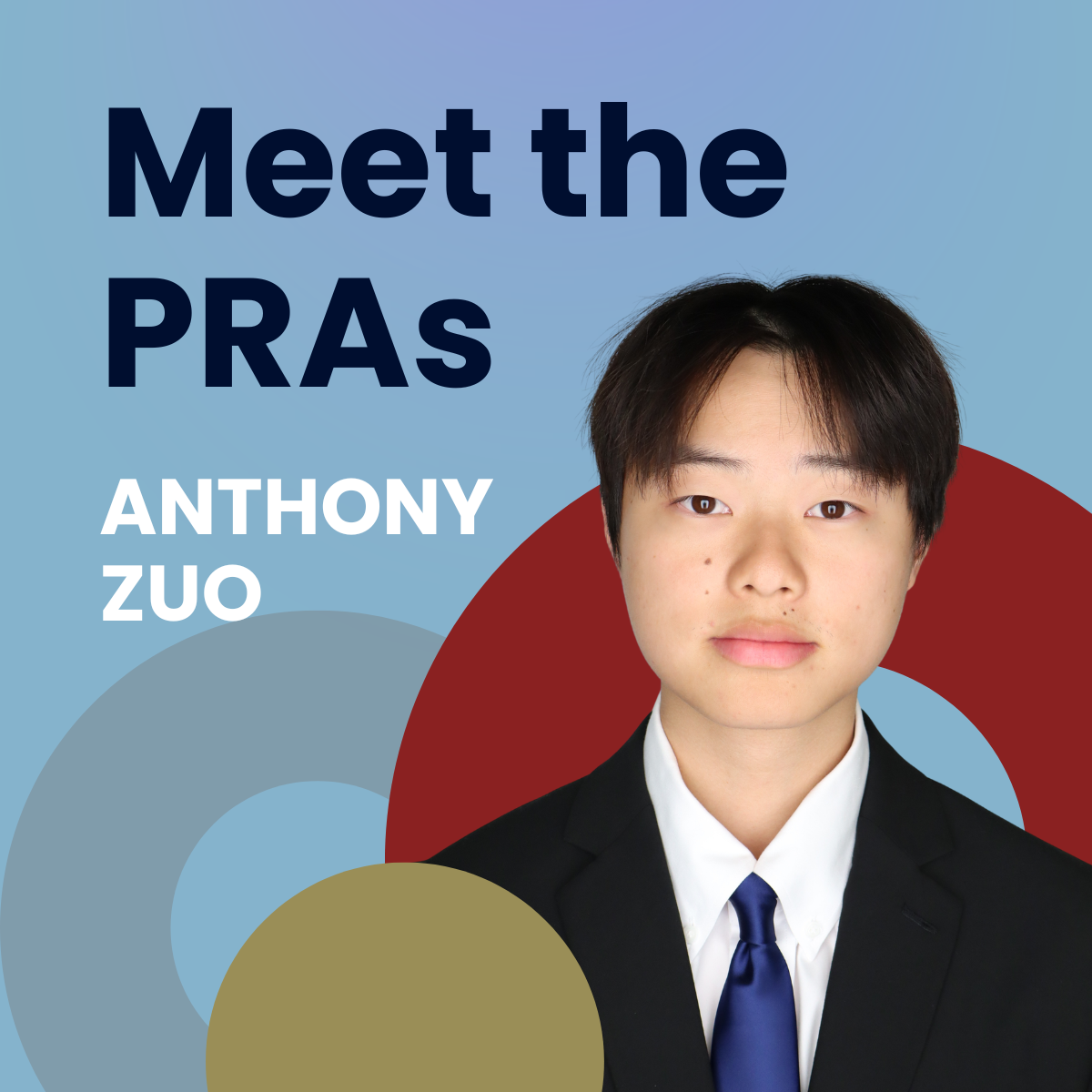
Meet the PRAs: Anthony Zuo

Meet Anthony Zuo ’27, an OUR Peer Research Ambassador majoring in Physiology and Neurobiology & Molecular and Cell Biology.Image of a peer research ambassador with the text "Meet the PRAs" Anthony Zuo over an artistic background.

What is the focus of your research/creative activity?

Currently, I work in the Sinder Lab located in Farmington at UConn Health Center. The focus of the research is to determine the effectiveness of stem cell therapy on mouse models with Osteogenesis Imperfecta (OI), a rare disorder that causes bone brittleness. OI is caused by mutations in the COLA1 and COLA2 genes resulting in misfolded collagen protein. Wild type collagen provides sructural support in the bones, thus mutated collagen results in brittle bone.

Stem cell therapy is a new strategy in addressing the underlying collagen mutation. Transplanting healthy bone cells into OI mice allows the formation of wild type bone, which may improve the overall phenotype of the skeleton. Currently, I am looking into the effectiveness of age on stem transplantation in the OI femur.

Why did you get involved in research/creative activity?

I got involved with research because I am passionate about rare diseases. Rare diseases are heavily understudied, and because of this, patients with rare diseases are waiting years to receive the correct diagnosis. I came into the lab with the perception that I could contribute to rare diseaes research. However, I became more interested in the process and experimental designs that wet lab research had to offer.

Outside the lab, I help with rare disease patient advocacy by hosting UConn’s Rare Disease Day Symposium for all undergraduates.

What advice would you give to aspiring student researchers?

Don’t be too set on joining a single lab. Though the content of a research lab may sound exciting, it is only one of many deciding factors on whether it is the right fit for you. Consider the mentorship quality, flexibility, and learning opportunities. With that being said, it is okay to join a lab that doesn’t overlap with your major. Prioritize fit over content.

What are your plans after graduation? How has involvement in research/creative activity influenced your plans and/or prepared you for the future?

After graduation, I will be applying to medical school. Rare disease research and advocacy has played a vital role in my decision to pursue a career in medicine, specifically the rare disease space. I hope to not only explore rare disease research opportunities, but also improve the quality of rare disease patient care in the clinic.

Click here to sign up for a meeting with Anthony, or any other Peer Research Ambassador!

Meet the PRAs: Pragyan Yadav

Meet Pragyan Yadav ’28, an OUR Peer Research Ambassador majoring in Physics and Computer Science, with a minor in Astrophysics.Image of a peer research ambassador with the text "Meet the PRAs" Pragyan Yadav over an artistic backgroun.

What is the focus of your research?

I use computational techniques and artificial intelligence to study the universe on both the largest and smallest scales. In astrophysics, I model the “cosmic web”, the massive network of galaxies and dark matter connecting the universe, as a graph to understand how it evolves over billions of years, while also using AI interpretability tools to see what neural networks can teach us about cosmology. Previously, I also developed machine learning algorithms in particle physics to analyze radiation signatures from different radioactive isotopes.

Why did you get involved in research/creative activity?

I have always been driven by curiosity about how the universe works at a fundamental level. Coming to UConn, I realized that modern physics relies heavily on code and data to solve problems equations alone cannot. I wanted to move beyond the textbook and apply computer science to real, unsolved questions about dark matter, cosmic evolution, and particle interactions.

What advice would you give to aspiring student researchers?

Don’t wait until you feel “qualified” or think you need to know everything before reaching out to a professor. Research is fundamentally about solving problems nobody has the answer to yet, so enthusiasm, consistency, and a willingness to learn on the fly matter far more than having a perfect background. Read a professor’s recent paper, send a thoughtful email showing genuine interest, and be ready to ask questions.

What do you enjoy the most about participating in research?

The moment of genuine discovery, when you write a script, run an analysis, or visualize a dataset and realize you are looking at a pattern or result that no one else has seen before.

What are your plans after graduation? How has involvement in research influenced your plans and/or prepared you for the future?

After graduating, I plan to pursue a PhD in astrophysics and continue researching complex physical systems using scientific machine learning. Engaging in undergraduate research since my freshman year not only confirmed my passion for academia, but also taught me how to manage independent projects, collaborate with scientists, and think critically through open-ended scientific questions.

Click here to sign up for a meeting with Pragyan, or any other Peer Research Ambassador!

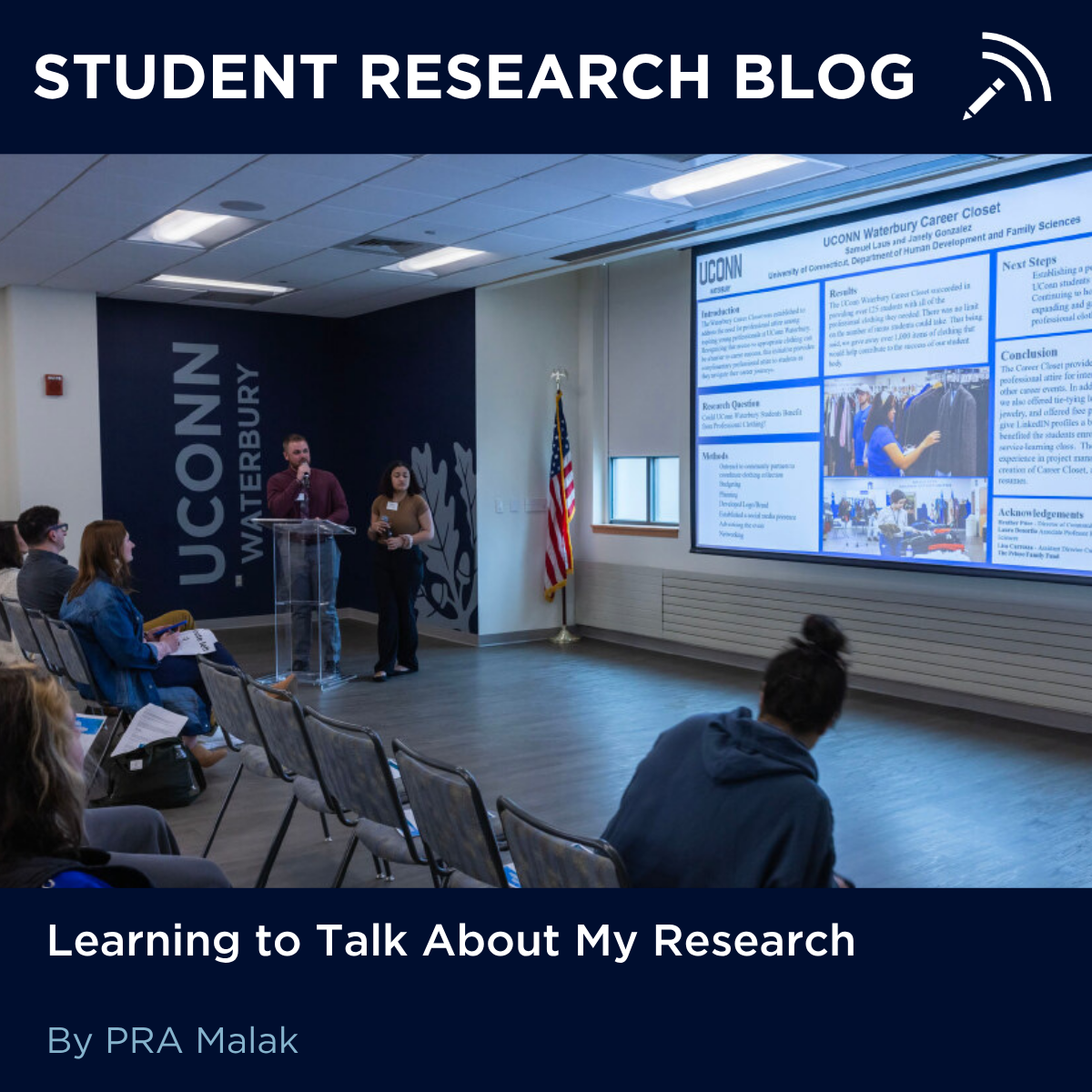
Learning to Talk About My Research

By PRA Malak NechnachText reads: Student Research Blog with "Learning to Talk about My Research by PRA Malak" at the bottom. Image in the middle depicts two people presenting at a conference.

The first time I presented my research, I was terrified because I cared so much that I was scared I wouldn’t explain it correctly.

I remember worrying about two opposite things at the same time: what if my research sounded too complicated, and I couldn’t make it understandable to people outside my field? But also… what if I simplified it too much and it didn’t sound scientific enough? I felt like I had to “prove” I belonged in research, and that pressure made presenting feel intimidating rather than exciting. On top of that, I used to feel disappointed that I didn’t get to present earlier in my research journey. It felt like everyone around me was already presenting posters, already confident, already “ahead.” But looking back, I’ve realized something important: it’s completely okay to not present right away. There is no timeline you have to follow. Research is already a huge learning curve, and presenting is a skill that develops with time.

When I finally did feel ready, I decided to go for it, and once I started presenting, I took every opportunity I could. Over the past semester, I presented my research at numerous conferences and symposiums, including the 28th Annual Neuroscience at Storrs Symposium, the McNair Scholars Research Conference at UNM,  Frontiers and more. And honestly? My first presentation at CAPS is not even close to the way I present now. The difference between my earliest poster presentation and my most recent one is huge, not because my research suddenly became “perfect,” but because I became more comfortable with it.

One of the biggest things I had to overcome was the fear of questions. I used to dread the moment someone would ask something I couldn’t answer. I thought it would make me look unqualified, like it would expose that I didn’t really know what I was doing. But now I understand that not having an answer does not take away from your project, your effort, or your knowledge. It doesn’t erase what you contributed. It doesn’t cancel the work you did. Research is full of unknowns; that’s literally the point. And when people ask questions, it usually means they’re engaged and curious, not trying to “test” you.

If you’re preparing for your first poster presentation, here are a few things I recommend keeping in mind:

  1. Explain it as simply as you can.
    This is harder than it sounds, and it might feel unnatural at first, that’s normal. During my first poster presentation, simplifying concepts felt difficult because I was still learning how to fully organize the story of my research in my own head. The more you practice, the more knowledge and confidence you gain, and the easier it becomes to explain your work clearly.
  2. It’s okay not to know the answer, learn how to redirect the conversation.
    If someone asks something you don’t know, you don’t have to panic. You can turn it into a discussion: talk through your hypothesis, share what you think might happen, or explain what future experiments could answer that question. A great presentation doesn’t mean you know everything, it means you can communicate what you do know and think like a scientist.
  3. Let your passion show.
    People can tell when you enjoy what you’re talking about. Your excitement matters more than you think; it makes your research feel real and engaging to your audience. Even if someone doesn’t understand every detail, they’ll remember how you made them feel included in the conversation.
  4. Confidence develops with time, so put yourself out there.
    This was the biggest lesson for me. You don’t need to be perfect at presenting. You just need to start. And remember, the people who stop at your poster want to listen to you. They’re there because they’re interested, so make sure to spend a good time.

Overall, my biggest advice is to make it fun, be proud of your work, and enjoy the experience.

Climbing up the Research Ladder: How to Gain More Responsibility in Research

By PRA Alana WolfsonPhoto of a squirrel climbing a tree with text that reads "Student Research Blog" at the top and "Climbing up the Research Ladder: How to Gain More Responsibility in Research by PRA Alana" at the bottom.

Let’s say you are working in a lab (first off, congrats on getting there in the first place). The majority of the research work you start out with is on a small scale (labeling tubes, assisting in fieldwork, shadowing graduate students, etc.) Once you feel comfortable in a lab setting, you may want to take on more responsibility and potentially start your own project. Here are some tips I used when starting my first research project:

  1. Communicate!

The first step of gaining more responsibility is to communicate with your professor and graduate/undergraduate students on your research team. A research lab or group is always going to be based on team effort and collaboration. It is extremely important to have a good relationship with the head professor of your group and other members. You can discuss ideas, questions, or even something you found interesting in a past paper. If you want to gain more responsibility or start a research project, you need to have an open conversation.

  1. Research Funding Opportunities/Internships

A great way to start working on a research idea or question is to investigate funding opportunities throughout the summer or academic year. UConn provides funding and on-campus housing options for students to conduct research throughout the summer. You can also venture into off-campus research experiences or funding sources outside of UConn that connect to your field of interest. Personally, I used funding from both an off-campus research organization and the UConn IDEA Grant for my first research project!

Check out the different research opportunities the Office of Undergraduate Research has to offer:

Funding Opportunities | Office of Undergraduate Research

  1. Read! Read! Read!

A good portion of research involves reading and reviewing literature. Whether that consists of scientific articles, the results of a past social survey, or publications from your professor, there are opportunities to read. Not only does reading help strengthen your knowledge in the field you are interested in, but it is also a great way to generate ideas.

  1. Take Notes/Get a Research Journal

This is an idea I got from an advisor of mine (also my favorite tip). When starting out in a research lab, you should have a notebook or document to record ideas, questions, and tasks you complete along the way (ex. Lab-bench skills, meeting notes, etc.). When you start a project, having a notebook becomes even more useful. Personally, I have a tiny black journal where I write out experimental protocols, my own personal edits, notes from research articles, and questions. It is basically an on-the-go research journal. I also have various documents, I-Pad notes, and folders organizing different aspects of my work. In addition to organizing your research notes, this can be a great way to jot down skills and accomplishments for your resume!

Lastly, just as a reminder, please take care of yourself. Imposter syndrome is real, and it can be draining. Please understand that undergraduate research should be viewed as an opportunity to learn and explore ideas of YOUR specific interest (as opposed to your major requirements). Taking on more research responsibility or starting a project requires time and patience. Best of luck on your research journey! You got this!!

The Art of the First Meeting: Finding Confidence in Research Conversations

By PRA Ruupala Kalaiarasu

Text reads "Student Research Blog" over the image of 2 trees on a snowy outdoor quad. Text below reads: The Art of the First Meeting: Finding Confidence in Research Conversations by PRA Ruupala.

I still remember how I felt in the minutes leading up to my interview with my mentor. My palms were sweaty, and my breath was shaky as I practiced reciting facts that I found interesting from her papers and my “why I’m interested” speech. Yet, I still felt unprepared.

I look back fondly over this interview, even though at the moment I was stressed out of my mind. It was through this meeting that I learned how kind my mentor is, and how passionate she is about her work. This meeting confirmed that I wanted to work in my mentor’s lab, but there are still a few things I wish I had been aware of beforehand.

Do Your Homework—But Don’t Overdo It

You might think the best way to prepare for your first meeting with your potential mentor is to read every single one of their papers and make sure you understand every single detail. I sure thought this was the case and threw around buzzwords from my mentor’s research papers within the written application I had submitted before my interview. However, it’s important to remember that you are not the one with a PhD in this field, your potential mentor is. Your main goal should be to understand what their lab or project focuses on, so you can find a connection to your own interests.

Honesty is the Best Policy 

It’s better to be honest about what you do and don’t know than to lie. Lying might set you up to get called out on your bluff, which can be a really uncomfortable situation. This doesn’t mean you should go into your meeting knowing nothing. However, your potential mentors know that you are an undergraduate student, and there is only so much that be taught in a classroom setting. To be honest, I learned most of everything I know about my research on the job and from my mentor’s guidance. The main things mentors are looking for are passion and a desire to learn more. If there’s something that you read about in one of their research papers and didn’t understand, this provides a great opportunity to ask a question and demonstrate you are interested in learning more about their work.

Small Questions Can Make Big Impressions

Asking questions such as “I had begun to read about your research in _____, and was wondering how you discovered your interest for this field?”, and “What’s your favorite aspect of doing research in this field?” go a long way in terms of demonstrating interest to your potential mentors. Additionally, questions can be a useful tool to ease into the conversation of them having a place for you in their lab. These questions should be reserved for the end of the meeting, but can include things such as “Are there ways for undergraduates to get involved in your lab this semester or in the future”, “What skills are most helpful for someone joining your lab?”, and “What classes would you expect for undergraduates within your lab to have taken?”.

The Meeting Isn’t Over When You Leave the Room

Your meeting is just the first step towards sealing the deal with your potential mentor. A good follow-up can be just as important as the initial meeting, and makes sure your name remains at the front of your potential mentor’s mind. This can be most easily achieved through a “thank you” email appreciating them for the time they set aside to have a conversation with you. Bonus points if you mention something you learned about them and their research! If you had discussed steps towards obtaining the position with them, such as applying for a specific program, sending over a résumé, or setting up another meeting, this would be the place to include that.

However, as important as it is for your potential mentor to see you as a good fit for their lab, it is equally as important that you see them as a good potential mentor for you. One thing I would always do immediately after meeting with a professor was reflect and jot down notes while the conversation was fresh on my mind. Though many believe that “research is research”, and it doesn’t matter if they like their research experience if they can add it onto their resume, this could not be further from the truth. Having a mentor that A) is conducting research you are interested in and B) is willing to help you in attaining your research goals can make or break your experience.

From Here on Out

Looking back, I’ve realized research isn’t all about having the right answers every step of the way, it’s about your willingness to ask the right questions. Mentors want to see your curiosity, not your perfection. It might be hard to believe, but our mentors aren’t perfect either, they’ve just had more years to make mistakes and learn! They were all in the same position as you at one point in their lives, as have all of us PRAs. It is normal to stress out while preparing for an interview with your first mentor! All to say, the best thing you can do is ask questions. The sooner you start asking questions, the sooner you start growing and learning, and you’ll find that confidence will accompany you before you even know it.

If you ever need help preparing for an interview, take the time to look at the “How to Connect With Faculty” section of the OUR’s website for some helpful tips and tricks. You can always reach out to me, another PRA, or one of our amazing staff members if you want to practice having this conversation in person as well!

The Intersection of Passion and Persistence

By Brielle Pierre Philippe, Peer Research AmbassadorAn image of Gampel Pavillion covered in snow with the words "Student Research Blog" at the top, and "The Intersection of Passion and Persistence by PRA Brielle" at the bottom.

The thing that usually gets everyone started on their research journey is passion–that spark of curiosity or excitement that fuels you to take all the necessary steps to find, connect with, and join a lab that aligns with your personal interests. Your “what-ifs” take shape before your eyes, and suddenly, all the questions you once had spinning around your head can be explored right in front of you.

I know this feeling. I remember this feeling. I remember what a rush it was to attend my weekly lab meetings with uncontainable anticipation, and I remember leaving feeling astonished and eager. I couldn’t wait to get my hands on my first project, and I was hungry to learn and contribute to the research in my field. The excitement of discovery, getting lost in the literature, and learning new techniques–these are all things that any new researcher would look forward to, and rightfully so!

Most of the time, I still feel that way. However, I would be lying if I said there were never moments when motivation was low—and I believe that would stand true for any researcher. The truth about research is that it can’t be 100% exciting all the time. There will be moments when things begin to lull. Data collection may feel tedious, results may come back inconclusive, there might be long analysis days, or you may just get stuck waiting on IRB approval.

Recently, one of my close friends told me all the cells she was growing this semester just decided to die, and now she has to start over with a whole new batch. Of course, things like that are terrible, but they can happen. In moments like these, passion may fade.

If this happens to you, know that it’s normal! Research is a journey, and your relationship with it may not be linear. There have been many times when I sat at a desk with the smell of wet rat in my nostrils for over two hours, typing in all the data we had collected into a spreadsheet, and sneezing nonstop because I had developed a slight allergy to the very same animals that I handled almost every day. Even if you love your project (and trust me, I love mine), motivation can drop–and that’s when persistence becomes essential.

The idea that researchers are always feeling eager and passionate is a myth. In truth, consistency matters more than constant excitement.

The Role of Persistence

I spent an entire semester of my sophomore year collecting data for my project, and the process required a lot of commitment. My partner and I would go into the lab nearly every day at the same time to collect data over a period of many weeks.

By the end of data collection, I was exhausted and ready to move on to analysis. However, when it came time to analyze the data, it looked like there wouldn’t be any significant results from the project I had poured my blood, sweat, and tears into. I was distraught.

Still, I decided to keep my head up and persist. I was able to present my research at a conference and feel proud of the work I had accomplished. After talking it over with my PI, we decided to rerun one of the experiments the following year to see if anything had changed. Now, as I’ve begun analyzing the new data, things are coming back significantly! Now, I understand that all my hard work was worth it, and even if I hadn’t gotten significant results the second time around, I would appreciate all I have accomplished.

What Persistence Looks Like in Research

Persistence in research can take many forms—revising, reanalyzing, refocusing, asking for feedback, and managing your time effectively. Passion gives meaning to persistence, and persistence strengthens passion over time.

After that tough stretch, I rediscovered my excitement. I also learned something important: while we often pour so much of ourselves into our research, we have to be careful not to give so much that we burn out or give up. Both passion and persistence are learned and cultivated; they are not innate personality traits.

Balancing these two qualities has changed my understanding of research, and taught me that it’s not just about outcomes, but about curiosity, commitment, and most of all, growth!

So, to new researchers: don’t worry if your passion wavers. Persistence will carry you through until it reignites!


A Winter Break Guide to Getting Research-Ready

By Hailey DeWalt, Peer Research Ambassador

Winter brAn image of a fall leaf stuck in the snow. Text above reads "Student Research Blog" and below "A Winter Break Guide to Getting Research-Ready" by PRA Hailey.eak is one of the best times to prepare for research without the added stress of classes, exams, and extracurriculars. Hopefully you are using this time to decompress and reset, but if you also find yourself wanting to get a head start on the spring semester, this guide is for you! 

This isn’t meant to be an exact formula for getting involved in research, but it outlines a few simple steps that can make the whole process feel a lot more approachable. Feel free to use a few or all of these suggestions, whatever feels right for you! 

  1. Update your resume

Not every research group will ask for a resume, but having one ready can give a PI (Principal Investigator) a quick overview of who you are and what experiences you have had. Winter break is a great time to reflect on what you have done so far, including jobs, clubs, volunteer work, leadership experience, and polish everything up. Even if you don’t end up using it right away, it will be something you’ll be grateful to have ready, especially if you are planning to apply to any research programs (like summer programs, for example).  

  1. Generate a list of potential labs you might be interested in

This is a perfect time to explore what topics actually interest you and what kind of research environment you want to be part of.  

A helpful place to start is figuring out the general style of research you’re interested in, whether wet lab, computational, clinical, social science, etc. If you’re not sure, that’s completely okay! Getting involved in research is a learning process, and sometimes you won’t know what feels right until you try it.  

Next, brainstorm broadly. Grab a blank piece of paper and write down anything that sparks your curiosity. It might be something a professor mentioned in class, a medical condition that affected someone you know, a social issue you care about, anything. Then start exploring labs related to those themes.  

A few of my suggestions to do that: 

  • Use Lincus, where you can enter keywords and find UConn faculty who have published on those topics.
  • Google faculty names to look for lab websites, research descriptions, or recent publications. (These are sometimes outdated, but you can still get a sense of what the lab studies) 
  • Browse department websites under their “Research” sections. For example, if you wrote down “genetics”, you might look at the MCB or PNB department pages. 
  • Check out research centers and institutes across the university. They often do very cool, interdisciplinary work that fewer students think to explore. You can find them listed on the link here, under the “Academic Centers & Institutes” tab.  

A helpful goal might be to create a list of around ten PIs whose work stands out to you and jot down their contact info and a few notes about what draws you to each one.  

  1. Draft an email template for cold-emailing faculty

We have great examples on our website here (under “Connecting With Faculty: The Email”), but I highly recommend creating your own version. Templates are just guides and your email will be much stronger if it feels personal and specific to you. 

A few quick reminders about the email: 

  • Keep it short and to the point! 
  • Introduce yourself briefly 
  • Explain what about their work genuinely interests you 
  • You do not need to oversell your experience or list every qualification, that can come later in conversation with the PI, if needed.  

Winter break can be a perfect time to write a template that feels true to you and can be easily customized for each PI down the line.  

  1. Browse OUR’s website for upcoming opportunities and deadlines

The Office of Undergraduate Research has so many opportunities and resources, more than most students realize. Winter break is a great time to explore the website and get familiar with programs you may want to apply to.  

Under the “Funding & Programs” tab, you’ll find options ranging from independent research funding to more structured summer programs. Two examples of summer research opportunities where students get paired with faculty mentors to complete a project are: 

  • Health Research Program (HRP) – Program for students looking for a formative health research experience at UConn Health. Applications are due February 9th.
  • SHAREProgram for social sciences, humanities and arts students looking to start their research journey. Applications are due March 30th.

If you think you might apply, it’s helpful to start reading program descriptions and expectations now so you feel prepared once applications open.  

I also recommend checking out upcoming spring workshops under the “Events” tab and marking them in your calendar. We offer sessions on finding summer research, letters of recommendation, and finding a research mentor over the winter break and in the early spring semester. These are great opportunities to get individual guidance and ask questions in real time.  

  1. Look at your availability for the spring semester

Many research groups will ask for your weekly availability, so it’s helpful to have that planned out early. If you are hoping to work in a wet lab, it’s common (though not universal) to need at least a three-hour block of time between 8am-5pm (generally speaking), especially when you are training and might need to work alongside graduate students. Every lab is different, but this is something to keep in mind as you plan your schedule.  

As You Head Into the Spring Semester 

Remember, you do not need to have everything figured out right now. Getting involved in research is a process, and these steps above are just a few options of low-pressure places to start. Winter break can be a great time to explore at your own pace, reflect on what excites you, and set a few building blocks in place so the upcoming semester feels a little less overwhelming, Whether you do all of these tasks or just one, you are already moving in the right direction and the Office of Undergraduate Research is here to support you every step of the way. You’ve got this, and we are excited to see where your research journey takes you!  


While our PRAs are not available for meeting over the break, OUR advisors are hosting general advising and program-specific support over the break. Get started today!

Five Things I Wish I Knew Before Starting an REU

By Hansuja Chaurasia, Peer Research AmbassadorText over an image. Bar the the top says "Student Research Blog" and bar at the bottom says "Five Things I Wish I knew Before Starting an REU by PRA Hansuja." Image is view of the biology Biodiversity Education & Research Greenhouses from the School of Pharmacy/Biology Building on Sept. 2, 2025. Scene depicts trees and plants next to a greenhouse.

When I was accepted into a summer research program at the University of Wisconsin, I was excited and nervous. I had no idea what to expect about spending ten weeks away from home with new people, in a completely different type of research environment. But that experience turned out to be one of the most influential parts of my undergraduate experience.

If you’re applying to a Research Experience for Undergraduates (REU), or just thinking about it, here are a few things I wish I’d known when I started!

1. It’s okay to be lost at the start.

When I arrived, I remember stepping into a room with students who seemed so confident, already debating coding languages, neural networks, and pipelines. Meanwhile, I was having difficulty opening my terminal window. What helped me was realizing that you’re there to learn, not to already have all the answers. Your colleagues and leaders are anticipating questions and asking them early on will help you get more comfortable sooner!

2. Your cohort is now your community.

Most REUs bring students from all over the country, so you will have people with different backgrounds and experiences. My group turned out to be one of the best parts of the program. We moved from discussing bugs in our code to strolling through farmers’ markets and going to drive-in movie theaters on the weekends. Take time to get to know the people in your program: they will be your best support system on those late lab nights and beyond.

3. Research can be different than what you are used to.

For me, I switched from doing research in a wet lab at UConn to computational modeling. I had to learn new software, think more abstractly about problems, and interact with data differently. Initially, I felt overwhelmed, but by the end, I realized that stepping out of one kind of research opened my skill set up more than anything else. Be open-minded, even though your project feels outside the scope of your comfort zone. It may turn out to be one of your most valuable experiences.

4. You’ll become more independent.

Unlike semester-long research where you might visit the lab once or twice a week, REUs are immersive. You’re responsible for managing your project, your time, and your problem-solving when things (inevitably) go wrong. That independence can feel intimidating at first, but it’s also incredibly empowering. By the end, you’ll look back and realize just how much you’ve learned: not only about research, but about yourself!

5. Don’t forget to explore outside the lab!

Yes, you’re there to do research, but you’re also spending a summer in a new place! Some of my favorite memories weren’t in front of my computer screen. They were kayaking, trying cheese curds for the first time, watching sunsets, and hiking with my new friends. Take time to enjoy where you are and learn about the community. Balance is what matters, and those days off work typically end up making the whole summer much more memorable.

Final Thoughts

Being a part of an REU was one of the most transformative things I experienced as an undergraduate. I gained new technical knowledge, became a more proficient researcher, and met people who continue to shape me today. My biggest advice is this: say yes to opportunities, be curious, and give yourself grace. You’re not expected to have it all figured out; you’re expected to grow!

Why Grad School Applications Aren’t as Scary as They Seem

By Breanna Bonner, Peer Research AmbassadorUConn Law School's stone exterior with the text "Student Research Blog" on top with "Why Grad School Applications Aren't as Scary as They Seem" on the bottom.

The fall semester brings up many unique feelings and responsibilities for UConn students: excitement about the start of the school year, dread of the first round of midterms, exhaustion about the course load, and anticipation for Thanksgiving break. For seniors intending to apply for graduate or professional school, the fall semester often brings feelings of anxiety and dread around starting the application process. Remembering the college application process personally brings a shiver down my spine; now as a senior applying for PhD programs, I find myself back in a similar position.

The bad news? Unfortunately, you DO have to go through the application process. There isn’t a shortcut or magic spell to get out of the standard requirements: essay questions, personal statement, letters of recommendations, etc. The good news? The skills that you use to find and pursue research in undergrad will be useful throughout this process. Here are some key similarities between the processes:

  1. Reaching out to professors of interest

Often, graduate and professional school applications will suggest that prospective students reach out to faculty at the school to see if their interests align with the students. In the case of PhD programs, most applications require it. While reaching out to these professors might seem daunting, it’s the same process as pursuing research in undergrad. In both cases, do your homework and email faculty to ask questions about the work they are currently doing. Consider reading How to Connect with Faculty for tips on making valuable faculty connections.

  1. Finding letters of recommendation

If you have ever applied to a research program such as BOLD or The Caxide Scholars Program, you know that letters of recommendations are often required for the application process. Especially when you are applying to take on a big project or degree, the application committee wants to know that faculty can vouch for your abilities. Graduate and professional school applications require multiple letters of recommendations for this exact reason. The etiquette for requesting letters of recommendation is simple: pick a professor who knows your abilities, try to reach out at least one month in advance of the deadline, and reach out a week before the due date with a check-in. While not required, it’s also a good idea to thank your professors after they have sent in the letter: remember, they put a lot of time and effort into those! Refer to OUR’s guide to letters of recommendations  for letter request templates.

  1. Nailing the personal pitch

Both research applications, reaching out to join a professor’s lab/project, and applying for graduate/professional school all require a personal pitch. Simply put, can you explain who you are, what research you want to do, why you want to pursue it, and what makes you uniquely qualified? If so, you’ve nailed the art of the personal pitch. If you’re lost on what to say, reach out to a peer research ambassador or a trusted advisor/ faculty member to help brainstorm.

Although applying for graduate or professional school might on the surface seem daunting, many of the skills that you utilize in pursuing research transfer over to the application process. Remember to thank your recommenders, reach out to trusted advisors for help, and utilize the resources of OUR. Good luck, we got this!