Uncategorized

Five Things I Wish I Knew Before Starting an REU

By Hansuja Chaurasia, Peer Research AmbassadorText over an image. Bar the the top says "Student Research Blog" and bar at the bottom says "Five Things I Wish I knew Before Starting an REU by PRA Hansuja." Image is view of the biology Biodiversity Education & Research Greenhouses from the School of Pharmacy/Biology Building on Sept. 2, 2025. Scene depicts trees and plants next to a greenhouse.

When I was accepted into a summer research program at the University of Wisconsin, I was excited and nervous. I had no idea what to expect about spending ten weeks away from home with new people, in a completely different type of research environment. But that experience turned out to be one of the most influential parts of my undergraduate experience.

If you’re applying to a Research Experience for Undergraduates (REU), or just thinking about it, here are a few things I wish I’d known when I started!

1. It’s okay to be lost at the start.

When I arrived, I remember stepping into a room with students who seemed so confident, already debating coding languages, neural networks, and pipelines. Meanwhile, I was having difficulty opening my terminal window. What helped me was realizing that you’re there to learn, not to already have all the answers. Your colleagues and leaders are anticipating questions and asking them early on will help you get more comfortable sooner!

2. Your cohort is now your community.

Most REUs bring students from all over the country, so you will have people with different backgrounds and experiences. My group turned out to be one of the best parts of the program. We moved from discussing bugs in our code to strolling through farmers’ markets and going to drive-in movie theaters on the weekends. Take time to get to know the people in your program: they will be your best support system on those late lab nights and beyond.

3. Research can be different than what you are used to.

For me, I switched from doing research in a wet lab at UConn to computational modeling. I had to learn new software, think more abstractly about problems, and interact with data differently. Initially, I felt overwhelmed, but by the end, I realized that stepping out of one kind of research opened my skill set up more than anything else. Be open-minded, even though your project feels outside the scope of your comfort zone. It may turn out to be one of your most valuable experiences.

4. You’ll become more independent.

Unlike semester-long research where you might visit the lab once or twice a week, REUs are immersive. You’re responsible for managing your project, your time, and your problem-solving when things (inevitably) go wrong. That independence can feel intimidating at first, but it’s also incredibly empowering. By the end, you’ll look back and realize just how much you’ve learned: not only about research, but about yourself!

5. Don’t forget to explore outside the lab!

Yes, you’re there to do research, but you’re also spending a summer in a new place! Some of my favorite memories weren’t in front of my computer screen. They were kayaking, trying cheese curds for the first time, watching sunsets, and hiking with my new friends. Take time to enjoy where you are and learn about the community. Balance is what matters, and those days off work typically end up making the whole summer much more memorable.

Final Thoughts

Being a part of an REU was one of the most transformative things I experienced as an undergraduate. I gained new technical knowledge, became a more proficient researcher, and met people who continue to shape me today. My biggest advice is this: say yes to opportunities, be curious, and give yourself grace. You’re not expected to have it all figured out; you’re expected to grow!

More Than Data: Research with Impact

By Mariam Vargas, Peer Research Ambassador
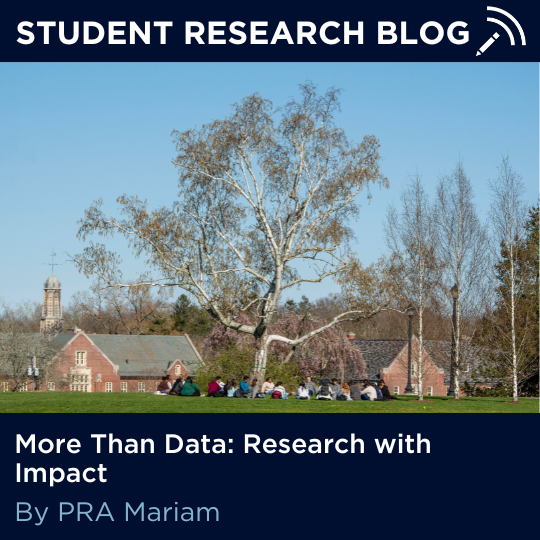
Picture of UConn students meeting outdoors under a tree with the Storrs campus in the background and text "Student Research Blog: More Than Data: Research with Impact, By PRA Mariam"When I first got involved in research, I didn’t fully understand the impact it could have beyond the classroom. I thought of research as something abstract, confined to academia. But, with many different experiences over the past few years my perspective has changed, and my impact has widened.

Through my work as a research assistant, I’ve contributed to projects that aim to influence policy, advance human rights and prevent violence before it happens. Each of these experiences has taught me that research can do more than describe the world, it can improve it.

One of the most impactful projects I’ve worked on is the CIRIGHTS Human Rights Data Project, where I helped assess how well countries comply with their international human rights obligations, focusing on judicially sanctioned torture. Through that experience I learned that data doesn’t just sit in a spreadsheet, it’s used by NGOs, scholars and policymakers to expose violations and push for accountability. By identifying where states are falling short, our work helps support the fight for justice but also accountability through sanctions, less aid and more.

I also worked on a project examining maternal organizations in Latin America, groups formed by mothers in response to state violence. These women, many of whom lost children to forced disappearances or political repression, turned their pain into advocacy. Studying their resilience and organizing strategies deepened my understanding of grassroots justice, reminded me that research can also preserve memory and amplify the voices of those most affected by injustice.

Most recently, I joined a research project in partnership with the Department of Homeland Security through a professor in the Department of Political Science, coding qualitative and quantitative data on rebel group recruitment patterns. The goal? To better understand the factors that drive people to join violent movements and to inform more effective, ethical counterterrorism strategies. Knowing that my research could contribute to policies aimed at preventing conflict and saving lives gave the work a new weight.

Research has the power to inform decision-makers, strengthen democratic institutions, and protect human rights. It can be a bridge between communities and policymakers, data and dignity, theory and practice.

For anyone unsure of whether research matters outside the university walls: it does. Whether it’s used to track violations, uplift marginalized voices, or guide national security strategies, research is one of the most important tools we have for making sense of, and making change in, our world.

Mariam is a senior double majoring in Political Science and IMJR: International Relations and minoring in Human Rights. Click here to learn more about Mariam.
Finding Research That Is Meaningful to You

By Hailey DeWalt, Peer Research Ambassador

Picture of a UConn light post with UConn banners and spring flowers with text "Student Research Blog: Finding Research That Is Meaningful to You, By PRA Hailey"You’ve probably heard a million times “find research you’re passionate about”, “engage in meaningful work”, “follow your heart”.

But… what if you don’t know what you’re passionate about?

Today I want to share a bit about my journey, how I figured out what excites me, and how you too can get started in research even if you’re not 100% sure where you want to go. Spoiler alert: it is more than okay to explore and change directions.

It’s Okay to Not Have It All Figured Out

For me, the issue wasn’t that I couldn’t find something interesting—it was that everything sounded interesting. Every topic felt groundbreaking, fascinating, and something I would be interested in exploring. I wanted to be involved in everything. And because of that, I struggled to figure out where to actually begin.

On top of that, there becomes the challenge of actually getting into a research lab, which can feel extremely intimidating and overwhelming.

So here is how I navigated it: Continue reading

The Proactive vs. Reactive Process: Beginning Your Research Journey

By Krithika Santhanam, Peer Research Ambassador

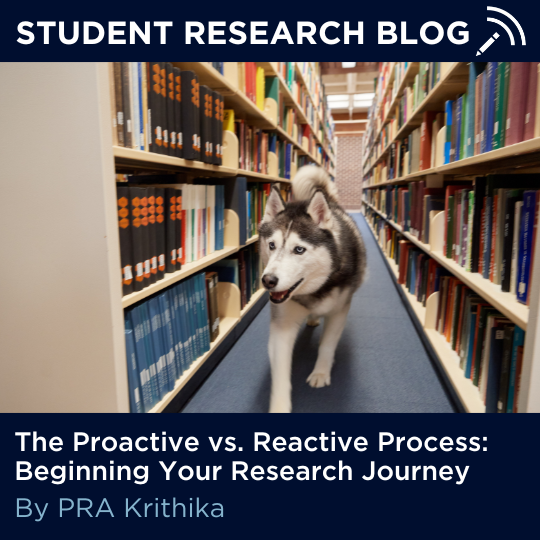
Picture of Jonathan the Husky in the UConn Storrs library with text: "Student Research Blog: The Proactive vs. Reactive Process: Beginning Your Research Journey, By PRA Krithika." with link - https://ugradresearch.uconn.edu/2025/03/20/proactive-reactive/.Are you interested in getting involved with research but have no idea where to begin? Have you applied to programs and are unsure where to go from here? Are you interested in finding a different research opportunity that aligns with your WHY? Then you are definitely in the right place! Welcome to a crash course on the proactive versus reactive processes that students tend to take when finding a research opportunity that truly aligns with their passions. Continue reading

Goals and Growth: Reflections of a Graduating Peer Research Ambassador

By Anabelle Bergstrom, Peer Research Ambassador

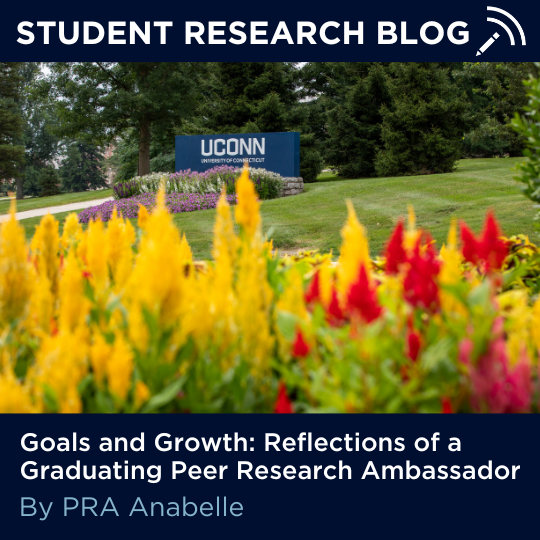
Picture of the UConn Sign with bright yellow and red flowers below. Text: "Student Research Blog, Goals and Growth: Reflections of a Graduating Peer Research Ambassador, By PRA Anabelle"As I write this blog article, I cannot believe I am coming to the end of my undergraduate career. I also cannot believe that I will be wrapping up my time as a Peer Research Ambassador, a position I have held since the summer between my freshman and sophomore years. This position in the Office of Undergraduate Research has been incredibly rewarding and fulfilling. My favorite part has been meeting students who are as interested in research as I am and helping them find their research passion. Over the past (almost) four years, I have learned so much that you may find useful as you continue to pursue your own undergraduate research goals. Continue reading

Balancing Research and Life: A Crash Course to Undergraduate Success

By Malak Nechnach, Peer Research Ambassador

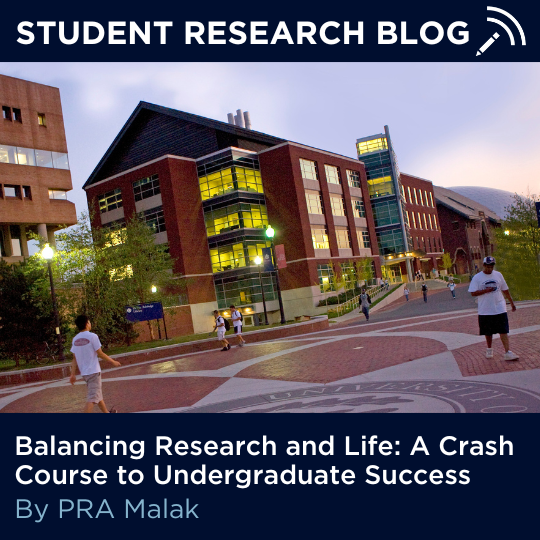
Student Research Blog - Balancing Research and Life: A Crash Course to Undergraduate Success, By PRA Malak with link https://ugradresearch.uconn.edu/2025/03/03/balancing-research/Undergraduate research is an amazing experience that enriches a student’s academic journey, providing opportunities to deepen knowledge, develop critical thinking skills and gain hands-on experience in a chosen field. However balancing research commitments with academic coursework and other commitments can be very challenging. Effective time management, setting clear priorities and fostering a supportive environment is essential for maintaining academic excellence while engaging in research.

Last semester proved to be very difficult for me to balance research with my other commitments. I realized I had to sacrifice something to be able to accommodate to my schedule, and usually that sacrifice was time and mental health. Although I loved my lab, I was not able to manage my time successfully and quickly felt drained in work. I believe this is an issue that a lot of undergraduate’s encounters once they start dedicating six, ten to twelve hours a week to research, which is why I hope my advice will help! Continue reading

Thriving, Not Just Surviving: Balancing Research, Jobs, Clubs, & Schoolwork

By Michela Brown, Peer Research Ambassador

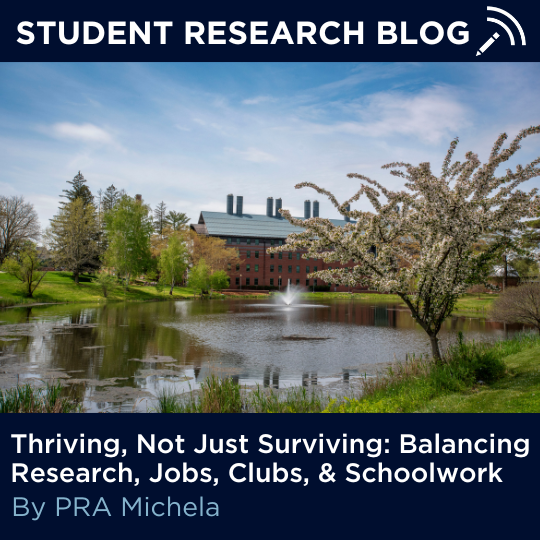
Picture of Swan Lake and the Chemistry Building on the UConn Storrs campus with text: "Student Research Blog: Thriving, Not Just Surviving: Balancing Research, Jobs, Clubs, & Schoolwork, By PRA Michela."As a senior in college, I’ve come to know firsthand how overwhelming it can feel to juggle classes, jobs, club commitments, and leadership roles – let alone adding research to the mix. Some days, it seems like there just aren’t enough hours to get everything done, and the pressure to succeed can feel intense. But let me assure you – everything will be okay. The key is finding balance and giving yourself grace along the way. Here are some strategies that have helped me navigate this journey and a reminder that you are not alone. Continue reading

Discovering Your Story

By Andrei Abarientos, Peer Research Ambassador

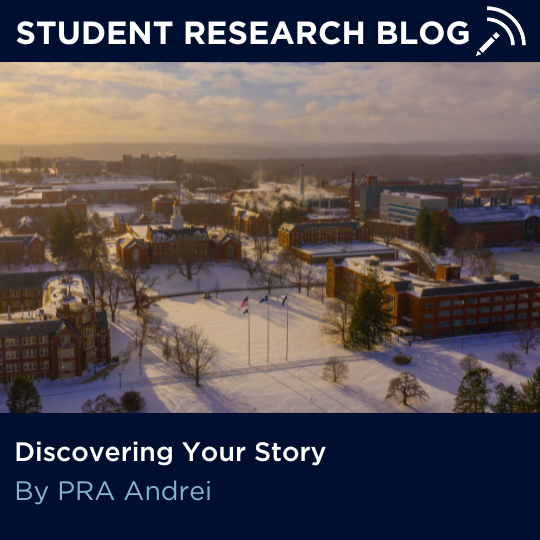
Snowy overhead picture of the Wilbur Cross building and adjacent buildings on the Storrs campus with text "Student Research Blog: Discovering Your Story, By PRA Andrei"One of the most important lessons that I learned as a researcher is that your research (and your experiences with it) is a story. One of the most important things you can do as an undergraduate to prepare for your future is to reflect and understand your own path, and how your research plays into that. Hand-in-hand with that is being able to effectively craft a narrative, which is crucial anytime you are explaining yourself, your work, and your career. Whether you’re studying molecular processes, supermassive black holes, or social issues, placing your work into a larger context and effectively articulate your path is a major pillar of being a researcher. In large presentations, interviews, applications, or even just small-talk with colleagues, having a mastery of storytelling is an oft-overlooked skill of a scientific or investigative career. There’s a myriad of ways to go about this, but here are a few steps to crafting your story that I’ve picked up through experience and through listening to others: Continue reading

Breaking the Mold: Standing Out in Your Pre-Health Journey

By Alexis Elkinson, Peer Research Ambassador

Picture of a tree on the Storrs campus with text "Student Research Blog: Breaking the Mold: Standing Out in Your Pre-Health Journey, by PRA Alexis" with link https://ugradresearch.uconn.edu/2025/01/31/breaking-the-mold/The road to a career in medicine, dentistry, or any graduate health program is often paved with rigorous coursework, competitive exams, and carefully curated extracurriculars. Many students strive to become the “perfect” or “cookie-cutter” applicant—someone with a flawless GPA, high test scores, and a checklist of clinical or community service hours and research experience. But the truth is, admissions committees are looking for more than just numbers. They seek individuals who are unique, passionate, and self-aware. So, how can you stand out? By embracing what makes you different, sharing your authentic experiences, and demonstrating your commitment to growth—both as a future healthcare professional and as a person. Continue reading

At Your Own Pace

By Naomi Benningfield, Peer Research Ambassador

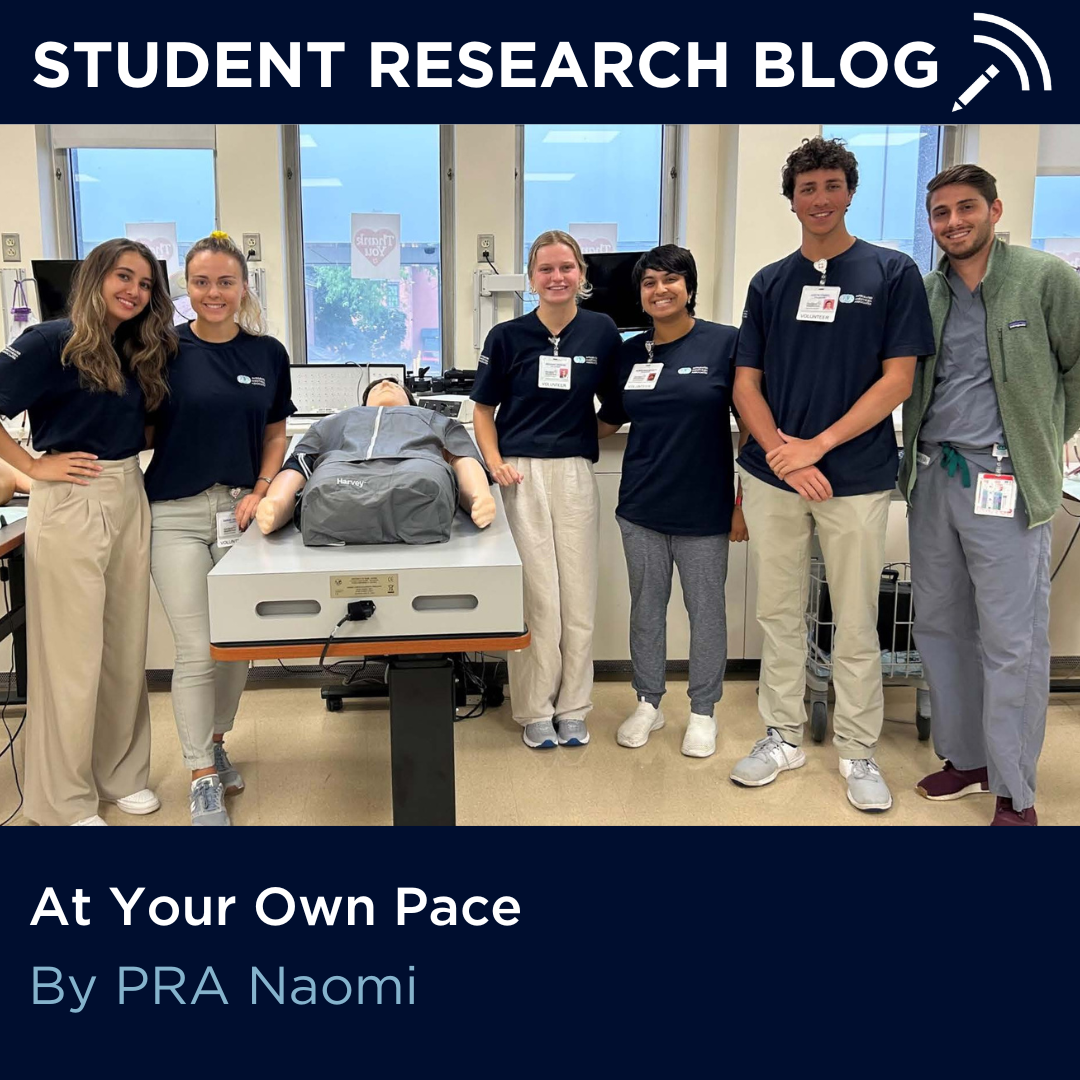
Picture of students in a medical simulation room with text "Student Research Blog - At Your Own Pace, By PRA Naomi" and link - https://ugradresearch.uconn.edu/2025/01/23/at-your-own-pace/“Do you know you have thirty minutes? Thirty, thirty, yes…”

At some point or another, we have all experienced the burning torment of falling behind in a never-ending race. What were we doing in 3rd grade when we should have been saving up for a house? Or last semester, when we should’ve completed our second research thesis? What about the freshman next door who has already lined up a research internship with Yale and is studying to take the MCAT?

As you carry on through your academic endeavors, you will continually come across people who appear unbreakable and completely have their s*** together! It will feel easy and even natural to compare yourself to them, especially when we live in a world in which success is often publicly displayed. You may think, “Maybe I’m not cut out to go to medical school. I haven’t heard back from any of the professors I emailed. I’m not smart enough to do research, it isn’t for me.” These feelings of self-doubt will eat away at your subconscious as you let the pressure of trying to be “good enough” consume you. Continue reading