Month: December 2018

• Student Accomplishments – December 2018

accomplishments-heading

Please join us in congratulating the UConn undergraduates named below for their significant research and creative accomplishments in summer and fall 2018. Students: if you have an accomplishment to share, please do so using this online form.


PUBLICATIONS

Keara Frawley ’18 (ENG) was first author on a recent publication from Dr. Seok-Woo Lee’s lab and her paper is featured in the journal cover:

Frawley, K.G., Bakst, I., Sypek, J.T., Vijayan, S., Weinberger, C.R., Canfield, P.C., Aindow, M., & Lee, S. (2018). A Nanoindentation Study of the Plastic Deformation and Fracture Mechanisms in Single-Crystalline CaFe2As2. The Journal of The Minerals, Metals & Materials Society, 70(7). doi: 10.1007/s11837-018-2851-y

William Hunt ’19 (ENG) was a co-author on a recent publication from Dr. Kevin Brown’s (Biomedical Engineering) research group:

Brown, K.S., Allopenna, P.D., Hunt, W.R., Steiner, R., Saltzman, E., McRae, K., & Magnuson, J.S. (2018). Universal Features in Phonological Neighbor Networks. Entropy, 20(7), 526; doi: 10.3390/e20070526

Craig Mendonca ’18 (CLAS) worked in the Gene Therapy Center in Dr. Guangping Gao’s lab at UMass Medical School. Craig was a co-author on a recent publication from this research internship:

Wang, D., Li, J, Song, C.Q., Tran, K., Mou, H., Wu, P.H., Tai, P.W.L., Mendonca, C.A., Ren, L., Wang, B.Y., Su, Q., Gessler, D.J., Zamore, P.D., Xue, W., & Gao, G. (2018). Cas9-mediated allelic exchange repairs compound heterozygous recessive mutations in mice. Nature Biotechnology, 36. doi: 10.1038/nbt.4219

Kathleen Renna ’20 (CAHNR), an undergraduate in the Health Research Program, and Yue (Jacky) Yang ’19 (ENG), a 2018 SURF student, were co-authors on a recent publication based on research conducted with Dr. Ephraim Trakhtenberg at UConn Health:

Rheaume, B.A., Jereen, A., Bolisetty, M., Sajid, M.S., Yang, Y., Renna, K., Sun, L., Robson, P., & Trakhtenberg, E.F. (2018). Single Cell Transcriptome Profiling of Retinal Ganglion Cells Identifies Cellular Subtypes. Nature Communications, 9(1). doi: 10.1038/s41467-018-05134-3


SUMMER RESEARCH ACTIVITIES

Jiana Baker ’20 (CLAS) conducted research in Dr. Sangamesh Kumbar’s lab in the Department of Orthopedic Surgery at UConn Health through the Health Careers Opportunity Program (HCOP) Summer Research Fellowship Program. Jiana presented her work “Novel Polymer-Nanotube Composites: Small Molecule Drug Delivery Systems for Peripheral Nerve Regeneration” at the HCOP poster session.

Claudia Fernanda Pena-Sulantay ’20 (ENG) spent her summer in Nove Hrady, Czech Republic, engaged in a research project at the Center for Nanobiology and Structural Biology (CNSB). Her work on the project “Structural and functional analysis of the yeast K+ translocation system(s) encoded by TRK1 and TRK 2 genes” was part of the REU program in Molecular Biophysics sponsored by Princeton University.

Tanya Miller ’20 (CLAS) engaged in structural biology research at the Laboratory of Structural Biology which is part of BIOCEV, the Biotechnology and Biomedicine Center of the Academy of Sciences and Charles University in Vestec, Czech Republic. She was supervised by Dr. Cyril Barinka during the 5-week summer program.


PRESENTATIONS
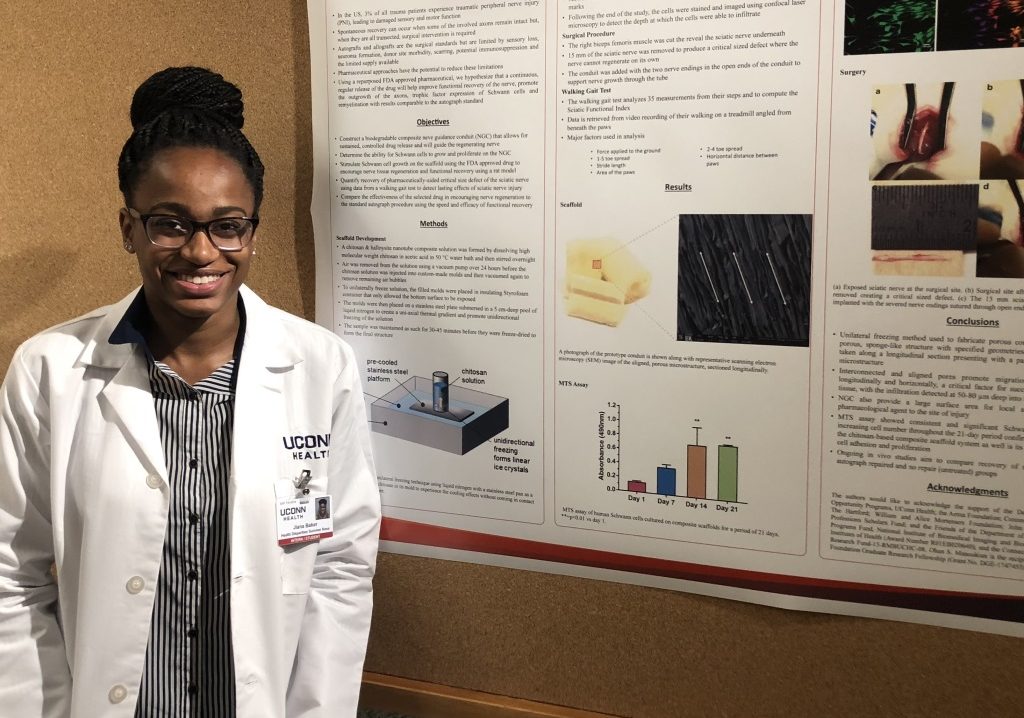
  • Jiana Baker presenting her research at the HCOP poster session.
    Jiana Baker '20 (CLAS)

Galaxy Community Conference-Bioinformatics Open Source Conference – June 25-30, 2018 – Portland, OR

Peter Richter ’19 (ENG) – OUR Travel Award recipient
Collecting Data for Association Genetics: Tripal Plant PopGen Submit Pipeline

American Society of Animal Science – Canadian Society of Animal Science Annual Meeting and Trade Show – July 8-12, 2018 – Vancouver, British Columbia

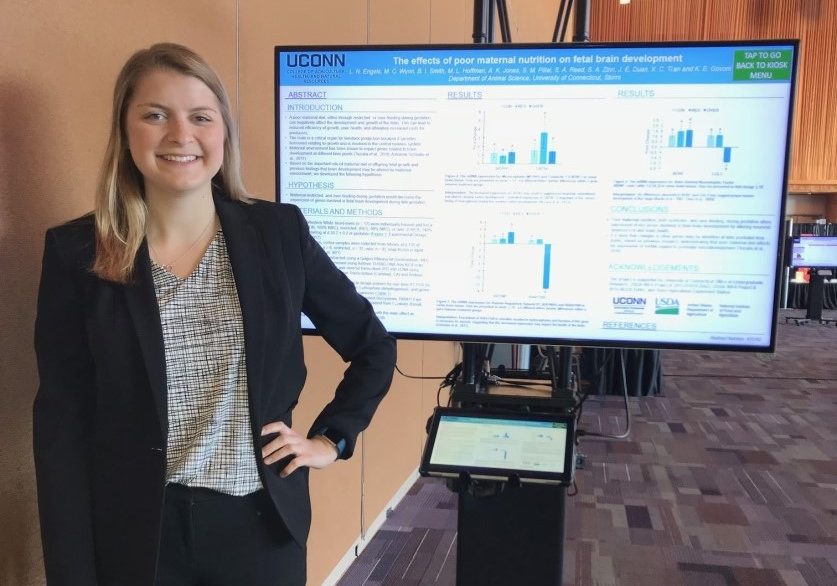
Lauren Engels ’19 (CAHNR) – OUR Travel recipient
The Effects of Poor Maternal Nutrition on Fetal Brain Development

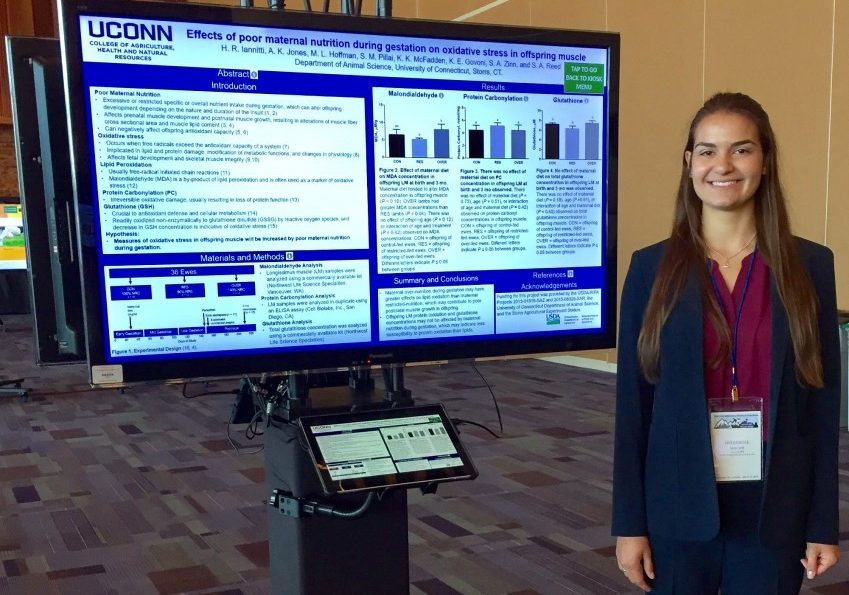
Helenrose Iannitti ’19 (CAHNR) – OUR Travel recipient
Effects of Poor Maternal Nutrition during Gestation on Oxidative Stress in Offspring Muscle

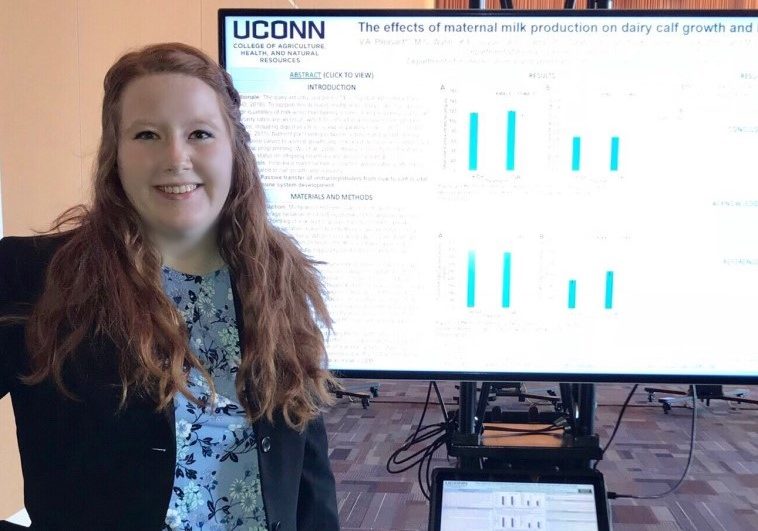
Veronica Pleasant ’19 (CAHNR) – OUR Travel recipient
The Effects of Maternal Milk Production on Dairy Calf Growth and Health

SACNAS 2018 – The National Diversity in STEM Conference – October 11-13, 2018 – San Antonio, TX

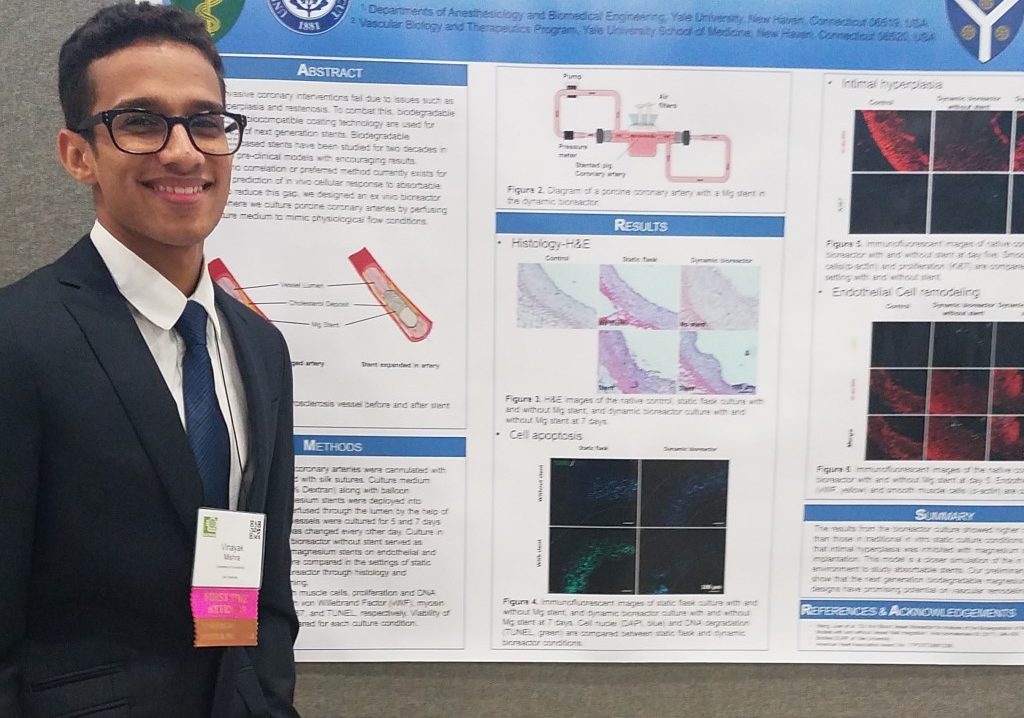
Vinayak Mishra ’21 (CLAS) – OUR Travel Award recipient
Cellular Response to Biodegradable Stent in Vascular Bioreactor

Biomedical Engineering Society (BMES) Annual Meeting – October 17-20, 2018 – Atlanta, GA

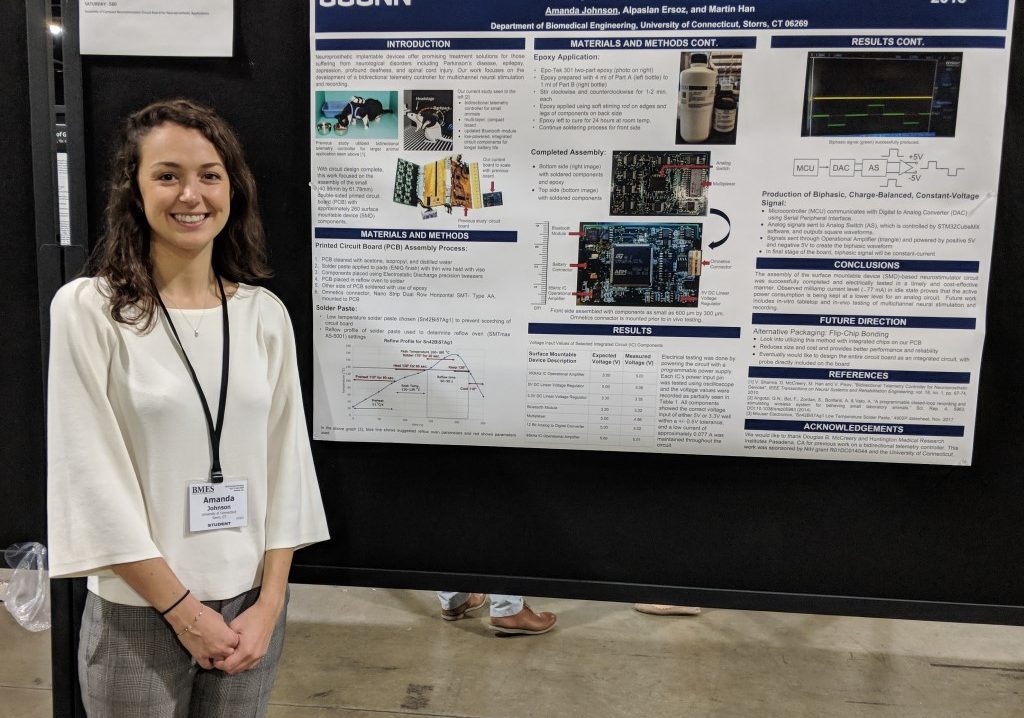
Amanda Johnson ’19 (ENG) – OUR Travel Award recipient
Assembly of Compact Neurostimulator Circuit Board for Neuroprosthetic Applications

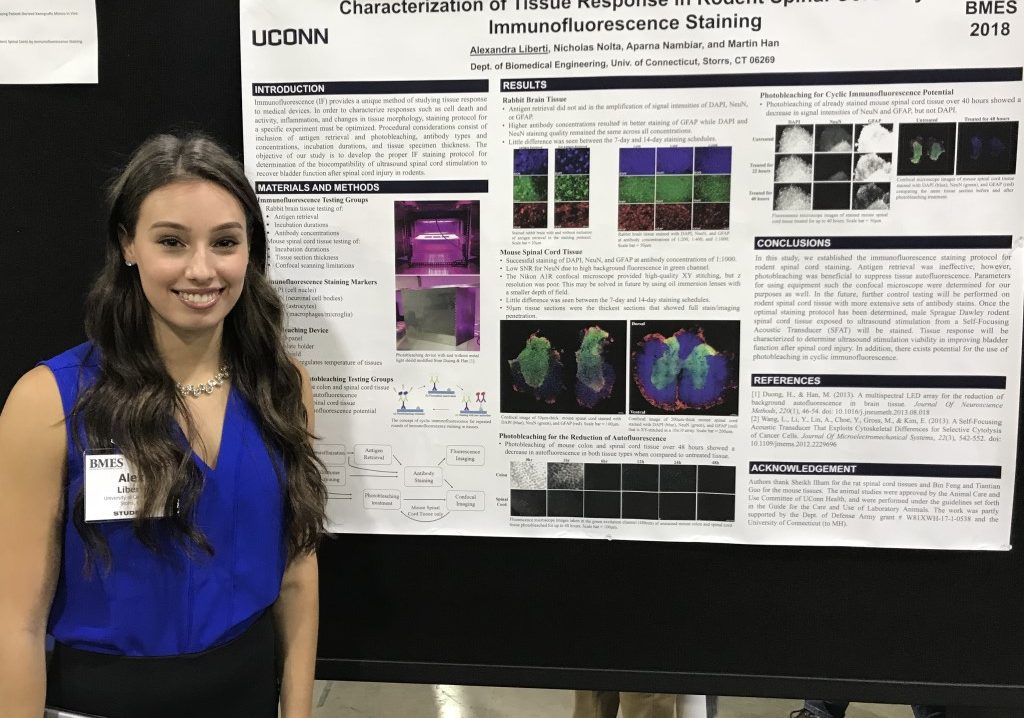
Alexandra Liberti ’19 (ENG) – OUR Travel Award recipient
Characterization of Tissue Response in Rodent Spinal Cords by Immunofluorescence Staining

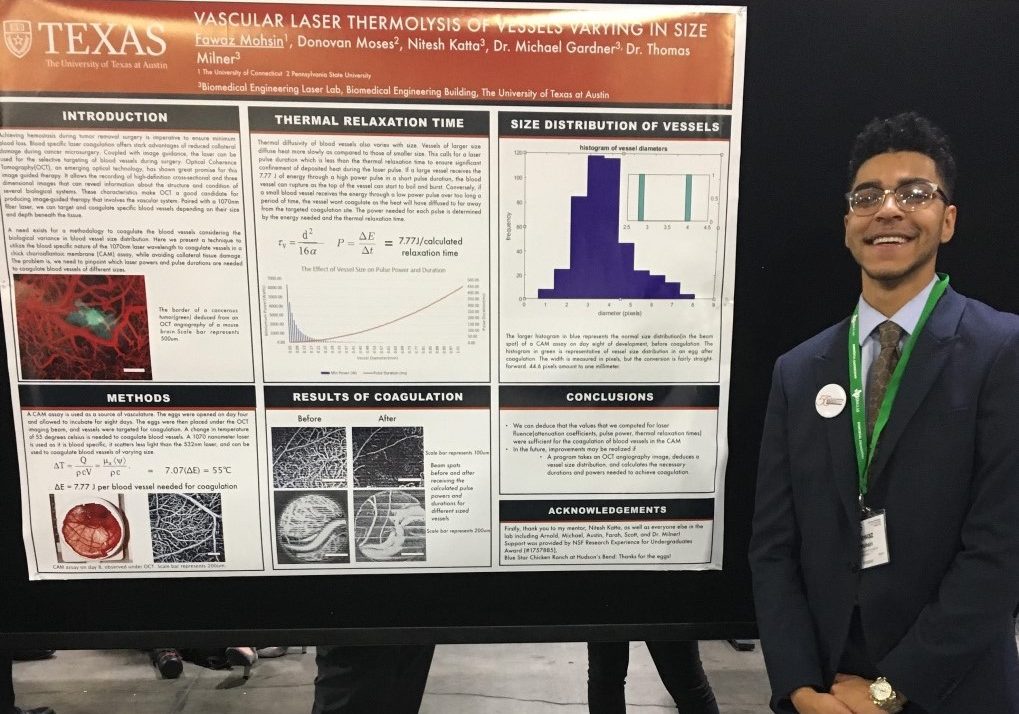
Fawaz Mohsin ’21 (ENG & BUS) – OUR Travel Award recipient
Vascular Laser Thermolysis of Blood Vessels Varying in Size

Society for Neuroscience (SFN) Annual Meeting – November 3-7, 2018 – San Diego, CA 

Skyler Sklenarik ’18 (CLAS) – OUR Travel Award recipient
Behavioral Biases in People at Risk for Problematic Gambling and Pornography Use

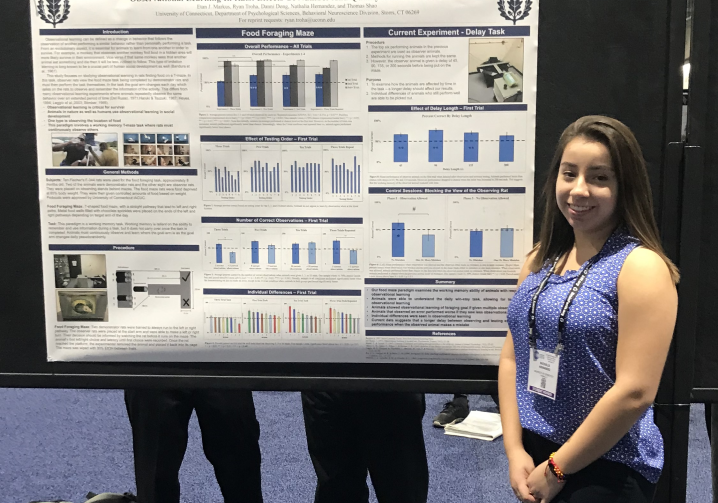
Nathalia Hernandez ’20 (CLAS) – OUR Travel Award recipient
Observational Learning in Rats: Effects of Number and Quality of Observations

Kyrstyn Jenkins ’20 (CLAS) – OUR Travel Award recipient
Evaluating Mechanisms of Reward Enhancement by Nicotine in Humans

National Council of Family Relations Annual Conference – November 7-10 – San Diego, CA

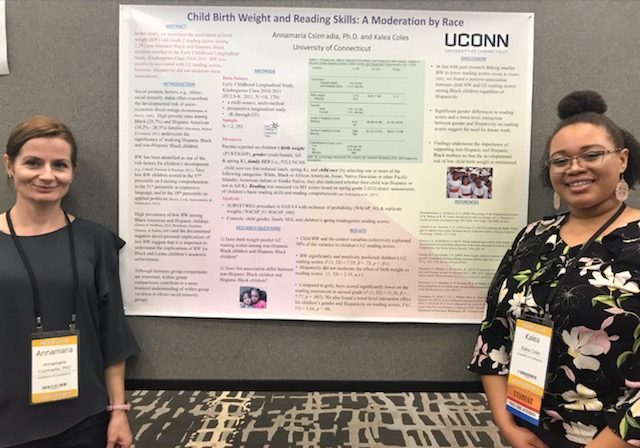
Kalea Coles ’19 (CLAS) – OUR Travel Award recipient
Child Birth Weight and Reading Skills: A Moderation by Race

SENTAC Conference – November 30-December 2, 2018 – Houston, TX

Anika Makol ’19 (CLAS) – OUR Travel Award recipient
Pediatric Nasal Burns During Operative Cautery; Are Aural Speculums More Protective than Nasal Speculums? – A Retrospective Chart Review
• SURF 2019: Program Updates

SURF logoWith the SURF 2019 application cycle underway, we would like to take the opportunity to highlight some updates and changes to this year’s SURF program. SURF continues to offer students from across the academic disciplines the opportunity to focus full-time on a research or creative project for 9-10 weeks over the summer.
Updates for 2019

New Application Management System

We are using the UConn Quest Portal, a new application management system powered by SurveyMonkey Apply, to collect, process, and review SURF applications for summer 2019. This new system will allow students to complete the various components of the SURF application in the most appropriate order for them and to make edits as needed prior to submission of their application.

  • Letters of Recommendation. As before, two letters of recommendation are required for the SURF application.
    • Student applicants must request recommendation letters through the application system by entering the name and email address of the faculty members who have agreed to write letters on their behalf. The system will send the recommenders an individual link for recommendation submission.
    • Faculty recommenders will receive an email from the Quest Portal on behalf of the student who is requesting a letter of recommendation. Both first and second recommenders will submit their letters through the portal by uploading a PDF file. Faculty who are serving as the project supervisor (1st recommender) will also be asked to answer a series of research compliance questions.

Application Reminders (See the full application outline here)

  • Budget reminders. Students should visit the Budget Policies and Samples page for detailed guidance about allowable expenses (now including maximum dollar amounts for expenses like poster printing) and examples of budgets that show the appropriate level of detail.
    • Student requesting stipend as part of a Plan A or Plan C budget should be careful to use accurate stipend language as noted on the Budget Policies page.
    • Faculty advisors of students conducting laboratory research: Please work with your advisee to ensure s/he has accurate information about the costs of lab supplies that can be procured through university purchasing channels and contracts.
  • Timeline reminders. Student should visit the Sample Timeline page for guidance on developing a detailed timeline. The SURF proposal timeline should clearly indicate start and end dates, the anticipated number of project work hours each week, and a week-by-week listing of planned project milestones.
  • Research Compliance reminders. Students and faculty should note that research compliance approvals are complex and take significant time. Please plan accordingly. While the necessary approvals are not required at the application stage, students should be aware that SURF funding will not be disbursed until all necessary compliance documents have been submitted to OUR, and that SURF awards will be rescinded if documentation is not received by the stated deadline. Both faculty and students are reminded to take care in reading the series of questions concerning biological materials as this category encompasses a wide range of items.

ESTA Requirement/Documentation of Safety Training

Students proposing SURF project work that will take place in a setting with hazards such as a lab, theater, or studio will be required to complete the Employee Safety Training Assessment (ESTA) with their faculty mentor to determine which safety training courses are required in order to work where hazards are present.

  • Student applicants will be asked about completion of the ESTA in the Research Compliance section of the application. We encourage students to complete the ESTA with their faculty supervisor prior to submitting their application.
  • Information on how to document completion of the ESTA and completion of the indicated training/registration for upcoming training is available on OUR’s Safety Training page.

SURF Mailing List. Students planning to apply for SURF can sign up for the SURF Mailing List to receive helpful application tips via email.

We look forward to another excellent set of SURF applications this year! The application deadline is Monday, February 4, 2019. We encourage all students to make use of SURF Office Hours to seek feedback on their draft materials and to ask any questions they might have about the program or the application. SURF Office Hours are scheduled for 1/22, 1/25, and 1/28. Full detail about times and location can be found in the sidebar on the main SURF webpage.

• Congratulations, 2019 SHARE Award Recipients!

We are delighted to announce the 15 student-faculty teams selected to receive awards for Spring 2019. Congratulations to all award recipients!

SHARE Awards support undergraduate research apprenticeships in the social sciences, humanities, and arts, offering students majoring in these fields opportunities to develop inquiry skills and explore research interests early in their college careers.


Project Title: Exploring the Upper Crust of Mesopotamian Society: An Archaeological Study of Bread Production at Tell Leilan
Student Apprentice: Stephen Baker, Anthropology and Physiology & Neurobiology
Faculty Mentor: Alexia Smith, Anthropology

Project Title: Head vs. Heart Beliefs: Comparing Intuitive and Rational Cognitive Judgments
Student Apprentice: Erin Blake, IMJR: Mental Health & Well-Being
Faculty Mentor: Crystal Park, Psychological Sciences

Project Title: Post-traumatic Growth in Eating Disorder Recovery
Student Apprentice: Michelle Franklin, Nursing
Faculty Mentor: Carrie Eaton, Nursing

Project Title: Study of Language and Math – Mapping Abilities and Math Fluency in Hearing and Deaf Children
Student Apprentice: Caroline Hebert, Speech, Language & Hearing Sciences and Cognitive Science
Faculty Mentor: Marie Coppola, Psychological Sciences

Project Title: “Advice and Consent” or “Search and Destroy?”: The Senate Judiciary Committee’s Review of U.S. Supreme Court Nominations in the Era of Party Polarization
Student Apprentice: John Kelly, Political Science
Faculty Mentor: Kimberly Bergendahl, Political Science

Project Title: The Scholio Project: Designing Online News Comments to Promote Intellectual Humility in Public Discourse
Student Apprentice: Addison Kimber, Political Science and Biology
Faculty Mentor: Michael Morrell, Political Science

Project Title: Justice in the Dark: How Secretively Funded Campaign Advertisements Shape Judicial Campaigns
Student Apprentice: Hollianne Lao, Political Science
Faculty Mentor: Virginia Hettinger, Political Science

Project Title: The PRISM Project: A Mindfulness Intervention on Substance Abuse
Student Apprentice: Kasey Macedo, Psychological Sciences and Human Development & Family Studies
Faculty Mentor: Beth Russell, Human Development & Family Studies

Project Title: Preterm Infant Feeding Type in Relation to Neurobehavioral Development Outcomes and Performances in the NICU
Student Apprentice: Effie Makris, Nursing
Faculty Mentor: Xiaomei Cong, Nursing

Project Title: Musical Rhythm and Nationalism in the Eastern Bloc
Student Apprentice: Maria Mandoiu, Music History and Anthropology
Faculty Mentor: Daniel Goldberg, Music

Project Title: Patterns of African American Life in Post War Hartford (1940-2010)
Student Apprentice: Chloe Murphy, Africana Studies
Faculty Mentor: Fiona Vernal, History and Africana Studies

Project Title: Puerto Rican Heritage Trail
Student Apprentice: Alejandro Rodriguez, History
Faculty Mentor: Anne Gebelein, Latin American and Caribbean Studies

Project Title: Digitizing the Paper Trail: Enslaved and Freedpeople in The Spanish Empire
Student Apprentice: Jenifer Rojas Orellana, Political Science
Faculty Mentor: Ricardo Salazar-Rey, History

Project Title: Can Inclusive Education Programs Reduce Racial and Gender Discrimination in the Labor Market?
Student Apprentice: Mary Vlamis, Economics and Political Science
Faculty Mentor: Jorge Aguero, Economics

Project Title: Stratified Model Minorities: Educational Experiences and Social Mobility of Chinese Immigrants from Taishan and Fuzhou
Student Apprentice: Jingya Zhu, Sociology and Communication
Faculty Mentor: Simon Cheng, Sociology

How Research Helped Me Choose a Career

By Divya Ganugapati, OUR Peer Research Ambassador

As an undergraduate student there is a lot of pressure on you to figure out exactly what you want to do with the rest of your life at such a young age. Enrolling at UConn at 17 years old, I had no clue what some of the 110+ majors offered here even meant (Cognitive Science? What?) let alone having to choose one.

Before switching to a Cognitive Science major, I originally was a Physiology and Neurobiology major. I knew I was interested in a field relating to the brain since I had so many brain-oriented unanswered questions. Why are humans the only species to industrialize? What is the difference between humans, animals, and machines? What happens when your brain gets injured? How can some people switch between two or more languages? These questions are what motivated my major change from a purely physiological and anatomical education of the brain to an interdisciplinary understanding of the brain’s application to language, emotion, and personality. Continue reading