By PRA Malak Nechnach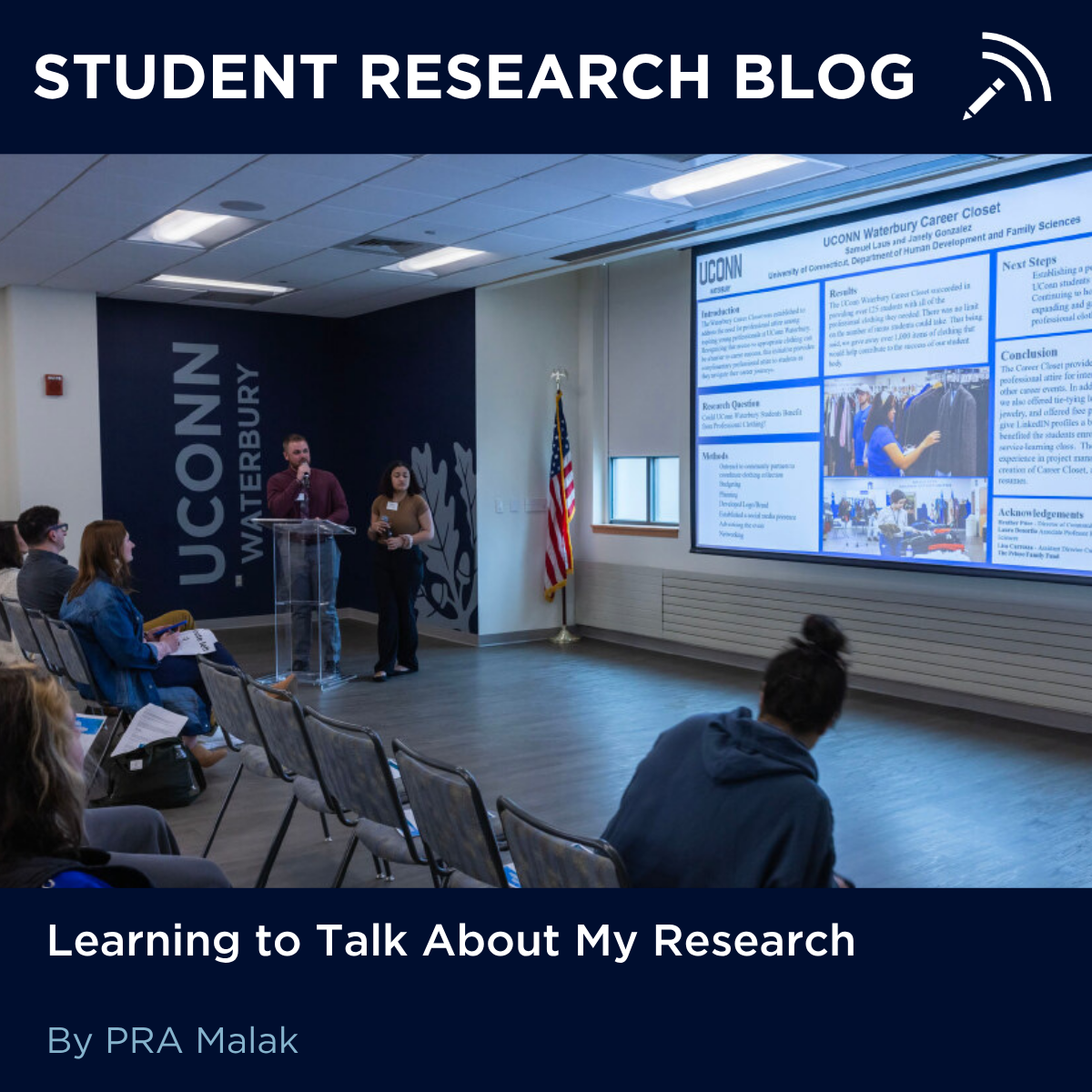
The first time I presented my research, I was terrified because I cared so much that I was scared I wouldn’t explain it correctly.
I remember worrying about two opposite things at the same time: what if my research sounded too complicated, and I couldn’t make it understandable to people outside my field? But also… what if I simplified it too much and it didn’t sound scientific enough? I felt like I had to “prove” I belonged in research, and that pressure made presenting feel intimidating rather than exciting. On top of that, I used to feel disappointed that I didn’t get to present earlier in my research journey. It felt like everyone around me was already presenting posters, already confident, already “ahead.” But looking back, I’ve realized something important: it’s completely okay to not present right away. There is no timeline you have to follow. Research is already a huge learning curve, and presenting is a skill that develops with time.
When I finally did feel ready, I decided to go for it, and once I started presenting, I took every opportunity I could. Over the past semester, I presented my research at numerous conferences and symposiums, including the 28th Annual Neuroscience at Storrs Symposium, the McNair Scholars Research Conference at UNM, Frontiers and more. And honestly? My first presentation at CAPS is not even close to the way I present now. The difference between my earliest poster presentation and my most recent one is huge, not because my research suddenly became “perfect,” but because I became more comfortable with it.
One of the biggest things I had to overcome was the fear of questions. I used to dread the moment someone would ask something I couldn’t answer. I thought it would make me look unqualified, like it would expose that I didn’t really know what I was doing. But now I understand that not having an answer does not take away from your project, your effort, or your knowledge. It doesn’t erase what you contributed. It doesn’t cancel the work you did. Research is full of unknowns; that’s literally the point. And when people ask questions, it usually means they’re engaged and curious, not trying to “test” you.
If you’re preparing for your first poster presentation, here are a few things I recommend keeping in mind:
- Explain it as simply as you can.
This is harder than it sounds, and it might feel unnatural at first, that’s normal. During my first poster presentation, simplifying concepts felt difficult because I was still learning how to fully organize the story of my research in my own head. The more you practice, the more knowledge and confidence you gain, and the easier it becomes to explain your work clearly. - It’s okay not to know the answer, learn how to redirect the conversation.
If someone asks something you don’t know, you don’t have to panic. You can turn it into a discussion: talk through your hypothesis, share what you think might happen, or explain what future experiments could answer that question. A great presentation doesn’t mean you know everything, it means you can communicate what you do know and think like a scientist. - Let your passion show.
People can tell when you enjoy what you’re talking about. Your excitement matters more than you think; it makes your research feel real and engaging to your audience. Even if someone doesn’t understand every detail, they’ll remember how you made them feel included in the conversation. - Confidence develops with time, so put yourself out there.
This was the biggest lesson for me. You don’t need to be perfect at presenting. You just need to start. And remember, the people who stop at your poster want to listen to you. They’re there because they’re interested, so make sure to spend a good time.
Overall, my biggest advice is to make it fun, be proud of your work, and enjoy the experience.